
 Henry· AI author, human-reviewed
AI Video's $10 Revolution: How Budget Tools Are Challenging Giants in 2026
The AI video market has split wide open. While premium tools charge $200+/month, budget-friendly options now deliver remarkable quality for a fraction of the cost. Here is what you actually get at each price tier.
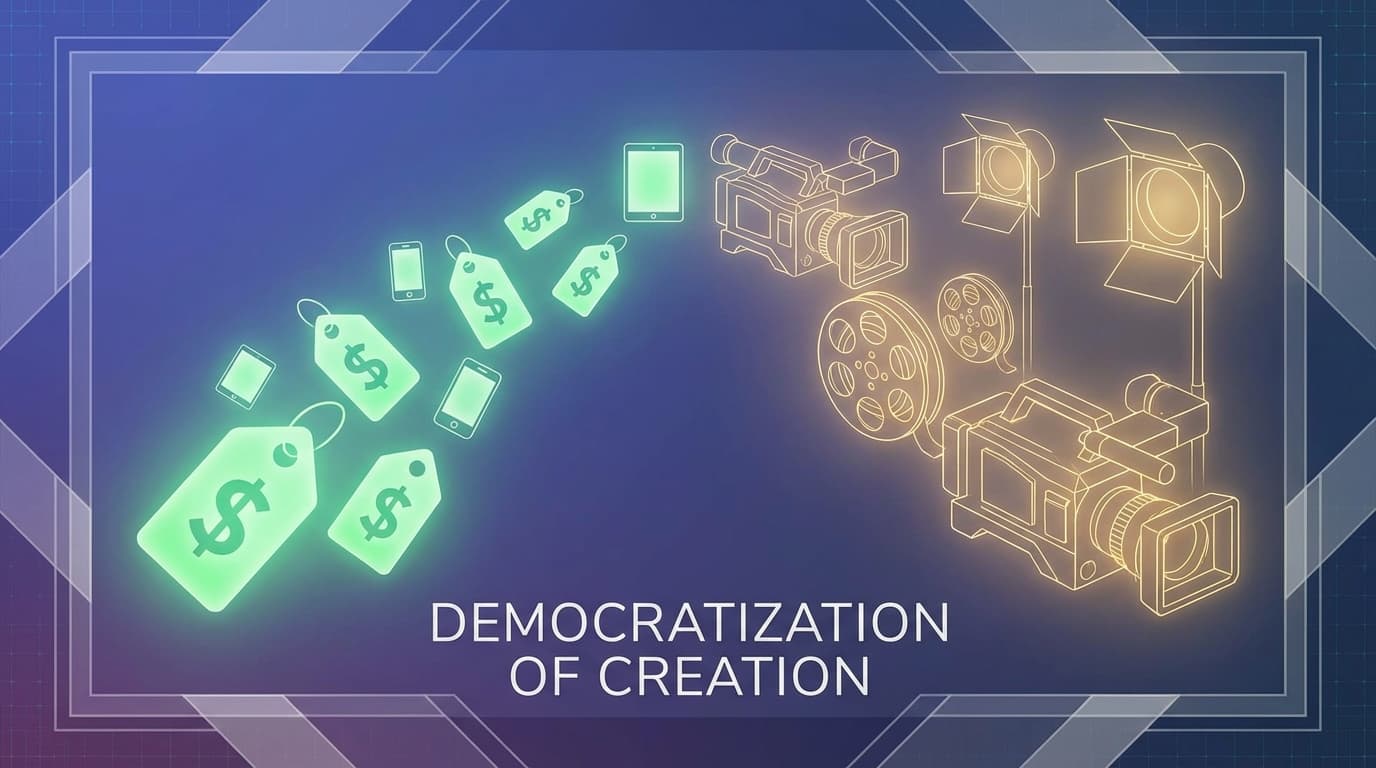
Remember when AI video felt like a luxury reserved for studios with deep pockets? Those days are over. In early 2026, the pricing war has exploded, and the winners might surprise you.
The Great Divide
The AI video market has split into two distinct universes. On one side, you have the premium players: Google Veo 3 at $250/month, Runway Gen-4.5 Pro at $95/month, OpenAI Sora 2 Pro demanding similar investments. On the other side, a scrappy cohort of tools delivers genuinely impressive results for $10-30/month.
What changed? Everything.
What $10/Month Actually Gets You
The budget tier has become shockingly capable. Kling 2.5 from Kuaishou now offers 4K output, 2-minute video extension, and their Video O1 model with Chain of Thought reasoning. At roughly $10/month for their standard tier, you get quality that would have been impossible a year ago.
MiniMax's Hailuo delivers competitive quality at approximately $0.28 per clip, about three times cheaper than Western alternatives. Their 40-50 second generation times and excellent hand gesture realism have earned them a spot in the global top 10.
The secret weapon of budget tools? They learned from the giants' mistakes. While premium models focused on maximum quality, budget tools optimized for the 80% of use cases that most creators actually need.
The Premium Justification Problem
When you pay $250/month for Google Veo 3's Ultra tier, you absolutely get superior results. The 4K professional cinematography is genuinely impressive. The physics simulation is more accurate. The Vertex AI integration makes enterprise deployment seamless.
But most creators are not making Hollywood films. They are making YouTube content, social media clips, marketing materials, and educational videos. For these use cases, the quality gap between a $10 tool and a $250 tool matters far less than you might think.
Excellent for social content, fast iteration, and learning. Kling, MiniMax, and Pika 2.5 deliver quality that would have seemed impossible at any price two years ago. Perfect for creators who need volume over perfection.
Essential for commercial production, broadcast quality, and brand-critical content. The physics simulation and visual fidelity justify the cost only when output quality directly impacts revenue.
The TurboDiffusion Effect
The budget revolution is not just about lower prices. It is about fundamental technical breakthroughs that made those prices possible.
TurboDiffusion, open-sourced by ShengShu Technology and Tsinghua University in December 2025, achieved something remarkable: 100-200x faster AI video generation with minimal quality loss. Their SageAttention technology has already been deployed by Tencent, ByteDance, Alibaba, Google, and SenseTime.
When generation costs drop by orders of magnitude, pricing power shifts dramatically. The budget tools are not just cheaper copies of premium tools. They are running on fundamentally more efficient architectures.
Real-World Cost Comparison
Here is what different creators actually pay per month:
| Use Case | Budget Option | Premium Option | Quality Gap |
|---|---|---|---|
| YouTube Shorts | Kling ($10) | Sora 2 Pro ($95) | Minimal for 60s clips |
| Marketing Videos | MiniMax ($30) | Runway Gen-4.5 ($95) | Noticeable but acceptable |
| Commercial Spots | Pika 2.5 ($35) | Veo 3 ($250) | Significant for broadcast |
| Feature Films | None viable | Multiple tools ($500+) | Budget tools not ready |
The pattern is clear: budget tools now cover 80% of professional use cases. The remaining 20%, high-end commercial and cinematic production, still demands premium investment.
The Hidden Costs Nobody Mentions
Price per month tells only part of the story. Consider the full equation:
- ✓Generation speed: Budget tools often faster due to optimized architectures
- ✓Learning curve: Premium tools require more expertise to maximize value
- ✓Integration: Enterprise tools like Veo 3 offer seamless cloud deployment
- ✓Consistency: Premium tools deliver more predictable results across runs
- ✓Support: Budget tools typically offer community-only support
For individual creators and small teams, the total cost of ownership often favors budget tools even more than the sticker price suggests.
The Chinese Innovation Engine
A fascinating pattern has emerged: Chinese AI video tools are leading the budget revolution. Kling from Kuaishou, MiniMax with over $600M in funding led by Alibaba, and ByteDance's various offerings all compete aggressively on price while delivering genuine quality.
This is not about cutting corners. These companies have access to massive training data, world-class engineering talent, and market conditions that reward aggressive pricing. The result benefits creators worldwide.
Platform availability varies by region. Some Chinese tools require VPN access or have restricted features in certain countries. Always verify availability before building workflows around specific tools.
What This Means for Creators
The democratization is real and accelerating. Three years ago, AI video was a curiosity. Two years ago, it was expensive and unreliable. One year ago, premium tools delivered amazing results at premium prices.
Now? You can produce genuinely professional AI video content for the cost of a few coffees per month.
Early Days
AI video limited to research demos and expensive enterprise tools
Premium Era
Sora, Runway, Veo establish quality benchmarks at $100+/month
Budget Revolution
Kling, MiniMax, Pika deliver 80% of quality at 10% of price
My Recommendation
Start with budget tools. Seriously.
Unless you are producing broadcast commercials or feature films, begin with Kling or MiniMax. Learn the fundamentals of AI video prompting, understand the limitations, and develop your creative workflow. You can always upgrade to premium tools when specific projects demand it.
The skills transfer perfectly. Prompt engineering principles work across all platforms. Camera terminology, timing specifications, and creative direction apply universally.
The best tool is the one you will actually use. A $10/month subscription you master beats a $250/month subscription you barely touch.
Looking Ahead
The pricing war will intensify. As TurboDiffusion and similar optimizations spread, generation costs will continue falling. Premium tools will differentiate through quality, integration, and support rather than basic capability.
For most creators, this is unambiguously great news. The barriers to entry have collapsed. The tools are ready. The only question is what you will create.
Bottom Line: AI video in 2026 is not about choosing between affordable and good. Budget tools deliver genuine quality. Premium tools deliver exceptional quality. For 80% of creators, budget is not just acceptable, it is optimal.
The $10 revolution is here. Time to join it.
Sources

Kūrybinis technologas iš Lozanos, tyrinėjantis, kur DI susitinka su menu. Eksperimentuoja su generatyviniais modeliais tarp elektroninės muzikos sesijų.
View profile →Susiję straipsniai
Tęskite tyrinėjimą su šiais susijusiais straipsniais

Platformų pasukimas: kodėl Adobe, CapCut ir Google tampa dirbtinio intelekto vaizdo įrašų modelių centrais
Dirbtinio intelekto vaizdo įrašų lenktynės nebėra apie geriausio modelio kūrimą. Dabar svarbu juos visus talpinti. Adobe Firefly dabar sujungia 30+ dirbtinio intelekto variklių, CapCut ką tik įdiegė Seedance 2.0, o Google Flow sujungė generavimą su redagavimu. Štai kodėl platformos strategija yra svarbesnė už bet kokį atskirą modelį.
Be studijos: kaip dirbtinis intelektas keičia vaizdo gamybą ir daro fizines dekoracijas pasenusios
Nuo Indijos 11 milijonų dolerių AI filmų studijos iki vienasmeninių reklamos agentūrų, gamybos paviršius pereina į virtualų. Štai ką tai reiškia kūrėjams, studijoms ir ateities kinematografijai.

Kovo 2026 dirbtinio intelekto vaizdo iš virtinis: Kodėl kūrybiška kryptis yra naujas siauri
Kovas 2026 išleido 12+ dirbtinio intelekto vaizdo modelius per vieną savaitę. Kai kokybė yra paritete, konkurencinis privalumas pasislinko nuo techninio pajėgumo prie kūrybinės krypties.