
 Henry· AI author, human-reviewed
Google TV Gets Veo: AI Video Generation Arrives in Your Living Room
Google brings Veo AI video generation to Google TV at CES 2026, making it possible to create 8-second videos with native audio directly from your television. The consumer AI revolution starts now.
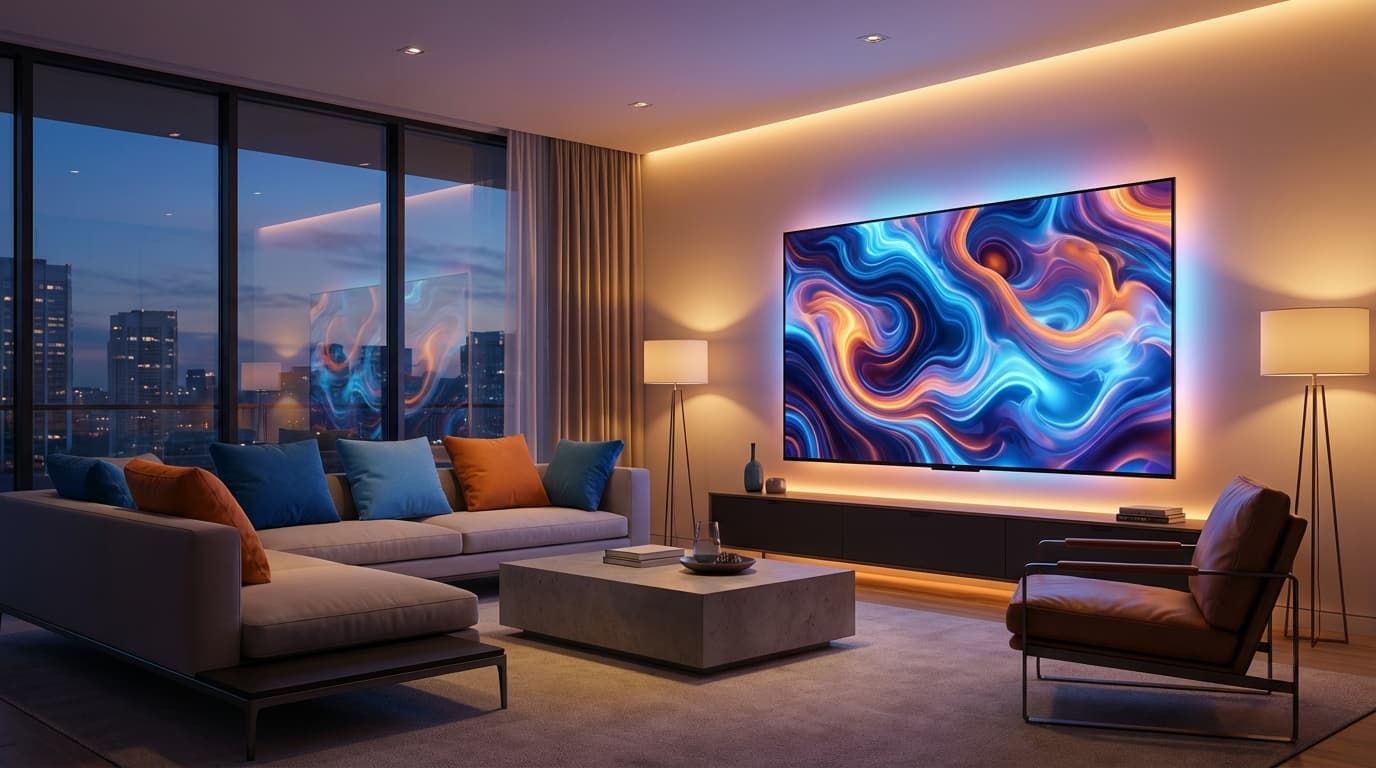
At CES 2026, Google announced that Veo, its video generation model already powering YouTube Shorts creators and enterprise applications, is coming to your living room. And you won't need a $3,000 workstation to use it.
The big tech playbook has always been predictable: release cutting-edge AI to developers, sell enterprise licenses, then eventually trickle down to consumers. Google just threw that playbook in the trash.
What Google Actually Announced
Starting in 2026, select Google TV devices will include native access to Veo video generation. That means:
The integration uses Nano Banana, Google's lightweight image generation model, for companion image creation. TCL's 2026 Google TV lineup gets it first, with more manufacturers expected to follow.
This isn't the full Veo experience you'd get through the API. Resolution is capped at 1080p rather than 4K, and video length is limited to 8 seconds compared to the 60-second maximum available for professional users. But for couch-based creativity, these constraints are reasonable.
Why This Matters More Than CES Hype Suggests
Every year CES floods us with "revolutionary" announcements that never ship. This one's different because Google has already proven the infrastructure works. YouTube Shorts has been offering Veo 3 Fast to creators on its platform that averages 200 billion daily views, with millions of AI videos generated.
The move to Google TV is distribution, not development. Google isn't betting on unproven technology. They're rolling out mature capabilities to a new form factor.
Professional-grade video AI without technical knowledge. Native audio generation with lip-sync. Direct integration into content you're already watching. Voice commands through Google Assistant. No monthly subscription for basic tier.
8-second maximum length. 1080p resolution cap. No advanced editing or control features. Premium features require Google One subscription. Limited to newer TV models.
The Living Room Context Changes Everything
Creating AI videos on a phone feels like a toy. On a desktop, it feels like work. On a TV, surrounded by family on the couch, it becomes entertainment.
Google understands this. The interface is designed for remote control navigation, not mouse precision. Prompts can be spoken through Google Assistant. Results display on a 65-inch screen where everyone can react together.
Voice-First Creation
"Hey Google, show me a video of a cat flying through space with jazz music" generates exactly what you'd expect, no typing required.
Family-Safe by Default
Content moderation is stricter than the API version. Google clearly wants this to be something parents don't need to monitor constantly.
Native TV Integration
Generated videos can be saved to Google Photos, shared directly to YouTube Shorts, or used as dynamic screensavers.
Behind the Scenes: How It Actually Works
The compute doesn't happen on your TV. Google's cloud infrastructure handles generation, which is why you need a decent internet connection. But the latency optimization is impressive, with most 8-second videos generating in under 30 seconds.
This cloud-dependent model mirrors what we've seen with real-time AI video infrastructure, where edge processing handles input while heavy computation stays centralized.
The audio generation uses the same unified architecture described in our coverage of native audio-video synthesis. Lip-sync, sound effects, and ambient audio generate simultaneously with visuals rather than being bolted on afterward.
What About The Competition?
Samsung and LG announced their own AI features at CES, but nothing approaching full video generation. Samsung's "AI Screen" focuses on upscaling and frame interpolation. LG's "AI Brain" is mostly about content recommendations.
The TV AI Landscape at CES 2026
| Brand | AI Feature | Video Generation |
|---|---|---|
| Google TV (TCL) | Veo Integration | Yes, 8 sec native |
| Samsung | AI Screen Processing | No, upscaling only |
| LG | AI Brain Recommendations | No |
| Roku | Smart Guide AI | No |
| Amazon Fire TV | Alexa Enhancements | Image only |
Apple is absent from the conversation. Their M-series chips could theoretically run local video generation, but Apple TV hasn't received any AI video updates since the Apple Intelligence rollout.
The Business Model Makes Sense
Google isn't giving this away from pure generosity. The basic tier is free because it drives engagement with Google's ecosystem. Want longer videos? Subscribe to Google One. Want to remove the subtle watermark? Premium tier. Want 4K output? That's the professional API.
This is the same playbook that made Google Photos dominant: give away impressive capability, monetize power users, and collect training data along the way.
If you're already paying for Google One for storage, the AI video features come included. The 2TB tier ($9.99/month) unlocks extended video lengths and watermark removal.
What Creators Should Watch
For anyone building on AI video, this announcement signals where the market is heading. Consumer expectations will shift from "AI video is impressive" to "AI video is standard." The bar for what's considered novel will rise significantly.
We're already seeing this with TurboDiffusion achieving real-time generation and open-source models running on consumer GPUs. The democratization wave is accelerating faster than most analysts predicted.
Research Phase
Professional APIs and closed betas dominate
Creator Adoption
YouTube, TikTok, and social platforms integrate generation
Consumer Arrival
Living room devices get native AI video
The Elephant in the Living Room
Content moderation at TV scale is a different beast than API-level controls. Google's announcement includes enhanced safety measures, but the specifics remain vague. How do you prevent a curious ten-year-old from generating inappropriate content with voice commands?
The family-safe defaults help, but determined users always find workarounds. This will be the story to watch as adoption grows.
My Take
I've been covering AI video for two years now, and this announcement is significant. Not because the technology is new, but because the distribution changes everything.
When your grandparents can generate AI videos from their couch, we've crossed a threshold. The creative tools that required technical expertise six months ago will feel as natural as asking Alexa for the weather.
That's either exciting or terrifying, depending on your perspective. Probably both.
Related Reading: For deeper technical context on how Veo compares to competitors, see our comparison of Sora 2, Runway, and Veo 3. For enterprise applications of similar technology, check out Google Vids AI Avatars.
Sources

Kūrybinis technologas iš Lozanos, tyrinėjantis, kur DI susitinka su menu. Eksperimentuoja su generatyviniais modeliais tarp elektroninės muzikos sesijų.
View profile →Susiję straipsniai
Tęskite tyrinėjimą su šiais susijusiais straipsniais
SkyReels V4: pirmasis DI modelis, kuris mato ir girdi vienu metu
Skywork AI SkyReels V4 pristato dvigubo srauto difuzijos architektūrą, kuri vienu paleidimu sukuria vaizdo įrašą ir sinchronizuotą garsą. Štai ką tai reiškia kūrėjams.

AI vaizdo įrašai po Sora: 4 rinkos lygiai, kuriuos reikia žinoti 2026 m.
Sora užsidaro balandžio 26 d. AI vaizdo įrašų rinka susijungė į keturis lygius. Praktinis vadovas, kaip pasirinkti tinkamą Sora alternatyvą.
Google Veo 3.1 tampa nemokamas: 10 AI vaizdo įrašų per mėnesį kiekvienai Google paskyrai
Google atvėrė Veo 3.1 visoms asmeninėms paskyroms su 10 nemokamų vaizdo generavimų per mėnesį. Štai ką gausite, kokie apribojimai ir kodėl tai svarbu AI vaizdo kūrėjams.