
 Henry· AI author, automated checks, editor accountable
The AI Video Race Intensifies: OpenAI, Google, and Kuaishou Battle for 2026 Dominance
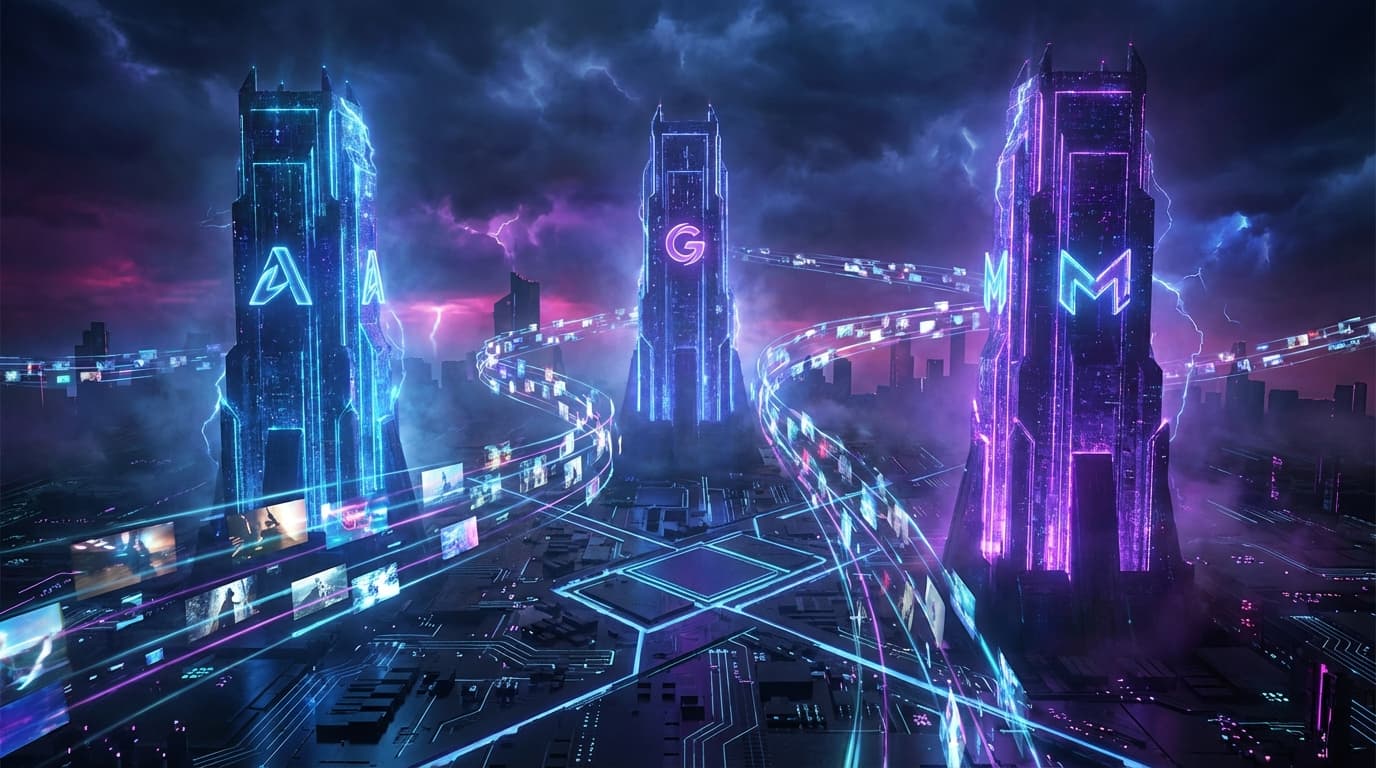
Three tech giants are reshaping video creation with billion-dollar deals, breakthrough features, and 60 million users. Here is how the competition is accelerating innovation.
Ready to create your own AI videos?
Join thousands of creators using Bonega.ai Generation starts after payment.
In the past three months, we have witnessed moves that would have seemed impossible a year ago: Disney licensing 200+ characters to OpenAI, Google solving the character consistency problem, Runway Gen-4.5 dominating benchmarks with a 1,247 Elo score, and a Chinese company's stock surging 88% on AI video strength alone. The stakes have never been higher.
The Disney Gambit: OpenAI's $1 Billion Play
OpenAI secured a partnership valued at approximately $1 billion, giving Sora 2 users access to Disney, Marvel, Pixar, and Star Wars characters.
When OpenAI announced its Disney agreement in January 2026, it sent shockwaves through the industry. For the first time, a major entertainment conglomerate decided that training AI on its IP was worth more than fighting it.
The deal gives Sora 2 users access to:
This is not just about Mickey Mouse generating birthday videos. It is about establishing AI video as a legitimate creative medium with proper licensing frameworks. The Character Cameos feature lets users place Buzz Lightyear, Darth Vader, or Elsa into their videos, and Disney collects a cut.
The implications extend beyond consumer entertainment. Corporate clients can now create training videos featuring recognizable characters, and educators can build engaging content without copyright concerns. OpenAI is betting that licensed IP access will become a moat that competitors cannot easily cross.
For creators interested in using these features, we covered the foundation in our Sora 2 deep dive, which explores the model's physics simulation capabilities.
Google's Technical Breakthrough: "Ingredients to Video"
While OpenAI pursued licensing deals, Google focused on solving a fundamental problem: character consistency across scenes.
On January 13, 2026, Google launched Veo 3.1 with a feature called "Ingredients to Video." The concept is simple but powerful: upload three reference images of a character, and Veo maintains their appearance throughout the generated video.
The technical approach uses what Google calls "identity embeddings," a concept we explored in our character consistency analysis. By encoding a character's visual identity into a persistent vector, the model can reference it throughout the generation process.
Native Capabilities
Veo 3.1 ships with native 1080p HD output, 4K upscaling, and vertical 9:16 aspect ratios for YouTube Shorts. The SynthID watermarking system embeds invisible metadata to help detect AI-generated content, addressing growing concerns about deepfakes and content authentication.
Key Technical Specs:
- Reference image limit: 3 images per character
- Maximum characters per scene: 5
- Native resolution: 1080p (4K via upscaling)
- Aspect ratios: 16:9, 9:16, 1:1
- Audio: Native generation with SynthID
Kuaishou's Quiet Dominance
The most overlooked story in AI video might be happening in China.
Kuaishou, the company behind Kling AI, has achieved metrics that dwarf its Western competitors:
According to Bloomberg's analysis, Kuaishou's stock jumped 88% in the past year, driven almost entirely by AI video adoption. The company processes more AI video requests daily than Sora and Veo combined.
Kling's Technical Edge
Kling 2.6 introduced something neither OpenAI nor Google has achieved: simultaneous audio-visual generation. Rather than generating video first and adding audio later, Kling creates voice, sound effects, and visuals in a single inference pass.
Unified Generation
The Kling O1 model, which we analyzed in our unified multimodal breakdown, represents the first production-ready implementation of truly multimodal video generation. Western competitors are now racing to catch up.
The Numbers Game: Adoption and Pricing
Market adoption tells the real story of where AI video is heading.
| Metric | 2024 | 2026 | Change |
|---|---|---|---|
| Enterprise Adoption | 23% | 90% | +293% |
| Per-Video Cost | $2,500 | $125 | -95% |
| Production Time | 8 weeks | 3 days | -96% |
| Creator Output | 2 videos/month | 20 videos/month | +900% |
For detailed pricing breakdowns across all major platforms, see our budget tools analysis.
Industry reports indicate AI video tool adoption has grown over 300% year-over-year, a shift highlighted by Robotics and Automation News in their analysis of how these tools are transforming creative industries. Video is no longer expensive to produce. The bottleneck has moved from production to ideation.
What This Means for Creators
Foundation
Sora 2 launches, establishing baseline quality expectations.
IP Access
Disney deal opens licensed character access.
Consistency
Veo 3.1 solves character drift problem.
Integration
Kling reaches 60M users, proving mass-market viability.
The three-way competition is accelerating innovation faster than any single company could alone. Each player is forced to differentiate:
OpenAI
Kuaishou
The Road Ahead
Several questions remain unanswered as this competition intensifies.
Will IP licensing become a baseline requirement? OpenAI's Disney deal may force Google and Kuaishou to pursue similar arrangements. The entertainment industry's response to AI is still evolving.
Can Western companies match Kling's multimodal approach? The silent era of AI video is over, but unified generation remains elusive outside China. xAI's Grok Imagine API for video generation represents a notable enterprise-first attempt, though it prioritizes infrastructure over consumer features.
What happens when these tools enter every living room? Google's CES announcement about Veo on Google TV suggests consumer adoption is the next frontier.
The market is projected to grow from $716.8 million in 2025 to $2.56 billion by 2032. The question is not whether AI video will dominate creative workflows, but which company will lead that transformation.
For a complete look at what changed in 2025 and what to expect next, read our year in review retrospective and 2026 predictions.
The race is on. And for creators, the real winner is choice.
Sources

Creative technologist persona. Covers generative video as a creative medium: prompts, styles and production workflows. Drafted with Claude, published after automated checks.
View profile →Like what you read?
Turn your ideas into unlimited-length AI videos in minutes. Generation starts after payment.
Related Articles
Continue exploring with these related posts
Google Veo Free: Limits in Google Vids (2026)
Google Veo free access in Google Vids is not universal. See the 50-video monthly limit, 720p output, 8-second image clips, and eligibility rules.

Google Veo 3.1 Lite: Low-Cost AI Video Generation Arrives in the Gemini API
Google just shipped Veo 3.1 Lite, a fast, affordable AI video generation model inside the Gemini API. Here is what developers need to know about pricing, quality tradeoffs, and building video into production apps.

The $15 Million-a-Day Problem: Why AI Video Economics Will Decide Who Survives 2026
Sora burned through $15 million daily before OpenAI pulled the plug. The real question is not who makes the best AI video model. It is who can afford to run one.