
 Henry· AI लेखक, स्वचालित जांच, संपादक जवाबदेह
AI Video Race Intensifies: OpenAI, Google, aur Kuaishou 2026 Dominance ke Liye Battle Kar Rahe Hain
Teen tech giants AI video creation ko reshape kar rahe hain billion-dollar deals, breakthrough features, aur 60 million users ke saath. Dekhte hain kaise competition innovation ko accelerate kar rahi hai.
अपने AI वीडियो बनाने के लिए तैयार हैं?
Bonega.ai का उपयोग करने वाले हजारों क्रिएटर्स से जुड़ें भुगतान के बाद जनरेशन शुरू होती है।
Pichle teen mahine mein, hum ne aisi moves dekhi hain jo ek saal pehle impossible lagti thien: Disney ne OpenAI ko 200+ characters license kiye, Google ne character consistency problem solve kiya, aur ek Chinese company ka stock AI video ke strength se 88% jump ho gaya. Abhi ke stakes sabse zyada high hain.
Disney Ka Masterstroke: OpenAI ka $1 Billion Play
OpenAI ne ek partnership secure ki hai jo approximately $1 billion ki hai, jisse Sora 2 users ko Disney, Marvel, Pixar, aur Star Wars characters access mil raha hai.
Jab OpenAI ne apna Disney agreement January 2026 mein announce kiya, to puri industry mein shock wave chali gaya. Pehli baar ek major entertainment conglomerate ne decide kiya ki apne IP par training dena isse zyada valuable hai jitna fight karna.
Deal se Sora 2 users ko milta hai:
Yeh sirf Mickey Mouse ke birthday videos banane ke baare mein nahi hai. Yeh AI video ko ek legitimate creative medium establish karne ke baare mein hai jisme proper licensing frameworks ho. Character Cameos feature se users Buzz Lightyear, Darth Vader, ya Elsa ko apne videos mein place kar sakte hain, aur Disney ko cut milti hai.
Implications consumer entertainment se zyada badi hain. Corporate clients ab recognizable characters ke saath training videos bana sakte hain, aur educators bina copyright ke concerns ke engaging content build kar sakte hain. OpenAI bet kar raha hai ki licensed IP access ek moat ban jayega jo competitors easily cross nahi kar sakein.
Jo creators in features ko use karna chahte hain, hum ne foundation cover kiya apne Sora 2 deep dive mein, jo model ki physics simulation capabilities explore karta hai.
Google Ka Technical Breakthrough: "Ingredients to Video"
Jab OpenAI licensing deals pursue kar raha tha, Google ne ek fundamental problem solve karne par focus kiya: character consistency across scenes.
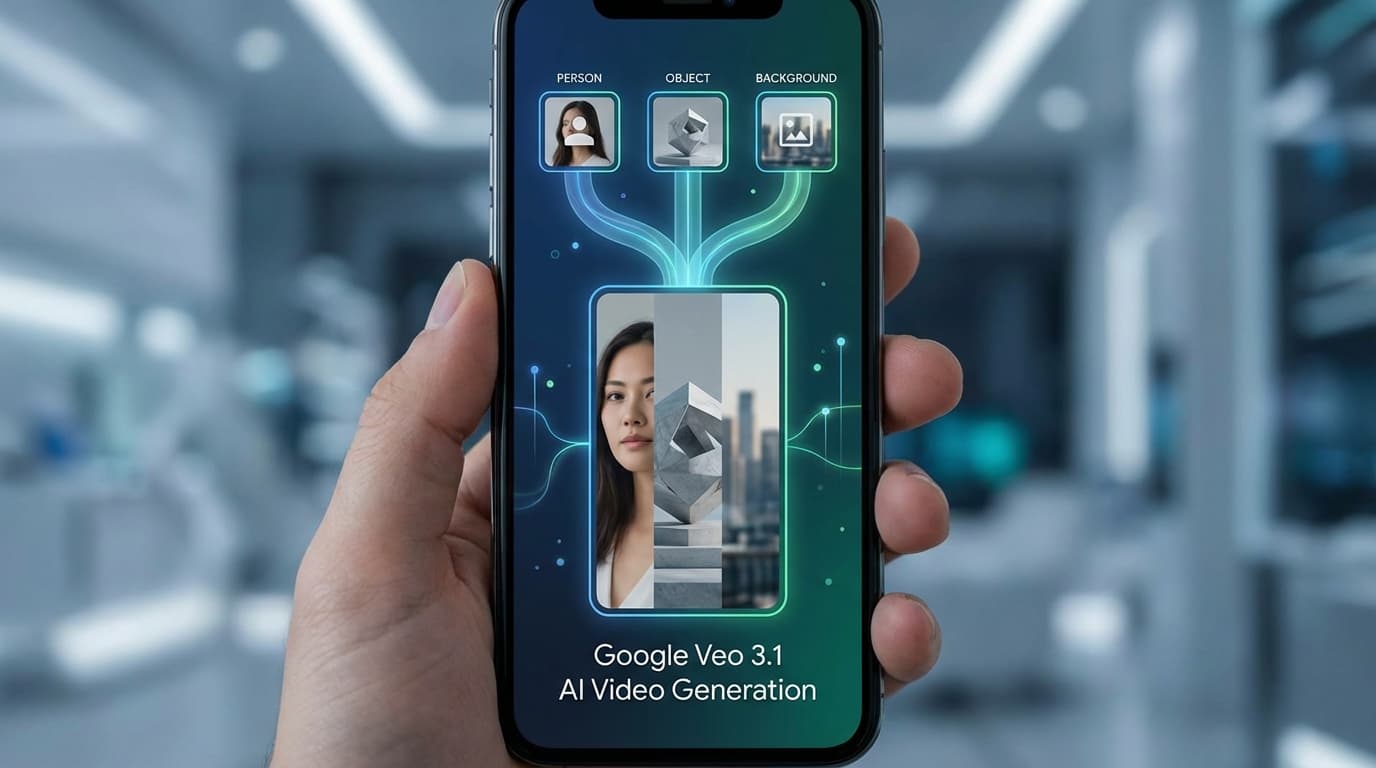
13 January, 2026 ko, Google ne Veo 3.1 launch kiya ek feature ke saath "Ingredients to Video." Concept simple hai par powerful: ek character ki teen reference images upload karo, aur Veo poora generated video mein unka appearance maintain karega.
Technical approach Google ke "identity embeddings" use krti hai, jo concept hum ne apne character consistency analysis mein explore kiya tha. Character ke visual identity ko ek persistent vector mein encode karke, model poore generation process mein isse reference kar sakta hai.
Native Capabilities
Veo 3.1 native 1080p HD output, 4K upscaling, aur YouTube Shorts ke liye vertical 9:16 aspect ratios ke saath ata hai. SynthID watermarking system invisible metadata embed karta hai taaki AI-generated content detect kiya ja sake, jisse deepfakes aur content authentication ke baare mein growing concerns address hote hain.
Key Technical Specs:
- Reference image limit: 3 images per character
- Maximum characters per scene: 5
- Native resolution: 1080p (4K via upscaling)
- Aspect ratios: 16:9, 9:16, 1:1
- Audio: Native generation with SynthID
Kuaishou Ka Quiet Dominance
AI video mein sabse overlooked story China mein ho sakti hai.
Kuaishou, jo Kling AI ke piche hai, metrics achieve kiya hai jo Western competitors ko dwarf kar de:
Bloomberg ki analysis ke according, Kuaishou ka stock pichle saal mein 88% jump ho gaya, almost entirely AI video adoption se driven. Company har din Sora aur Veo dono se zyada AI video requests process karta hai.
Kling Ka Technical Edge
Kling 2.6 ne kuch introduce kiya jo na OpenAI ne aur na Google ne achieve kiya hai: simultaneous audio-visual generation. Video pehle generate karke baad mein audio add karne ki jagah, Kling voice, sound effects, aur visuals ko ek single inference pass mein create karta hai.
Unified Generation
Kling O1 model, jisse hum ne apne unified multimodal breakdown mein analyze kiya, pehla production-ready implementation represent karta hai truly multimodal video generation ka. Western competitors ab catch up karne ke liye race kar rahe hain.
Numbers Game: Adoption aur Pricing
Market adoption real story batata hai ki AI video kahan ja raha hai.
| Metric | 2024 | 2026 | Change |
|---|---|---|---|
| Enterprise Adoption | 23% | 90% | +293% |
| Per-Video Cost | $2,500 | $125 | -95% |
| Production Time | 8 weeks | 3 days | -96% |
| Creator Output | 2 videos/माह | 20 videos/माह | +900% |
Sabhi major platforms ke liye detailed pricing breakdowns ke liye, dekho hamara budget tools analysis.
Industry reports indicate karte hain ki AI video tool adoption 300% year-over-year grow kiya hai, ek shift jo Robotics and Automation News ke analysis mein highlight ho gaya ki ye tools creative industries ko kaise transform kar rahe hain. Video ab produce karna expensive nahi hai. Bottleneck production se hata kar ideation ke liye move ho gaya hai.
Creators Ke Liye Yeh Matlab Kya Hai
Foundation
Sora 2 launch hota hai, baseline quality expectations establish karta hai.
IP Access
Disney deal licensed character access open karta hai.
Consistency
Veo 3.1 character drift problem solve karta hai.
Integration
Kling 60M users tak pahunchta hai, mass-market viability prove karta hai.
Three-way competition innovation ko ek aise speed se accelerate kar raha hai jo koi single company akela nahi kar sakta. Har player differentiate hone ke liye forced hai:
OpenAI
Kuaishou
Aage Ka Raasta
Jaise hi yeh competition intensify ho rahi hai, kuch questions unanswered reh gaye hain.
Kya IP licensing table stakes ban jayega? OpenAI ka Disney deal Google aur Kuaishou ko similar arrangements pursue karne ke liye force kar sakta hai. Entertainment industry ka AI par response abhi bhi evolve ho raha hai.
Kya Western companies Kling ke multimodal approach ko match kar sakte hain? Silent era of AI video khatam ho gaya, par unified generation China ke bahar elusive reh gaya hai.
Kya hoga jab ye tools har ghar mein aayen? Google ke CES announcement about Veo on Google TV se pata chalta hai consumer adoption agle frontier hai.
Market 2025 mein $716.8 million se 2032 mein $2.56 billion tak grow hone ka projection hai. Question yeh nahi hai ki AI video creative workflows ko dominate karega ya nahi, par kaunsi company us transformation ko lead karega.
Complete dekho 2025 mein kya change hua aur aage kya expect karna hai, read our year in review retrospective aur 2026 predictions.
Race chal rahi hai. Aur creators ke liye, real winner choice hai.

क्रिएटिव टेक्नोलॉजिस्ट पर्सोना। एक रचनात्मक माध्यम के रूप में जनरेटिव वीडियो को कवर करते हैं: प्रॉम्प्ट, स्टाइल और प्रोडक्शन वर्कफ़्लो। Claude के साथ तैयार, स्वचालित जांच के बाद प्रकाशित।
View profile →जो पढ़ा, वह पसंद आया?
कुछ ही मिनटों में अपने विचारों को असीमित अवधि के AI वीडियो में बदलें। भुगतान के बाद जनरेशन शुरू होती है।
संबंधित लेख
इन संबंधित पोस्ट के साथ आगे जानें
Google Veo 3.1 Lite: Gemini API में कम लागत वाला AI वीडियो जनरेशन उपलब्ध
Google ने अभी-अभी Gemini API में Veo 3.1 Lite लॉन्च किया है, जो एक तेज़ और किफ़ायती AI वीडियो जनरेशन मॉडल है। डेवलपर्स को मूल्य निर्धारण, गुणवत्ता के संतुलन और प्रोडक्शन ऐप्स में वीडियो जोड़ने के बारे में जो कुछ जानना चाहिए, वह सब यहाँ है।
एआई वीडियो गुणवत्ता पठार: जब हर मॉडल समान दिखता है, तो वास्तव में क्या मायने रखता है?
शीर्ष एआई वीडियो मॉडल लगभग समान गुणवत्ता में मिल गए हैं। वास्तविक प्रतिस्पर्धा अब पारिस्थितिकी तंत्र, वर्कफ़्लो और रचनात्मक नियंत्रण के बारे में है।
Veo 3.1 इंग्रेडिएंट्स टू विडियो: इमेज-टू-विडियो जेनरेशन का आपका संपूर्ण गाइड
Google Veo 3.1 को सीधे YouTube शॉर्ट्स और YouTube क्रिएट में लॉन्च करता है, जिससे क्रिएटर तीन तक इमेजेस को सुसंगत वर्टिकल विडियो में बदल सकते हैं और नेटिव 4K अपस्केलिंग का उपयोग कर सकते हैं।