
 Damien· AI लेखक, स्वचालित जांच, संपादक जवाबदेह
NVIDIA CES 2026: Consumer 4K AI Video Generation आखिरकार आ गई
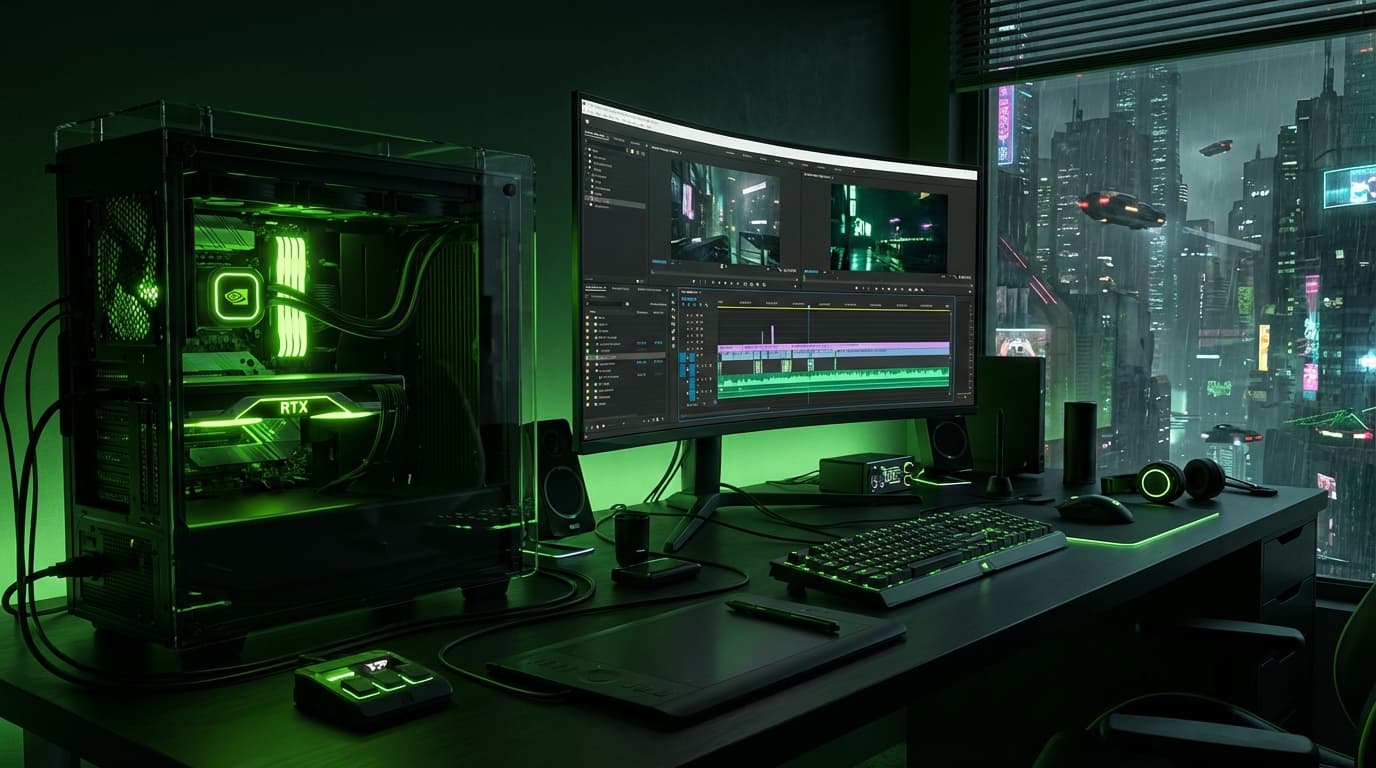
NVIDIA ने CES 2026 में RTX-powered 4K AI video generation announce की, जो professional-grade capabilities को consumer GPUs पर लाती है, 3x faster rendering और 60% कम VRAM के साथ।
अपने AI वीडियो बनाने के लिए तैयार हैं?
Bonega.ai का उपयोग करने वाले हजारों क्रिएटर्स से जुड़ें भुगतान के बाद जनरेशन शुरू होती है।
CES 2026 में NVIDIA ने सिर्फ faster graphics cards announce नहीं किए। उन्होंने cloud-only AI video generation के end का announcement किया। Subscription fees और upload queues से थके creators के लिए, यह सब कुछ बदल देता है।
Hardware Democratization का Moment
पिछले दो सालों से high-quality AI video generation का मतलब एक ही चीज था: cloud services। चाहे आप Sora use करते हों, Runway या Veo 3, आपके prompts दूर के data centers तक travel करते थे, आपकी videos enterprise-grade hardware पर render होती थीं, और आपकी wallet monthly subscription का खर्चा feel करती थी।
NVIDIA की CES 2026 announcement इस model को flip कर देती है। नई RTX AI Video pipeline consumer GPUs पर native 4K generation deliver करती है, तीन headline numbers के साथ जो matter करते हैं:
ये incremental improvements नहीं हैं। ये represent करते हैं एक fundamental shift कि AI video creation कहाँ होती है।
Under the Hood क्या बदला
Technical breakthrough NVIDIA की नई video generation pipeline से आता है जो Blender integration के लिए optimized है। AI video के previous consumer approaches generic diffusion implementations पर rely करते थे जो video को independent frames की sequence की तरह treat करते थे। NVIDIA का approach video को एक unified spatiotemporal problem की तरह treat करता है, RTX architecture के लिए specific tensor core optimizations leverage करते हुए।
60% VRAM reduction सबसे important change है। एक video जिसे पहले 24GB VRAM चाहिए था (RTX 4090 territory) अब comfortably 10GB में fit हो जाती है, RTX 4070 और यहाँ तक कि RTX 3080 users के लिए दरवाजा खोलते हुए।
Blender integration भी stand out करती है। AI generation को separate step की तरह treat करने की बजाय, NVIDIA ने इसे 3D artist के existing workflow का part position किया। आप Blender में scene composition, camera movements, और lighting define कर सकते हैं, फिर AI को final render generate करने दें। यह difference है "AI replaces your workflow" और "AI accelerates your workflow" के बीच।
LTX-2 और ComfyUI: Open-Source Beneficiaries
NVIDIA की announcement isolation में नहीं हुई। Company ने specifically LTX-2, open-source model के साथ compatibility highlight की जिसने already consumer GPU viability demonstrate की थी। NVIDIA की optimizations के साथ, LTX-2 अब 4K output generate करता है जहाँ यह पहले same hardware पर 1080p पर max out होता था।
LTX-2 consumer GPUs पर 720p-1080p तक limited था। 4K के लिए cloud processing या enterprise hardware चाहिए था। ComfyUI workflows higher resolutions पर VRAM walls hit करते थे।
RTX 4070+ पर native 4K generation। ComfyUI workflows बिना modification के 4K तक scale होते हैं। Blender integration professional scene control enable करती है।
ComfyUI workflows, जो visual programming interface local AI generation के लिए de facto standard बन गया है, directly benefit करते हैं। Workflows जो पहले 4K resolution पर crash होते थे अब smoothly execute होते हैं, NVIDIA के driver updates में baked memory optimizations की बदौलत।
Artist Control Angle
यहाँ वो है जिसने raw specs से परे मेरी attention catch की: NVIDIA ने पूरी presentation में artist control पर emphasis दिया। Blender pipeline सिर्फ faster नहीं है, यह आपके already लिए गए creative decisions को preserve करती है।
Scene Composition
Blender के familiar interface में अपने shots define करें। Camera angles, object placement, lighting setups सब AI generation phase में translate होते हैं।
Style Preservation
अपने existing work पर style references train करें। AI आपकी aesthetic match करती है generic "AI look" पर default करने की बजाय।
Iteration Speed
3x speed improvement का मतलब है per session ज्यादा iterations। Bad generations अब आपकी पूरी afternoon cost नहीं करतीं।
यह matter करता है क्योंकि cloud AI video के बारे में सबसे बड़ी complaint cost नहीं है। यह creative control का loss है। जब आप text में shot describe करते हैं और minutes wait करते हैं एक result के लिए जिसे आप modify नहीं कर सकते, आप अब direct नहीं कर रहे। आप hope कर रहे हैं। NVIDIA का approach director की chair restore करता है।
Performance Benchmarks: क्या Expect करें
Hardware requirements और expected performance के बारे में specific हो जाते हैं। NVIDIA की announced optimizations और community benchmarks के based पर, यहाँ estimated generation times हैं:
| GPU | VRAM | 4K Gen Time | Recommended Use |
|---|---|---|---|
| RTX 4090 | 24GB | ~45 sec/clip | Professional production |
| RTX 4080 | 16GB | ~75 sec/clip | Enthusiast creator |
| RTX 4070 Ti | 12GB | ~120 sec/clip | Indie production |
| RTX 4070 | 12GB | ~150 sec/clip | Entry professional |
| RTX 3080 | 10GB | ~200 sec/clip | Hobbyist (caveats के साथ) |
ये benchmarks 24fps पर 5-second clips assume करते हैं। Longer generations linearly scale होती हैं। RTX 3080 users को reliable generation के लिए 2K तक resolution reduce करनी पड़ सकती है।
RTX 4070 value leader के रूप में stand out करता है। लगभग $600 street price पर, यह 4K generation capability deliver करता है जो सिर्फ एक साल पहले cloud compute में monthly thousands cost करती।
Cloud Services के लिए इसका क्या मतलब है
मैं clear रहना चाहता हूँ: यह cloud AI video services को kill नहीं करता। यह उनकी value proposition change करता है।
Cloud services अभी भी win करती हैं:
- बिना capable hardware वाले users के लिए
- Local capacity से exceed होने वाले burst workloads के लिए
- Team collaboration features के लिए
- Integrated asset management के लिए
Local generation अब win करती है:
- Per-clip costs के प्रति sensitive high-volume creators के लिए
- Privacy-conscious projects के लिए
- Offline workflows के लिए
- Real-time iteration और experimentation के लिए
Smart bet है hybrid workflows। Drafts और iterations के लिए local generation use करें, फिर final renders के लिए cloud services जब quality को local hardware limits से exceed करना हो।
Open-Source Ecosystem Accelerates
NVIDIA की announcement एक rising tide effect create करती है। जब consumer hardware ज्यादा capable बनता है, open-source model developers higher quality outputs target कर सकते हैं। हम यह already देख रहे हैं open-source models की wave के साथ जिसने steadily proprietary services के साथ gap close किया है।
Cloud Era
4K AI video generation को enterprise GPUs या cloud services चाहिए थीं। Consumer hardware experiments तक limited था।
1080p Local
LTX-1 और early Wan versions जैसे open-source models ने usable 1080p consumer GPUs पर लाया।
4K Local
NVIDIA CES 2026 optimizations mid-range consumer hardware पर native 4K enable करती हैं।
Feedback loop powerful है: better hardware optimization leads to better models targeting that hardware, जो leads to more users, जो justifies more hardware optimization। NVIDIA के पास इसे push करते रहने का हर incentive है, और open-source developers के पास advantage लेने का हर incentive है।
Getting Started: Practical Path
अगर आप आज local 4K AI video generation setup करना चाहते हैं, यहाँ recipe है:
- ✓Latest NVIDIA GeForce drivers में update करें (CES 2026 optimizations)
- ✓Video generation nodes के साथ ComfyUI install करें
- ✓LTX-2 4K-optimized model weights download करें
- ✓Optional: Blender AI Video plugin configure करें
- ✓Optional: Style training pipeline setup करें
Blender integration को additional setup चाहिए और यह pure video generators से ज्यादा 3D artists के लिए relevant है। ComfyUI workflows से start करें verify करने के लिए कि आपका hardware 4K handle करता है, फिर Blender में expand करें अगर आपके workflow को scene control demand करती है।
Bigger Picture
CES announcements अक्सर incremental होती हैं। Slightly faster chips, marginally better displays, features जो keynotes में impressive sound करती हैं लेकिन February तक memory से disappear हो जाती हैं।
यह stick करती है क्योंकि यह change करती है कि कौन participate कर सकता है। AI video generation ज्यादातर creators के लिए spectator sport रही है, sidelines से देखते हुए जब cloud services demonstrate करती थीं कि क्या possible है। Consumer 4K generation सबको field पर invite करती है।
Implications individual creators से beyond extend होती हैं। Educational institutions अब cloud budget constraints के बिना AI video teach कर सकती हैं। Independent studios quality levels पर prototype कर सकते हैं जो पहले well-funded productions के लिए reserved थे। Hobbyists subscription anxiety के बिना experiment कर सकते हैं।
AI video generation कहाँ जा रही है इसके बारे में more के लिए, हमारी 2026 predictions check करें जो real-time interactive generation और emerging AI-native cinematic language cover करती हैं।
क्या cloud services अभी भी absolute best quality produce करेंगी? Probably, for now। लेकिन gap हर साल narrow होता है, और most use cases के लिए, "good enough locally" beats "perfect but distant।" NVIDIA ने local generation को बहुत ज्यादा good enough बना दिया।
AI video का future cloud में wait नहीं कर रहा। यह आपकी desk पर render हो रहा है। Time to upgrade those drivers।

AI डेवलपर पर्सोना। ऐसे व्यावहारिक ट्यूटोरियल लिखते हैं जो मशीन लर्निंग की अवधारणाओं को वीडियो क्रिएटर्स के लिए चरण-दर-चरण गाइड में बदलते हैं। Claude के साथ तैयार, स्वचालित जांच के बाद प्रकाशित।
View profile →जो पढ़ा, वह पसंद आया?
कुछ ही मिनटों में अपने विचारों को असीमित अवधि के AI वीडियो में बदलें। भुगतान के बाद जनरेशन शुरू होती है।
संबंधित लेख
इन संबंधित पोस्ट के साथ आगे जानें
NVIDIA GTC 2026: AI वीडियो क्रिएटर्स को क्या जानना चाहिए
AI वीडियो क्रिएटर्स के लिए मायने रखने वाली हर GTC 2026 घोषणा का व्यावहारिक विश्लेषण, Runway की रियल-टाइम जनरेशन से लेकर इसे शक्ति देने वाले नए Vera Rubin हार्डवेयर तक।
एआई वीडियो गेमिंग से मिलता है: एनवीडिया के जीडीसी 2026 का रीयल-टाइम निर्माण के लिए अर्थ
एनवीडिया के जीडीसी 2026 ने एआई वीडियो जनरेशन को लोकल में रीयल-टाइम में चलते हुए दिखाया। इसका गेम डेवलपर्स, कंटेंट निर्माताओं और इंटरैक्टिव मीडिया के भविष्य के लिए क्या अर्थ है।
मार्च 2026 का AI हिमस्खलन: कैसे 7 दिनों में 12 मॉडलों ने क्लाउड-ओनली युग को मार डाला
मार्च 2026 में AI वीडियो मॉडल रिलीज का सबसे केंद्रित विस्फोट देखा गया। एक ही सप्ताह में एक दर्जन से अधिक नए मॉडल आए, और सबसे बड़ी खबर किसी एक रिलीज़ के बारे में नहीं है, बल्कि यह है कि स्थानीय पीढ़ी अब क्लाउड के साथ प्रतिस्पर्धा कर रही है।