
 Damien· AI लेखक, स्वचालित जांच, संपादक जवाबदेह
Parallelized Diffusion: AI Image Generation Kaise Quality Aur Resolution Barriers Tod Rahi Hai
Parallelized diffusion architectures explore karo jo ultra-high resolution image generation aur complex multi-element compositions enable karte hain. Technical breakthrough mein deep dive jo AI image synthesis redefine kar rahi hai.
अपने AI वीडियो बनाने के लिए तैयार हैं?
Bonega.ai का उपयोग करने वाले हजारों क्रिएटर्स से जुड़ें भुगतान के बाद जनरेशन शुरू होती है।
AI image generation landscape ne abhi ek breakthrough experience kiya. Jabki DALL-E 3 1792x1024 resolution par max out hota hai aur Midjourney artistic style par focus karta hai, naye parallelized diffusion architectures unprecedented detail consistency ke saath ultra-high resolution outputs achieve kar rahe hain. Secret? Ek parallelized approach jo fundamentally reimagine karti hai ki AI models complex visual content kaise generate karte hain.
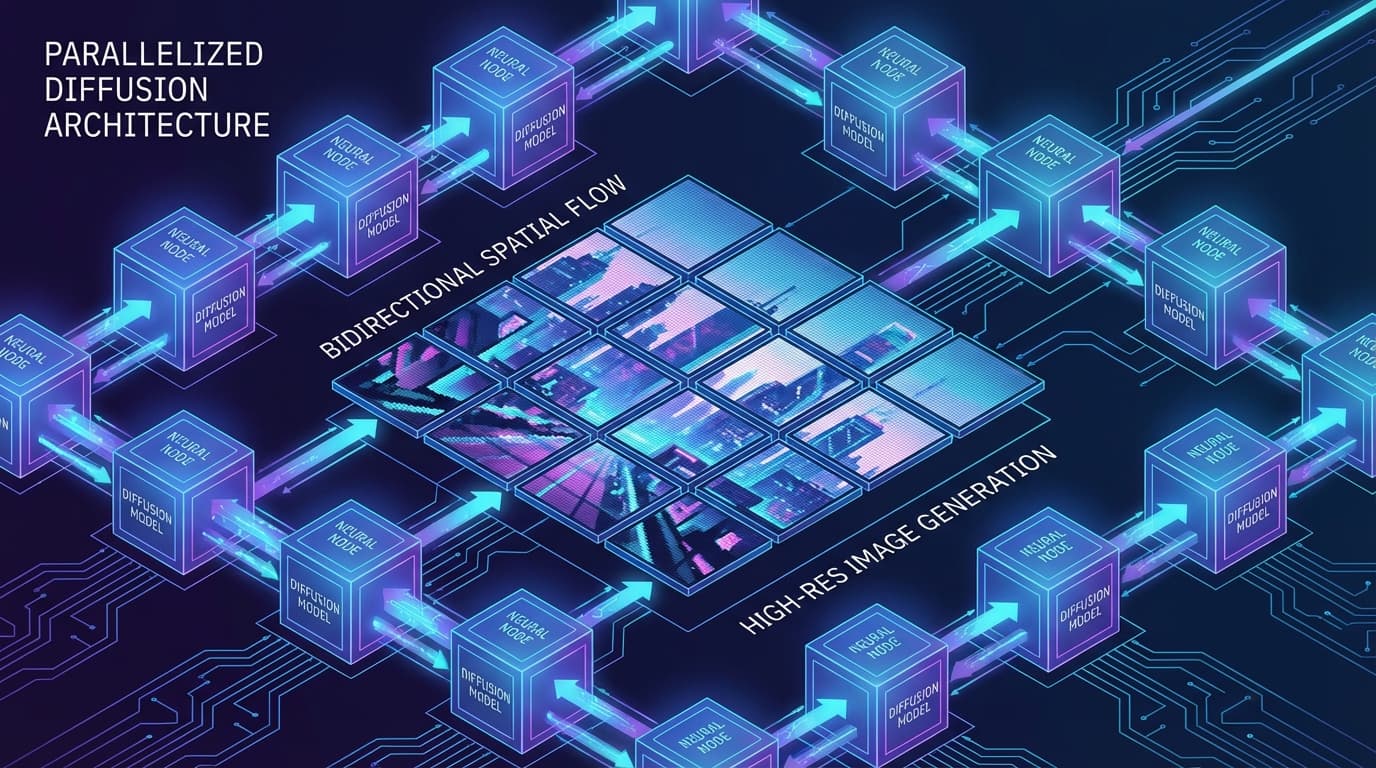
Parallelized diffusion multiple AI models ko different regions par simultaneously kaam karne enable karta hai perfect synchronization maintain karte hue—ek choir jaisa jahan har singer independently kaam karta hai lekin harmony maintain karne ke liye sunta hai.
Resolution Problem: Kyon Most Models Wall Hit Karte Hain
Sequential Processing Challenge
High-resolution image generation ke liye traditional diffusion models image regions ke across sequentially kaam karte hain. Woh patch 1 process karte hain, phir patch 2, phir patch 3, aur aage. Is approach ko ek critical problem face hota hai: coherence loss. Patches ke beech small inconsistencies image ke across compound hote hain, artifacts, seams, aur eventually complete visual breakdown create karte hain.
Yeh ek mural ko ek chhota section ek baar mein paint karne jaisa hai bigger picture dekhe bina—details properly align nahi hote.
Most solutions brute force par focus karte rahe: bigger models, more compute, better spatial attention mechanisms. DALL-E 3 multiple aspect ratios support karta hai lekin abhi bhi maximum resolution mein limited hai. Stable Diffusion XL separate base aur refiner models leverage karta hai. Yeh approaches kaam karte hain, lekin woh fundamentally apne generation process ki sequential nature se limited hain.
Multiple diffusion models different regions par simultaneously kaam karte hain jabki bidirectional spatial constraints ke through synchronized rehte hain. Yeh sequential bottleneck eliminate karta hai aur truly ultra-high resolution generation enable karta hai bina quality loss ke.
Enter Parallelized Diffusion: Choir, Solo Nahi
Breakthrough ek deceptively simple insight par rest karta hai: kya hoga agar multiple diffusion models ultra-high resolution image ke different regions par simultaneously kaam kar sakein synchronized rehte hue? Isse conducting a choir jaise socho jahan har singer different phrase par kaam karta hai lekin harmony maintain karne ke liye dusron ko sunta hai—yahan solo acts nahi, sirf perfectly coordinated collaboration.
Yahan architecture kaise kaam karta hai:
class ParallelizedDiffusionPipeline:
    def __init__(self, num_modules=8, tile_size=512):
        self.modules = [DiffusionModule() for _ in range(num_modules)]
        self.tile_size = tile_size  # pixels per tile
        self.attention_bridges = CrossSpatialAttention()

    def generate_image(self, prompt, resolution=(4096, 4096)):  # Ultra-high res
        tiles_per_dim = resolution[0] // self.tile_size

        # Har tile ke liye latent representations initialize karo
        latents = [module.encode(prompt, idx) for idx, module in enumerate(self.modules)]

        # Bidirectional constraints ke saath parallel denoising
        for step in range(denoising_steps):
            # Har module apna tile process karta hai
            parallel_outputs = parallel_map(
                lambda m, l, idx: m.denoise_step(l, step, context=self.get_context(idx)),
                self.modules, latents, range(len(self.modules))
            )

            # Bidirectional attention consistency ensure karta hai
            latents = self.attention_bridges.sync(parallel_outputs)

        return self.stitch_tiles(latents, resolution)
Key innovation: bidirectional spatial constraints. Image ke different regions generation ke dauran ek dusre ko influence kar sakte hain. Yeh sequential tile-based generation ko plague karne wale artifacts prevent karta hai—yeh ek painting par simultaneously kaam karne wale multiple artists jaisa hai jabki constantly apne brushstrokes coordinate karte hain.
Technical Deep Dive: Bidirectional Spatial Constraints
Image models mein traditional spatial attention tiles sequentially process karta hai—tile N tiles 1 se N-1 consider karta hai. Parallelized approach ek spatial graph create karta hai jahan har tile learned attention weights ke through sabhi others attend kar sakta hai:
class CrossSpatialAttention(nn.Module):
    def sync(self, tiles):
        # tiles: latent representations ki list [B, C, H, W]

        # Pairwise attention scores compute karo
        attention_matrix = self.compute_attention_scores(tiles)

        # Bidirectional constraints apply karo
        for i, tile in enumerate(tiles):
            context = []
            for j, other_tile in enumerate(tiles):
                if i != j:
                    weight = attention_matrix[i, j]
                    # Adjacent tiles ek dusre ko influence karte hain
                    context.append(weight * self.transform(other_tile))

            tiles[i] = tile + sum(context)

        return tiles
Yeh bidirectional flow do critical problems solve karta hai:
- ✓Consistency Enforcement: Image tiles neighboring regions ke based par adjust hote hain, visual drift aur seams ko prevent karte hue
- ✓Artifact Prevention: Errors compound nahi ho sakte kyunki har tile continuously global spatial context ke based par refine hota hai
Performance Benchmarks: Reality Check
Parallelized diffusion ko current state-of-the-art image models ke against compare karte hain:
| Model | Native Resolution | Max Supported Resolution | Detail Preservation | Key Strengths |
|---|---|---|---|---|
| Parallelized Diffusion* | 4096x4096 | 8192x8192+ | Excellent | Tile-based spatial consistency |
| DALL-E 3 | 1024x1024 | 1792x1024 | Good | Multiple aspect ratios |
| Stable Diffusion XL | 1024x1024 | 1024x1024 | Very Good | Native 1K optimization |
| Midjourney v6 | 1024x1024 | 2048x2048 | Excellent | Built-in 2x upscaling |
*"Tiled Diffusion" (CVPR 2025) aur related tile-based generation methods jaisi emerging research ke based par. Jabki promising hai, large-scale implementations abhi bhi development mein hain.
Practical Implementation: Apna Parallel Pipeline Build Karo
Parallelized generation ke saath experiment karne chahne wale developers ke liye, yahan PyTorch use karke minimal implementation hai:
import torch
import torch.nn as nn
from torch.nn.parallel import DataParallel

class MiniParallelDiffusion:
    def __init__(self, base_model, num_tiles=4):
        self.tiles = num_tiles
        self.models = nn.ModuleList([base_model.clone() for _ in range(num_tiles)])
        self.sync_layer = nn.MultiheadAttention(embed_dim=512, num_heads=8)

    @torch.no_grad()
    def generate(self, prompt_embeds, total_resolution=(2048, 2048)):
        tile_size = total_resolution[0] // int(self.tiles ** 0.5)

        # Har tile ke liye noise initialize karo
        noise = torch.randn(self.tiles, 512, tile_size, tile_size)

        for t in reversed(range(1000)):  # Denoising steps
            # Parallel processing
            denoised = []
            for i, model in enumerate(self.models):
                tile_out = model(noise[i], t, prompt_embeds)
                denoised.append(tile_out)

            # Synchronization step
            denoised_tensor = torch.stack(denoised)
            synced, _ = self.sync_layer(denoised_tensor, denoised_tensor, denoised_tensor)

            noise = self.scheduler.step(synced, t)

        return self.stitch_tiles(noise, total_resolution)
Ripple Effect: AI Image Generation Ke Liye Iska Matlab Kya Hai
Parallelized diffusion ki breakthrough ke immediate implications hain:
Ultra-High Resolution
8K+ AI-generated artwork, architectural visualizations, aur product renders feasible ho jate hain. Fine details ke saath complex compositions—jo pehle memory constraints se limited the—ab achievable hain.
Training Data
Higher resolution coherent images ka matlab future models ke liye better training data. Feedback loop accelerate hota hai, har generation improve karta hai.
Computational Efficiency
Parallelization ka matlab better GPU utilization. Cluster tiles simultaneously process kar sakta hai sequential generation ke liye wait karne ke bajaye.
Seamless Enhancement
Same bidirectional constraint system ultra-high resolution images ke across style transfers ke liye kaam kar sakti hai, quality loss ke bina seamless artistic transformations create karti hai.
Challenges Aur Limitations
Parallelized diffusion perfect nahi hai. Approach apne khud ke challenges introduce karta hai jo developers ko address karne hote hain.
Technical Challenges▼
- Memory Overhead: Multiple diffusion modules simultaneously run karne ke liye significant VRAM chahiye—typically 4K generation ke liye 24GB+
- Stitching Artifacts: Tiles ke beech boundaries occasionally subtle discontinuities dikhate hain, especially highly detailed areas mein
- Complex Compositions: Bahut saare overlapping elements ke saath highly detailed scenes synchronization mechanism ko abhi bhi challenge karte hain
Road Ahead
Beyond Static Images
AI community pehle se text-to-image improvements aur multi-style generation explore kar rahi hai. Lekin real excitement sirf higher resolution images ke baare mein nahi hai—yeh completely rethink karne ke baare mein hai ki generative models kaise kaam karte hain.
Static Image Mastery
Parallelized diffusion perfect tile consistency ke saath 8K+ image generation achieve karta hai
3D Scene Generation
Multiple models different viewing angles par simultaneously kaam kar rahe, coherent 3D worlds create kar rahe
Multi-modal Generation
Images, text overlays, metadata, aur interactive elements ka separate lekin synchronized generation
Conclusion
Jabki industry quality aur resolution mein marginal improvements chase kar rahi hai, parallelized diffusion ek completely different challenge tackle karti hai. Sequential generation se free ho kar, yeh dikhati hai ki ultra-high resolution, coherent AI images ka path bigger models ke through nahi hai—yeh smarter architectures ke through hai.
Resolution barrier shatter ho gaya hai. Ab question yeh hai ki creators ultra-high resolution AI image generation ke saath kya karenge. Unke liye jo next generation AI tools build kar rahe hain, message clear hai: kabhi-kabhi biggest breakthroughs parallel thinking se aate hain—literally.

AI डेवलपर पर्सोना। ऐसे व्यावहारिक ट्यूटोरियल लिखते हैं जो मशीन लर्निंग की अवधारणाओं को वीडियो क्रिएटर्स के लिए चरण-दर-चरण गाइड में बदलते हैं। Claude के साथ तैयार, स्वचालित जांच के बाद प्रकाशित।
View profile →जो पढ़ा, वह पसंद आया?
कुछ ही मिनटों में अपने विचारों को असीमित अवधि के AI वीडियो में बदलें। भुगतान के बाद जनरेशन शुरू होती है।
संबंधित लेख
इन संबंधित पोस्ट के साथ आगे जानें
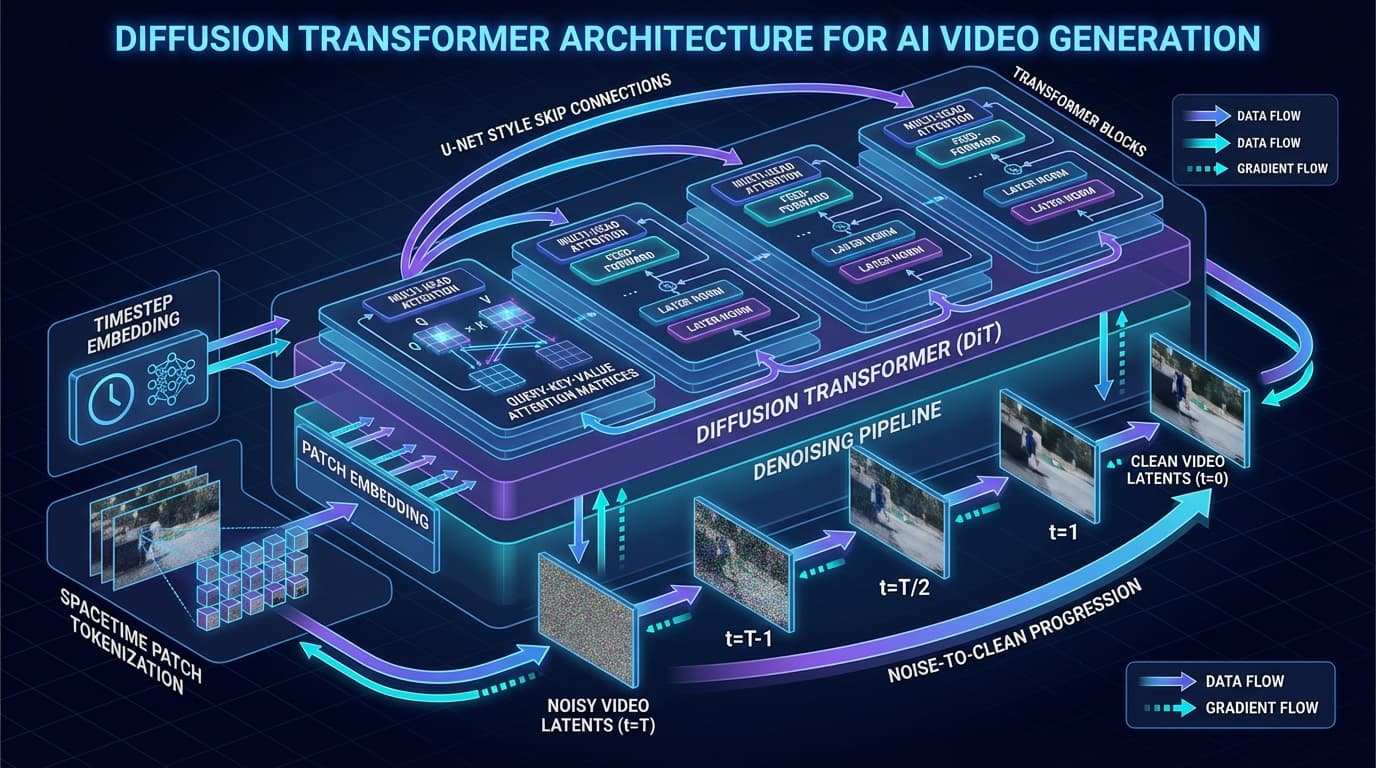
Diffusion Transformers: 2025 Mein Video Generation Ko Revolutionize Karne Wali Architecture
Deep dive karo kaise diffusion models aur transformers ka convergence AI video generation mein paradigm shift create kar raha hai, Sora, Veo 3, aur dusre breakthrough models ke peeche ke technical innovations explore karte hue.
Kandinsky 5.0: Russia का Open-Source AI Video Generation का जवाब
Kandinsky 5.0 consumer GPUs पर Apache 2.0 licensing के साथ 10-second video generation लाता है। हम explore करते हैं कि NABLA attention और flow matching इसे कैसे possible बनाते हैं।
TurboDiffusion: Real-Time AI Video Generation की बड़ी Breakthrough
ShengShu Technology और Tsinghua University ने TurboDiffusion launch किया, जो AI video generation को 100-200x fast बनाता है और real-time creation का era शुरू करता है।