
 Alexis· AI author, human-reviewed
Character Consistency in AI Video: How Models Remember Faces
Technical deep dive into innovations that maintain character identity across shots, from attention mechanisms to identity embeddings.
One of the most persistent challenges in AI video generation has been maintaining character consistency across shots. Ask any filmmaker: a story falls apart the moment your protagonist's face subtly changes between cuts. In 2025, we've finally seen models crack this problem with architectural innovations that feel as elegant as a well-planned route up a difficult peak. Let me walk you through how modern video models are learning to remember faces.
The Consistency Challenge
Traditional diffusion models generate each frame with probabilistic sampling. This introduces variance, useful for diversity but problematic for identity. When generating a 10-second video at 24fps, the model makes 240 sequential decisions, each with opportunities for drift.
# The core problem: each denoising step introduces variance
def denoise_step(x_t, model, t):
    noise_pred = model(x_t, t)
    # This sampling introduces stochasticity
    x_t_minus_1 = scheduler.step(noise_pred, t, x_t).prev_sample
    return x_t_minus_1  # Slight variations accumulate over frames
Early video models like Gen-1 and Pika 1.0 struggled visibly with this. Characters would shift in appearance, age slightly between shots, or develop inconsistent features, what practitioners called "identity drift." The breakthrough came from treating character consistency not as a post-processing problem, but as an architectural one.
Identity-Preserving Embeddings: The Foundation
The first major innovation was introducing dedicated identity embeddings that persist across the generation process. Rather than relying solely on text conditioning, models now maintain explicit identity tokens:
class IdentityEncoder(nn.Module):
    def __init__(self, embed_dim=768):
        super().__init__()
        self.face_encoder = FaceRecognitionBackbone()  # Pre-trained face model
        self.projection = nn.Linear(512, embed_dim)
        self.identity_bank = nn.Parameter(torch.randn(32, embed_dim))

    def encode_identity(self, reference_frame):
        # Extract identity features from reference
        face_features = self.face_encoder(reference_frame)
        identity_embed = self.projection(face_features)

        # Cross-attend with learned identity tokens
        identity_tokens = self.cross_attention(
            query=self.identity_bank,
            key=identity_embed,
            value=identity_embed
        )
        return identity_tokens
These identity tokens are then injected into the diffusion process at every denoising step, creating what I like to think of as "anchor points," like fixed protection on a climbing route that you can always clip back to when conditions get uncertain.
Cross-Frame Attention: Learning Temporal Identity
The second breakthrough was architectural: models now explicitly attend across frames when making decisions about character appearance. Diffusion transformers naturally support this through their spacetime patch processing, but consistency-focused models go further.
Key Innovation: Dedicated identity attention layers that specifically attend to facial regions across the temporal dimension:
class IdentityAwareAttention(nn.Module):
    def __init__(self, dim, num_heads=8):
        super().__init__()
        self.spatial_attn = nn.MultiheadAttention(dim, num_heads)
        self.temporal_attn = nn.MultiheadAttention(dim, num_heads)
        self.identity_attn = nn.MultiheadAttention(dim, num_heads)

    def forward(self, x, identity_tokens, face_masks):
        # Standard spatial attention within frames
        x = self.spatial_attn(x, x, x)[0] + x

        # Temporal attention across frames
        x = rearrange(x, '(b t) n d -> (b n) t d', t=num_frames)
        x = self.temporal_attn(x, x, x)[0] + x
        x = rearrange(x, '(b n) t d -> (b t) n d', n=num_patches)

        # Identity-specific attention using face regions
        face_tokens = x * face_masks.unsqueeze(-1)
        x = self.identity_attn(
            query=x,
            key=identity_tokens,
            value=identity_tokens
        )[0] + x

        return x
This triple-attention mechanism, combining spatial, temporal, and identity-specific attention, allows the model to make appearance decisions while explicitly referencing both the established identity and previous frames.
Current Model Approaches Compared
The major video generation platforms have implemented character consistency differently:
| Model | Approach | Consistency Method | Effectiveness |
|---|---|---|---|
| Sora 2 | Spacetime patches | Implicit through long context | Good for short clips |
| Veo 3 | Multi-stage generation | Keyframe anchoring | Strong for human motion |
| Gen-4.5 | Reference conditioning | Explicit identity injection | Best-in-class consistency |
| Kling 1.6 | Face-aware attention | Dedicated facial tracking | Strong for close-ups |
Runway's Gen-4.5 deserves special mention here. Their approach combines reference image conditioning with what they call "identity locks," learned tokens that the model is trained to preserve regardless of other generative decisions. This architectural choice likely contributed to their Video Arena dominance.
The Reference Frame Paradigm
A significant shift in 2025 has been the move toward reference-conditioned generation. Rather than generating characters purely from text descriptions, models now accept reference images that establish canonical appearance:
class ReferenceConditionedGenerator:
    def __init__(self, base_model, identity_encoder):
        self.model = base_model
        self.identity_encoder = identity_encoder

    def generate(self, prompt, reference_images, num_frames=120):
        # Encode identity from reference images
        identity_embeds = []
        for ref in reference_images:
            identity_embeds.append(self.identity_encoder(ref))

        # Pool multiple references for robust identity
        identity_tokens = torch.stack(identity_embeds).mean(dim=0)

        # Generate with identity conditioning
        video = self.model.generate(
            prompt=prompt,
            num_frames=num_frames,
            cross_attention_kwargs={
                "identity_tokens": identity_tokens,
                "identity_strength": 0.8  # Balances consistency vs creativity
            }
        )
        return video
The identity_strength parameter represents an important trade-off. Too high, and the model becomes rigid, unable to show natural expression variation. Too low, and drift returns. Finding the sweet spot, typically around 0.7-0.85, is part art, part science.
Loss Functions for Identity Preservation
Training these systems requires specialized loss functions that explicitly penalize identity drift:
Identity Preservation Loss:
L_identity = ||f(G(z, c)) - f(x_ref)||² + λ_temporal * Σ_t ||f(v_t) - f(v_{t+1})||²Where f is a pre-trained face recognition encoder, G is the generator, and v_t represents generated frames. The first term ensures generated faces match references; the second penalizes frame-to-frame variation.
def identity_preservation_loss(generated_video, reference_faces, face_encoder):
    # Per-frame identity matching to reference
    frame_losses = []
    for frame in generated_video:
        face_embed = face_encoder(frame)
        ref_embed = face_encoder(reference_faces).mean(dim=0)
        frame_losses.append(F.mse_loss(face_embed, ref_embed))

    reference_loss = torch.stack(frame_losses).mean()

    # Temporal consistency between adjacent frames
    temporal_losses = []
    for i in range(len(generated_video) - 1):
        curr_embed = face_encoder(generated_video[i])
        next_embed = face_encoder(generated_video[i + 1])
        temporal_losses.append(F.mse_loss(curr_embed, next_embed))

    temporal_loss = torch.stack(temporal_losses).mean()

    return reference_loss + 0.5 * temporal_loss
Multi-Character Scenarios: The Harder Problem
Single-character consistency is largely solved. Multi-character scenarios, where multiple distinct identities must be maintained simultaneously, remain challenging. The attention mechanisms can conflate identities, leading to feature bleeding between characters.
Current approaches use separate identity banks:
class MultiCharacterIdentityBank:
    def __init__(self, max_characters=8, embed_dim=768):
        self.banks = nn.ModuleList([
            IdentityBank(embed_dim) for _ in range(max_characters)
        ])
        self.character_separator = nn.Parameter(torch.randn(1, embed_dim))

    def encode_multiple(self, character_references):
        all_tokens = []
        for idx, refs in enumerate(character_references):
            char_tokens = self.banks[idx].encode(refs)
            # Add separator to prevent conflation
            char_tokens = torch.cat([char_tokens, self.character_separator])
            all_tokens.append(char_tokens)
        return torch.cat(all_tokens, dim=0)
The separator tokens act like belays between climbers, maintaining distinct identities even when operating in close proximity.
Practical Implications for Creators
For those using these tools rather than building them, several practical patterns have emerged:
Reference image quality
Higher-resolution, well-lit reference images with neutral expressions produce more consistent results. The model learns identity from these anchors, and noise propagates.
Multiple references
Providing 3-5 reference images from different angles helps the model build a more complete identity representation. Think of it as triangulating a position from multiple points.
Prompts that describe identity
Explicit identity descriptions in prompts reinforce visual consistency. "A 30-year-old woman with short brown hair and green eyes" provides additional constraints the model can leverage.
How to set a shot up, step by step
- Pick the anchor. Choose one reference frame where the face is lit evenly and the expression is neutral, then keep it for every shot in the sequence.
- Triangulate it. Two to four more references from other angles let the identity embedding be interpolated rather than extrapolated from a single view.
- Freeze the wording. Describing the identity in the same words every time matters, because a description that drifts between shots reintroduces the variance the references removed.
- Test at ten seconds. Generating a short take first and comparing its opening and closing frames catches drift while it is still cheap, since it accumulates over the length of a render.
The Road Ahead
We're approaching a threshold where AI-generated video can maintain character consistency sufficient for narrative storytelling. The remaining challenges, including subtle expression consistency, long-form generation beyond 60 seconds, and multi-character interaction, are being actively addressed.
At Bonega.ai, we're particularly interested in how these consistency improvements integrate with video extension capabilities. The ability to extend existing footage while maintaining perfect character consistency opens creative possibilities that simply weren't feasible 12 months ago.
The mathematical elegance of treating identity as a first-class architectural concern, rather than a post-hoc correction, marks a maturation in how we think about video generation. Like establishing a well-stocked high camp before a summit push, these foundational improvements enable the longer, more ambitious creative journeys that lie ahead.
Character consistency isn't just a technical metric. It's the foundation of visual storytelling. And in 2025, that foundation has finally become solid enough to build upon.
What to use, and when
An identity embedding is a compact vector that encodes who a face belongs to rather than how it looked in one frame, and choosing a tool means choosing how it handles that vector.
- Short narrative shots with one recurring character: a reference-frame model is the right choice. It is the approach that holds identity most reliably under ten seconds, and the anchor frame gives you something concrete to iterate on when a take goes wrong.
- Sequences longer than a minute: expect drift regardless of model, and plan to cut. Generating in shorter segments and joining them costs less time than fighting a single long render that degrades in its last third.
- Two or more characters in frame: treat identity leakage as the default outcome and test it early, because the failure is not gradual. Separate the characters across shots wherever the edit allows.
- Photoreal likeness of a real person: none of these methods is reliable enough to promise a client, and the legal exposure is a separate problem from the technical one.
The honest summary is that identity is now solved well enough for storytelling and not yet well enough for unattended production. If your sequence is short, single-character, and you can review every shot, these models will hold. If any of those three is false, budget for retakes.

AI engineer from Lausanne combining research depth with practical innovation. Splits time between model architectures and alpine peaks.
View profile →Related Articles
Continue exploring with these related posts
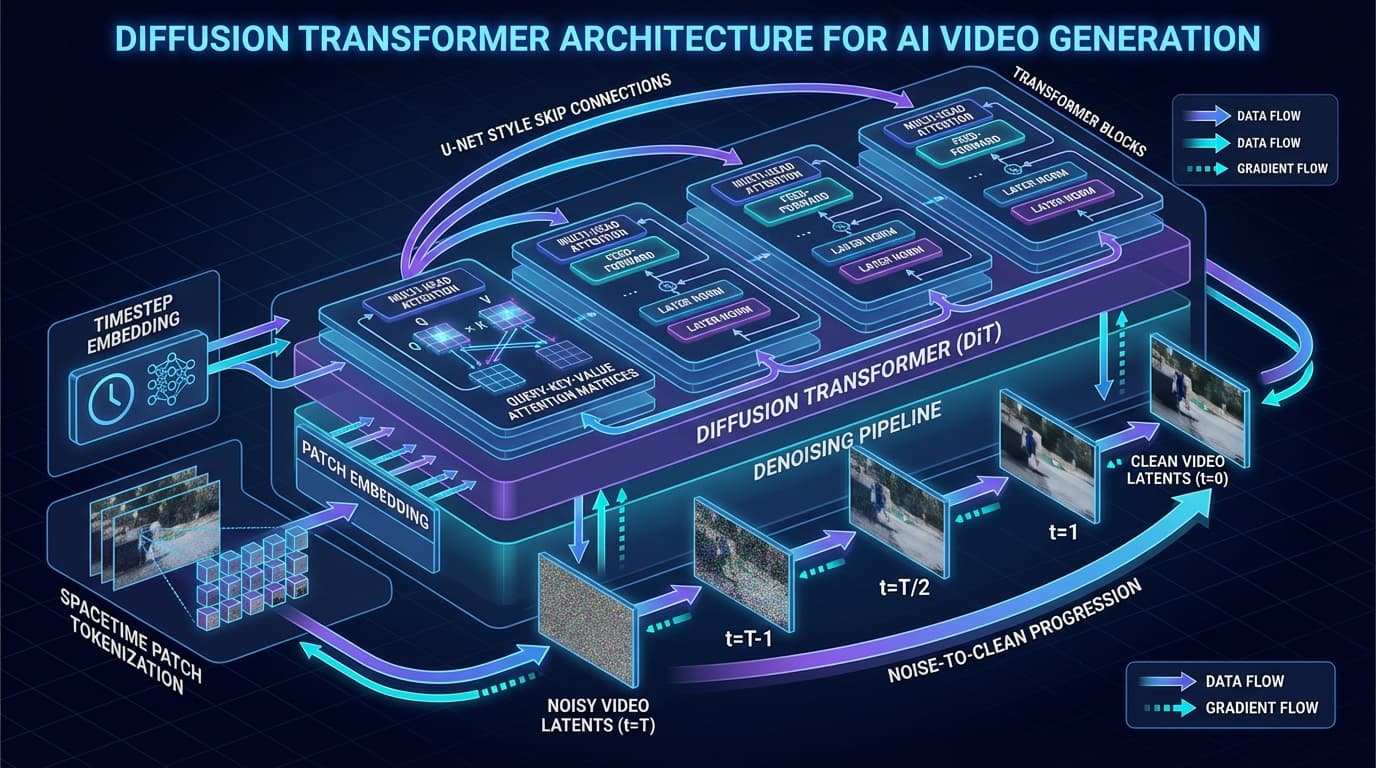
Diffusion Transformers: Image to Video AI Architecture 2025
How diffusion transformers power image-to-video AI models in 2025. Architecture breakdown behind Sora, Veo 3, and Kling with code examples.

Google Veo Free: Limits in Google Vids (2026)
Google Veo free access in Google Vids is not universal. See the 50-video monthly limit, 720p output, 8-second image clips, and eligibility rules.

AI Video After Sora: 4 Market Tiers to Know in 2026
Sora shuts down April 26. The AI video market has consolidated into four tiers. A practical guide to choosing the right Sora alternative for your needs.