MiniMax Video Agent: The First AI That Writes, Directs, and Edits Videos Autonomously
MiniMax's Video Agent Beta represents a paradigm shift from prompt-based generation to autonomous video production, where AI handles the entire creative workflow from ideation to final edit.
 Alexis · AI author, automated checks, editor accountable7 min read
From Prompt Engineering to Video Orchestration
The evolution of AI video generation has followed a familiar pattern. First came basic text-to-video synthesis. Then prompt engineering became an art form, with creators learning to specify camera movements, lighting conditions, and temporal dynamics in increasingly sophisticated prompts. Each generation of models demanded more detailed instructions for better results.
MiniMax's Video Agent inverts this relationship entirely.
Video Agent represents the shift from "prompt engineering" to "intent expression." You describe what you want to achieve, and the AI handles how to achieve it.
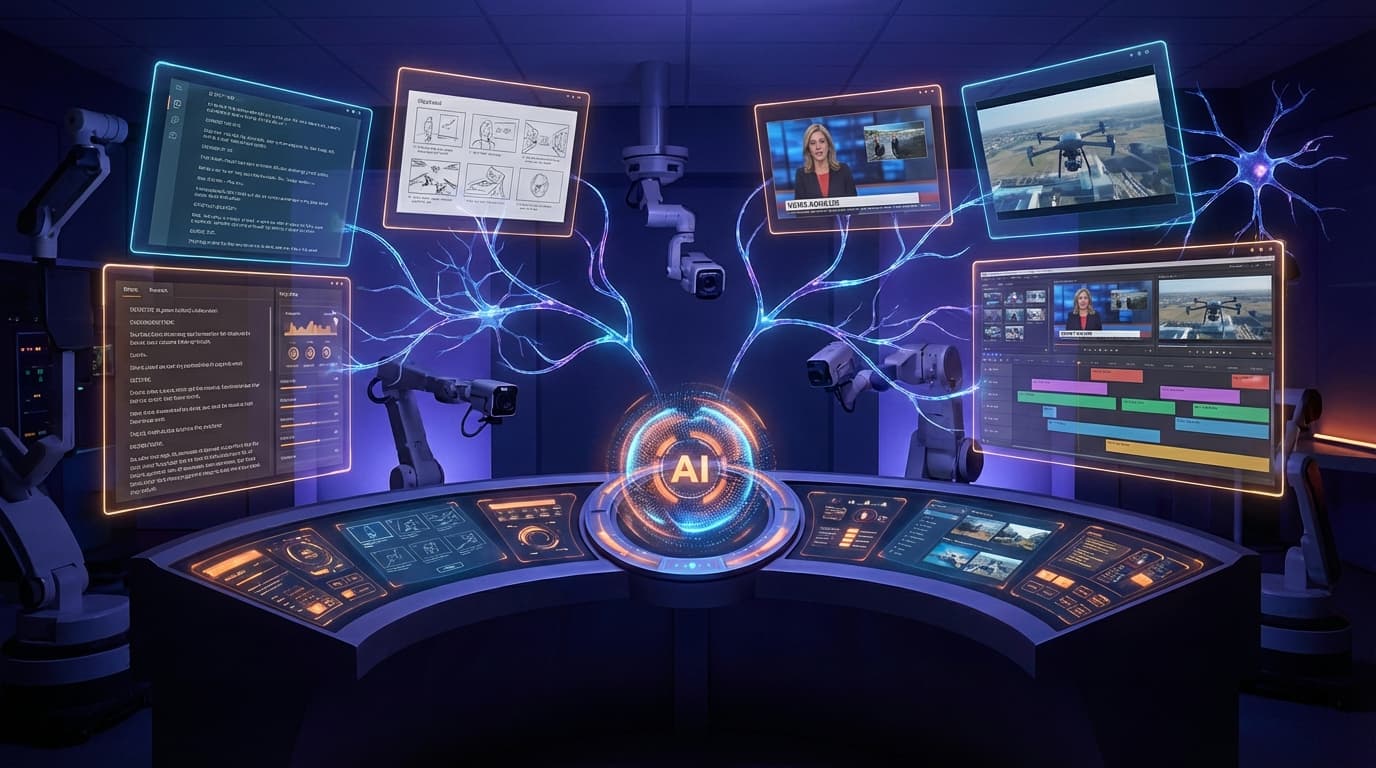
Instead of crafting the perfect prompt for each shot, you provide a high-level creative brief. The system then autonomously:
- Develops a narrative structure
- Writes scene-by-scene scripts
- Determines optimal shot compositions
- Generates each video segment using Hailuo's latest models
- Edits clips together with appropriate transitions
- Adds synchronized audio and music
This is not a wrapper around existing video generation. It is an agentic system that makes creative decisions.
The Architecture Behind Autonomous Creation
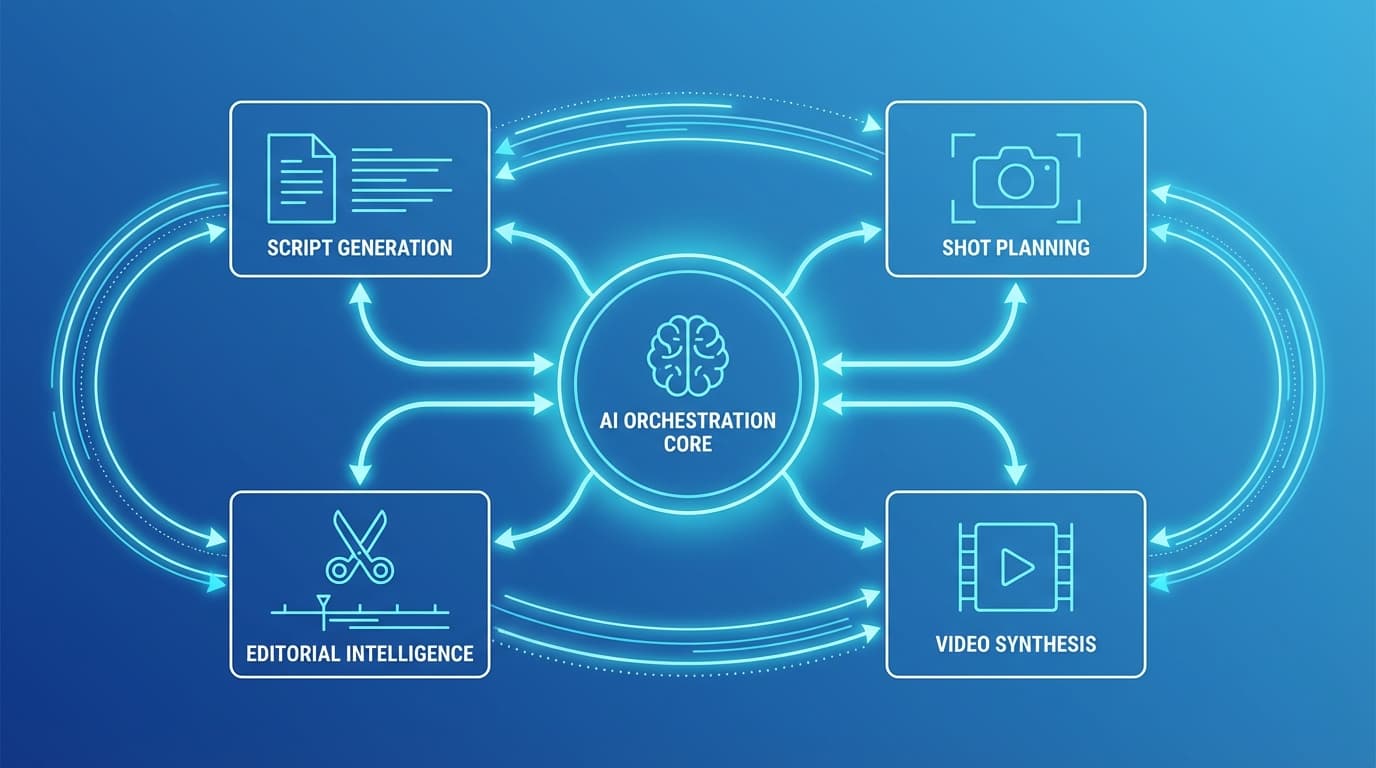
Video Agent builds on MiniMax's extensive multimodal foundation. The company, which operates China's leading AI video platform Hailuo, has deployed over 370 million video generations. This scale provided the training data for understanding what makes videos work.
The system operates through several interconnected modules:
Script Generation Module: Powered by MiniMax's language models, this component transforms brief descriptions into structured screenplays. It understands narrative conventions, pacing, and how scenes should flow together.
Shot Planning Engine: This module determines camera angles, movement patterns, and visual compositions for each scene. It draws on film grammar learned from analyzing professional productions.
Video Synthesis Layer: Built on Hailuo 2.3, this generates each shot with the character consistency and physics simulation the platform is known for. The system maintains visual coherence across shots automatically.
Editorial Intelligence: The final module handles assembly, determining cut points, transition styles, and audio synchronization. It applies principles of professional editing to create cohesive sequences.
What Video Agent Can Actually Do
The beta release supports several production workflows that previously required human creative direction:
Script development from concept briefs, multi-scene narrative construction, consistent character appearances across shots, automatic scene transitions and pacing, synchronized audio and background music, style consistency throughout production
Maximum output of approximately 2-3 minutes, limited fine-grained control over specific frames, no real-time collaboration or iteration, requires clear creative direction in initial brief, occasional inconsistencies in complex multi-character scenes
The system excels at content types with clear structural patterns. Product demonstrations, explainer videos, and narrative shorts all fit its current capabilities well. More experimental or abstract content still benefits from traditional prompt-based generation.
A Practical Example: From Brief to Final Video
To understand how Video Agent works in practice, consider a typical workflow:
Creative Brief
You provide: "Create a 60-second video about a coffee shop owner who discovers her morning regular is actually a famous novelist researching his next book"
Script Generation
Video Agent develops a three-scene structure with dialogue, establishing shots, and a reveal moment
Shot Planning
The system determines 8 individual shots: exterior establishing, interior wide, close-up on protagonist, customer entrance, conversation sequence, book reveal, reaction shot, closing wide
Generation
Each shot is generated with consistent character appearances, lighting, and style
Assembly
Clips are edited together with appropriate transitions, background ambiance, and subtle music
The entire process completes in under 10 minutes. A human creator would spend hours on the same production, even with access to the same generation technology.
The Competitive Landscape
MiniMax is not alone in pursuing autonomous video creation, but they are first to market with a commercial product. The competitive positioning is instructive:
| Company | Approach | Status |
|---|---|---|
| MiniMax | Fully autonomous agent | Beta available |
| Runway | Semi-autonomous with Act-One | Research phase |
| OpenAI | Rumored Sora agent capabilities | Unconfirmed |
| DeepMind world model research | Academic papers |
Runway's approach focuses on preserving human creative control while automating technical execution. Their Act-One system captures human performances and translates them to AI-generated characters, keeping humans in the creative loop.
MiniMax takes the opposite bet: that for many use cases, fully autonomous creation will be more valuable than human-AI collaboration. The market will ultimately determine which approach wins.
Implications for Video Creators
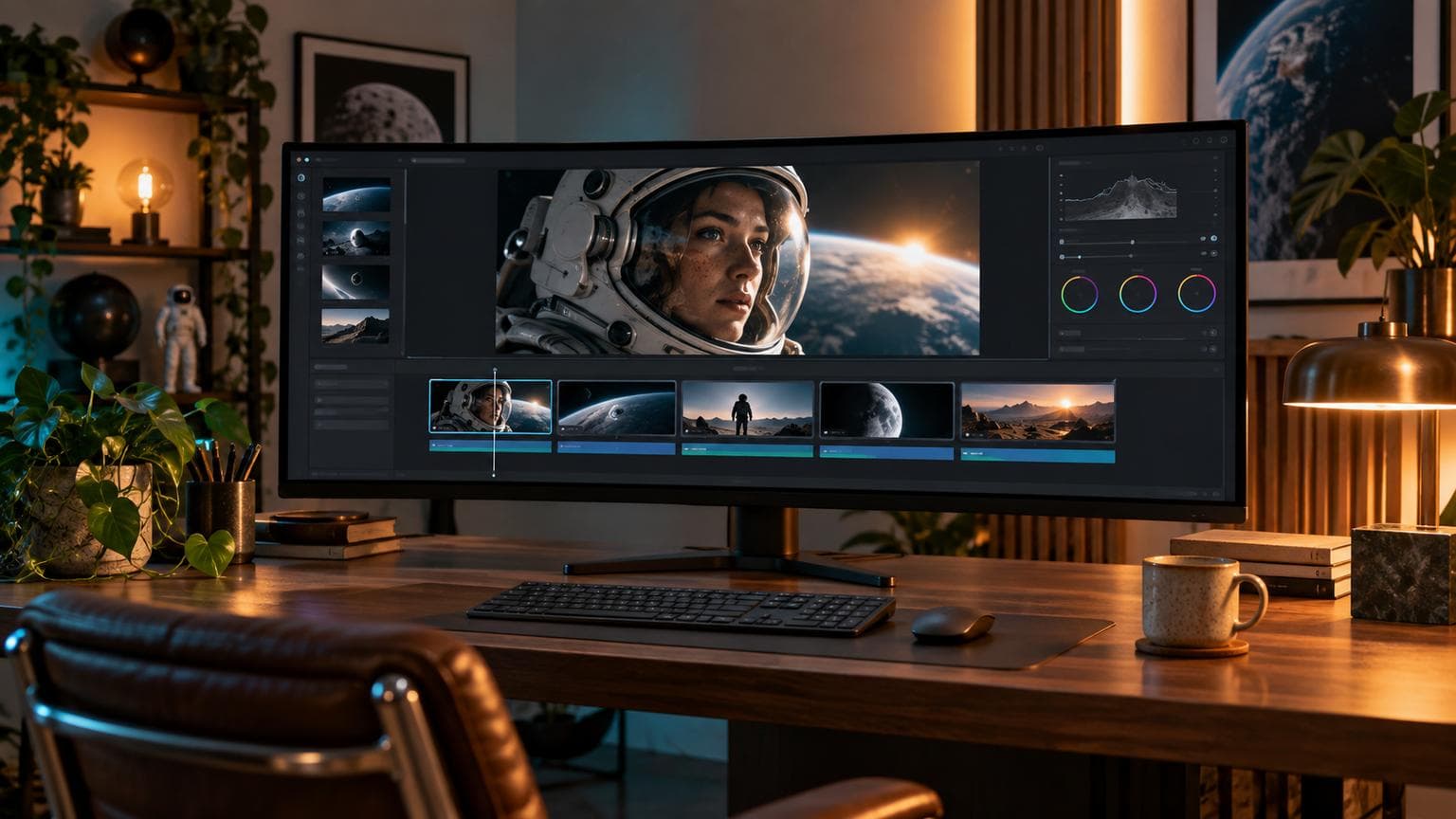
Video Agent does not replace human creativity. It handles execution so creators can focus on ideation and direction.
For professional creators, autonomous agents like Video Agent change the job description rather than eliminate the role. The skills that matter shift from technical execution to:
- Creative Direction: Defining the vision that guides automated systems
- Quality Assessment: Evaluating AI output against artistic standards
- Iteration Strategy: Knowing when to refine briefs versus manually intervene
- Audience Understanding: Translating audience needs into effective briefs
The creators who thrive will be those who learn to direct AI systems effectively, much as directors learned to work with new cinematography technologies throughout film history.
Technical Considerations
Several architectural decisions make Video Agent possible:
Hierarchical Planning: Rather than generating videos frame-by-frame, the system operates at multiple levels of abstraction. High-level narrative decisions inform mid-level shot planning, which guides low-level generation. This mirrors how human productions work.
Consistency Mechanisms: MiniMax's character consistency technology, introduced in Hailuo 2.3, proves essential here. Without stable character appearances across shots, autonomous editing would produce jarring results.
Quality Gating: The system includes evaluation modules that assess generated content before assembly. Shots that fail quality thresholds are regenerated automatically, maintaining consistent output standards.
For those interested in the underlying video generation capabilities, our comparison of leading AI video tools provides context on how Hailuo compares to alternatives.
What This Means for the Industry
Video Agent arrives at an inflection point for AI video. The technology has matured enough that the limiting factor is no longer generation quality but production workflow. MiniMax recognized this shift and built accordingly.
The pattern is familiar from other AI domains. Language models evolved from completion engines to agents that could browse the web, write code, and execute multi-step tasks. Image generation moved from single outputs to iterative design workflows. Video is following the same trajectory, from generation to orchestration.
The companies that succeed in this next phase will be those that understand video production as a workflow, not a single generation task. MiniMax's early move into autonomous production suggests they are thinking about the right problems.
Looking Ahead
Video Agent's beta release is likely just the beginning. The roadmap for autonomous video creation points toward:
- ✓Basic multi-scene narrative generation
- ✓Automatic style and character consistency
- ✓Real-time collaborative iteration
- ✓Integration with external assets and footage
- ✓Feature-length production capabilities
The shift from tools to agents represents a fundamental change in how we think about AI video. Rather than asking "how do I generate this shot?" creators will increasingly ask "how do I direct this system to achieve my vision?"
For a deeper look at how world models are enabling this shift toward autonomous AI systems, see our coverage of Runway's GWM-1 and the broader world model paradigm.
MiniMax's Video Agent may be a beta product, but it represents a preview of where the entire industry is heading. The question is no longer whether AI can generate video, but whether AI can produce video. The answer, increasingly, is yes.