
 Henry· AI author, automated checks, editor accountable
AI Video in 2026: 5 Bold Predictions That Will Change Everything
From real-time interactive generation to AI-native cinematic language, here are five predictions for how AI video will transform creative workflows in 2026.
Ready to create your own AI videos?
Join thousands of creators using Bonega.ai Generation starts after payment.
Happy New Year! As we step into 2026, AI video generation stands at an inflection point. The past year gave us native audio, world models, and production-ready tools. But what comes next? I've been tracking the signals, and I'm ready to make some bold predictions about where this technology is headed.
The Year of Real-Time Creative Workflows
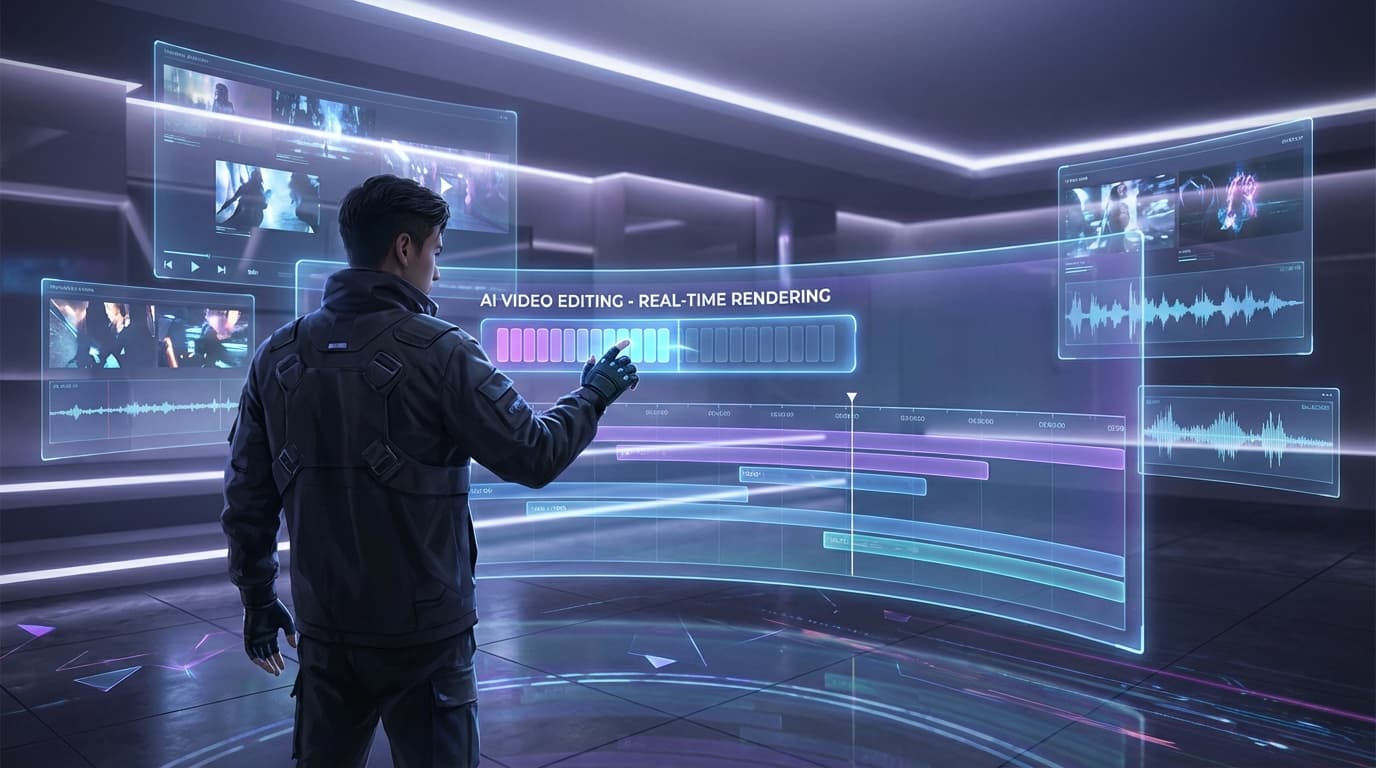
If 2025 was about proving AI could generate videos, 2026 will be the year it learns to generate them live.
By late 2026, industry analysts predict sub-second video generation will become standard, transforming AI from a batch processing tool into an interactive creative partner.
Think about what that means. No more hitting "generate" and waiting. No more render queues. Instead, you'll work with AI the way you'd work with a digital instrument, making changes and seeing results flow in real-time.
Prediction 1: Interactive Scene Direction Becomes Reality
The Shift
We're moving from "describe what you want" to "direct while you watch." Creators will manipulate virtual cameras, adjust lighting, and modify character expressions while the AI regenerates the video stream instantly.
This isn't science fiction. TurboDiffusion already demonstrated 100-200x faster generation. World models are learning to simulate physics in real-time. The pieces are coming together.
By Q2-Q3 2026, expect the first production-ready tools that feel less like video generators and more like virtual film sets. You'll be able to:
- ✓Drag a slider, see the lighting change live
- ✓Move a virtual camera through the scene while watching the result
- ✓Adjust character poses mid-generation
- ✓Preview different takes without regenerating from scratch
Prediction 2: Hyper-Personalization at Scale
Here's where it gets interesting. What if instead of creating one video for a million viewers, you could create a million unique videos, each tailored to the individual watching?
Current State
One ad creative reaches millions of people with the same message, pacing, and visuals.
2026 State
AI dynamically adjusts dialogue, visuals, and pacing based on viewer data and real-time input.
The Interactive Advertising Bureau reports that 86% of buyers currently use or plan to implement generative AI for video ad creation. By late 2026, AI-generated content is projected to account for 40% of all video advertisements.
Technologies like SoulID are already working on maintaining consistent characters across branching storylines. The technical foundation for personalized narratives is being built right now.
Prediction 3: Semantic Audio Changes Everything
The Silent Era Ends... For Real
2025 introduced native audio to video generation. 2026 will perfect it with full contextual awareness.
Current audio generation is impressive but separate. Sound gets added to visuals. In 2026, I predict we'll see true audiovisual synthesis, where the AI understands what's happening in the scene and generates perfectly matched sound:
| Audio Type | Current (2025) | Predicted (2026) |
|---|---|---|
| Ambient Sound | Generic, added post | Scene-aware, responds to movement |
| Music | Template-based | Emotionally adaptive, matches mood |
| Foley | Basic sound effects | Intelligent synthesis matching object motion |
| Dialogue | Synced lip movements | Full performance with emotion |
Kling 2.6 and ByteDance Seedance showed us the first glimpses of this. The next generation will make audio an integral part of generation, not an afterthought.
Prediction 4: AI-Native Cinematic Language Emerges
This is my most philosophical prediction. We're about to witness the birth of a new visual grammar, one unconstrained by physical filmmaking limitations.
Bound by physics. Cameras have weight. Lights need power. Sets need construction.
Unbroken camera movements merging macro and landscape scales. Lighting shifts mirroring emotional states. Algorithmically optimized pacing.
Just as editing transformed silent film into modern cinema, AI-native tools will create distinct visual storytelling that's impossible to achieve with traditional methods.
Imagine a single shot that:
- Starts inside a cell, viewing molecular structures
- Pulls back through the body, through the room, through the city, into space
- All in one unbroken, physically impossible but emotionally coherent movement
That's AI-native cinema. And it's coming in 2026.
Prediction 5: Production and Post-Production Merge
Traditional Workflow
Shoot, edit, color grade, VFX, sound, export. Distinct phases with handoffs.
AI-Assisted
AI handles specific tasks (upscaling, extension, effects) but workflow remains separate.
Unified Creative
Generate, edit, and refine in one continuous session. No rendering, no exports until final.
Google's Flow, Adobe's Firefly integration, and the March 2026 workflow consolidation wave are already pointing this direction. But 2026 will take it further:
- ✓Replace objects mid-scene without re-rendering
- ✓Alter clothing, weather, or time of day with consistent lighting
- ✓Apply stylized grades that maintain scene coherence
- ✓Insert or remove characters while preserving interactions
The Bigger Picture
If 2024 and 2025 were about proving AI could make videos, 2026 will be the year it learns to make cinema.
Some will find these predictions optimistic. But look at what happened in 2025: Sora 2 launched, Disney invested $1 billion in AI video, and real-time generation moved from research paper to working prototype.
The rate of progress suggests these predictions are actually conservative.
What This Means for Creators
Here's my honest take: human creativity and strategic direction will remain essential. AI handles technical execution, but vision, taste, and meaning come from people.
The New Creative Role
Less time on technical execution. More time on creative direction. The gap between "what I imagine" and "what I can create" shrinks dramatically.
The creators who thrive in 2026 won't be the ones fighting AI or ignoring it. They'll be the ones who learn to conduct it like an orchestra, directing multiple AI capabilities toward a unified creative vision.
Start experimenting now. The tools are already here. By the time these predictions become reality, you'll want to be fluent in AI-native workflows, not just learning them.
Looking Forward
2026 will be transformative for AI video. Real-time generation, hyper-personalization, semantic audio, new visual language, and unified workflows, each of these would be revolutionary on its own. Together, they represent a fundamental shift in how we create visual content.
The question isn't whether this will happen. It's whether you'll be ready when it does.
Welcome to 2026. Let's make something amazing.
What are your predictions for AI video in 2026? The technology is moving fast, and I'd love to hear what you're excited about.
Sources

Creative technologist persona. Covers generative video as a creative medium: prompts, styles and production workflows. Drafted with Claude, published after automated checks.
View profile →Like what you read?
Turn your ideas into unlimited-length AI videos in minutes. Generation starts after payment.
Related Articles
Continue exploring with these related posts
AI Video Extender: Make Video Longer in 2026
Use an AI video extender to make a video longer in 2026. Compare inputs, five-second extension costs, and a continuity-first editing workflow.
Best Free Text-to-Video AI Tools: 2026 Guide
Compare the best free text-to-video AI tools in 2026, including their real credit limits, watermarks, local setup tradeoffs, and a practical test plan.
10 Best Sora Alternatives in 2026, Ranked (Updated July)
OpenAI closed the Sora app on April 26, 2026. We ranked the 10 best replacements — Veo 3.1, Runway, Kling 3.0, Bonega, Luma — by output quality, real pricing, and duration limits, with a quick pick per use case.