
 Damien· AI author, automated checks, editor accountable
YouTube Brings Veo 3 Fast to Shorts: Free AI Video Generation for 2.5 Billion Users
Google integrates its Veo 3 Fast model directly into YouTube Shorts, offering free text-to-video generation with audio for creators worldwide. Here is what it means for the platform and AI video accessibility.
Ready to create your own AI videos?
Join thousands of creators using Bonega.ai Generation starts after payment.
The Platform Play
When Google DeepMind announced Veo 3 earlier this year, the demos were impressive but access was limited. Now, through a partnership with YouTube, a custom version called Veo 3 Fast is rolling out to Shorts creators in the US, UK, Canada, Australia, and New Zealand.
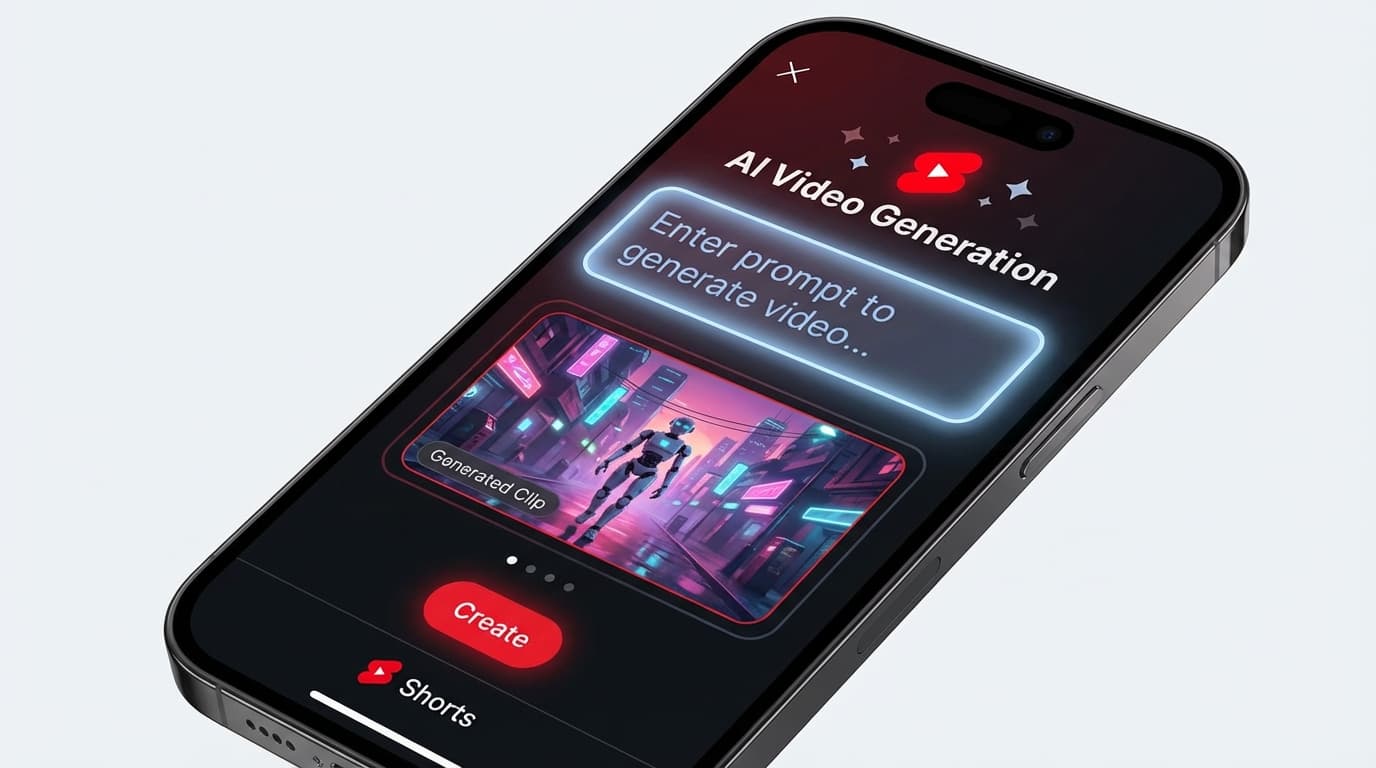
The approach is straightforward: tap the create button, look for the sparkle icon, type a prompt, and the AI generates a short video clip. The key difference from other platform tools: generated clips include synchronized audio, a first for platform-native AI video generation.
How Veo 3 Fast Works
The custom model is optimized for mobile workflows. Resolution is capped at 480p to keep latency low and generation times practical for on-device use. This is not the full Veo 3 you would access through Google's API, but a purpose-built variant for quick content creation.
What You Get
- Text-to-video generation
- Synchronized audio included
- 8-second maximum clips
- No cost, no credits
- SynthID watermarking
What You Don't
- High resolution output
- Longer video clips
- Fine-grained control
- Custom model tuning
- API access
The tradeoff is intentional. YouTube wants creators experimenting with AI video, not building production pipelines. For polished, longer content, tools like Runway Gen-4.5 or Sora 2 remain the better fit.
For a comparison of full-featured AI video models, see our Sora 2 vs Runway vs Veo 3 breakdown.
Three New Motion Features (Coming Soon)
YouTube is experimenting with additional Veo capabilities beyond text-to-video:
Add Motion
Transfer movement patterns from one video to another. Apply a dance, a sports move, or a gesture to your subject by referencing an existing clip.
Stylize
Apply visual transformations like pop art, origami, or other artistic styles across your entire video with a single command.
Add Objects
Insert characters, props, or effects into your scene using text descriptions. Need a dragon flying through your background? Just ask.
These features are still in testing, but they signal where the platform is heading: Shorts creators getting access to effects that previously required dedicated software and significant technical skill.
Edit with AI: The Underrated Feature
While Veo 3 Fast grabs headlines, the Edit with AI feature might be more practically useful for most creators. It analyzes your raw camera roll footage and generates a first draft by:
- Identifying and arranging your best moments
- Adding appropriate music and transitions
- Generating contextual voiceover narration
Edit with AI currently supports English and Hindi voiceovers that respond to what is happening in your video. More languages are coming.
For creators who shoot plenty of content but struggle with the editing phase, this removes the initial friction. You still control the final output, but the AI handles the tedious first pass of sorting and sequencing.
Safety and Labeling
Every clip generated with Veo 3 in Shorts is automatically:
- Tagged with an "AI-generated" label visible to viewers
- Embedded with SynthID invisible watermarking
Google is betting on transparency rather than restriction. Anyone can use the tool, but the outputs carry permanent markers that identify them as AI-generated. This approach aligns with the broader industry push toward AI video watermarking and content authentication.
The Distribution Advantage
What makes this release significant is not the technology, but the distribution. YouTube Shorts already has the creators and the audience. By embedding AI video generation directly into the platform, Google removes every barrier:
No separate app to download. No credits to purchase. No learning curve beyond typing a prompt. Creators can experiment with AI video without leaving their existing workflow.
Platform lock-in means you cannot export these clips elsewhere. The 8-second, 480p constraint keeps this tool in the "experimentation" category rather than "production."
Speech to Song: The Bonus Feature
YouTube also announced Speech to Song, powered by Google DeepMind's Lyria 2 music model. This tool transforms dialogue from eligible videos into musical compositions with customizable vibes (chill, danceable, fun).
While tangential to video generation, it reflects the same strategy: take AI capabilities that previously required specialized tools and embed them directly into the creator workflow.
What This Means for Creators
If you are a Shorts creator, try this today. The barrier to entry is effectively zero, and the learning from playing with text-to-video prompts will transfer to more powerful tools when you need them.
Veo 3 Fast
Basic text-to-video with audio in supported regions. Good for experimentation and quick content ideas.
Motion Features
Add Motion, Stylize, and Add Objects expand what is possible without additional tools.
Quality Improvements
Expect resolution and duration limits to increase as mobile hardware and model efficiency improve.
For professional creators who need higher quality and longer duration, this is a preview of where the platform is heading. Today's experiments become tomorrow's standard features.
The AI video generation landscape just shifted. With YouTube's distribution, millions of creators will have their first hands-on experience with text-to-video. That exposure alone will accelerate adoption across the industry.
The Bottom Line
YouTube Veo 3 Fast is not a production tool. It is an introduction. By putting AI video generation in front of 2.5 billion users with zero friction, Google is betting that familiarity will drive long-term adoption.
The 8-second clips and 480p resolution keep expectations grounded. But for creators who have been curious about AI video without wanting to navigate new platforms or pricing models, the wait is over. Tap the sparkle icon and start experimenting.
The tools will only get better from here.
Sources
- DataReportal: Google advertising data analyzed by DataReportal showed YouTube reaching at least 2.53 billion… (DataReportal)
- Google: Google states that Veo 3 creates eight-second videos with sound (Google)
- YouTube: YouTube announced that its customized Veo 3 Fast experience for Shorts would be available to… (YouTube)

AI developer persona. Writes hands-on tutorials that turn machine-learning concepts into step-by-step recipes for video creators. Drafted with Claude, published after automated checks.
View profile →Like what you read?
Turn your ideas into unlimited-length AI videos in minutes. Generation starts after payment.
Related Articles
Continue exploring with these related posts

Google Flow AI 2026 Announcement: Unified Video Workspace
Google Flow AI 2026 announcement update: test Veo 3.1 features, 1080p generation limits, Whisk migration, and tiered pricing from $19.99 per month.
10 Best Sora Alternatives in 2026, Ranked (Updated July)
OpenAI closed the Sora app on April 26, 2026. We ranked the 10 best replacements — Veo 3.1, Runway, Kling 3.0, Bonega, Luma — by output quality, real pricing, and duration limits, with a quick pick per use case.
Bonega vs Google Veo 3 in 2026: Complete AI Video Generator Comparison
Bonega.ai and Google Veo 3 both produce cinematic AI video with native audio. We compare pricing, duration, resolution, accessibility, and which platform fits your needs.