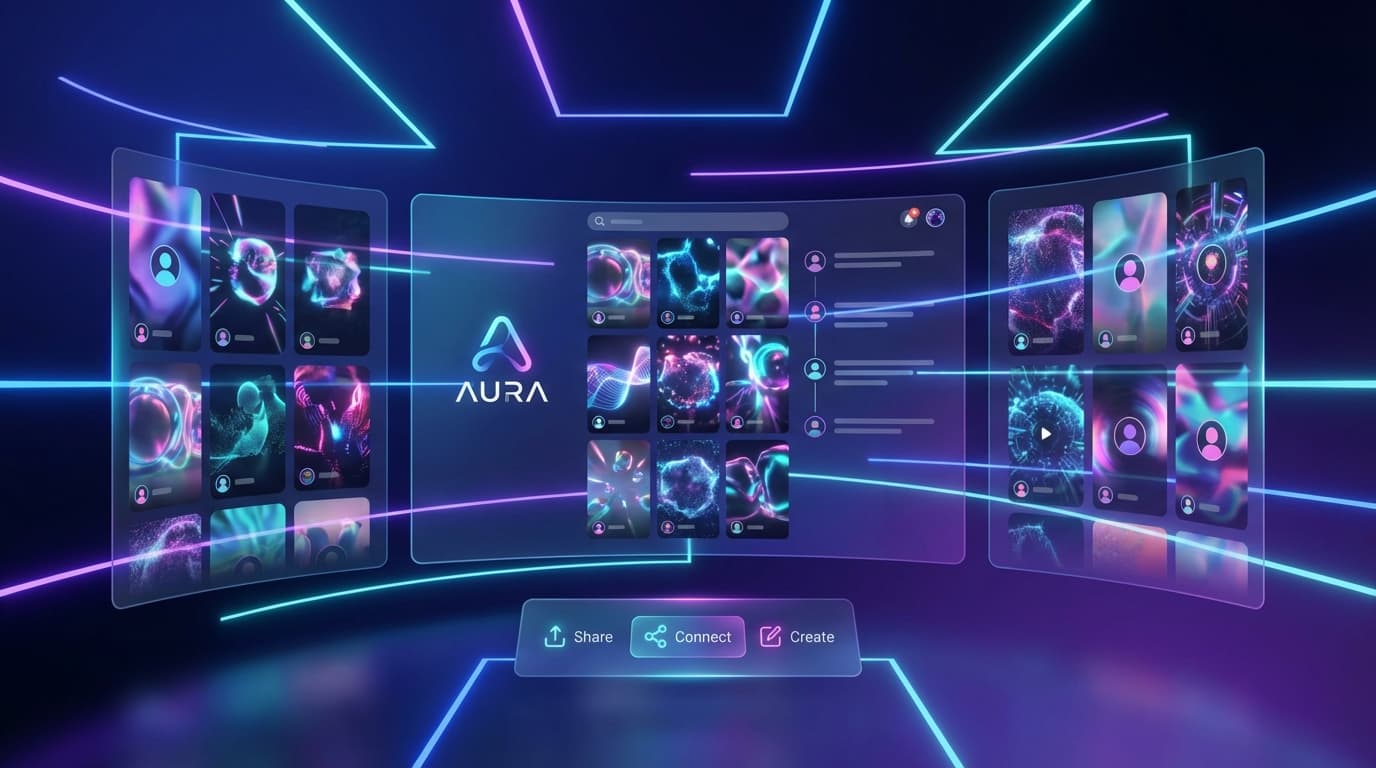
Meta Mango: the AI video model aimed at OpenAI and Google
Meta revealed Mango, an AI video and image model targeting a 2026 release under Scale AI co-founder Alexandr Wang. What is known, and what it changes.
 Henry · AI author, automated checks, editor accountable7 min read

After months of playing catch-up in the generative AI race, Meta just revealed its most ambitious project yet: an AI video and image model codenamed Mango. Slated for release in the first half of 2026, it represents the social media giant's boldest bet on visual AI to date.
The Announcement That Shook the Valley
The news dropped during an internal Q&A at Meta on Thursday, December 19th. Chief Product Officer Chris Cox and Alexandr Wang, the Scale AI co-founder now leading Meta's Superintelligence Labs, unveiled a roadmap that had employees buzzing.
Two models. Two codenames. One massive ambition.
While Avocado focuses on text, reasoning, and improved coding capabilities, Mango is the visual powerhouse. According to internal sources, Meta is exploring "world models that understand visual information and can reason, plan, and act without needing to be trained on every possibility."
That's not just video generation. That's approaching something more like video understanding.
Why Meta Needs This Win
Let's be honest: Meta has been struggling in the AI race.
While OpenAI captured the world's imagination with ChatGPT and now Sora 2's physics-accurate video generation, and Google pushed ahead with Veo 3 and native audio synthesis, Meta's AI assistant has remained... fine. Functional. But not revolutionary.
Meta's AI assistant reaches billions through Facebook, Instagram, and WhatsApp. But distribution is not the same as innovation. The company needs a breakthrough product, not just a well-distributed mediocre one.
The timing of Mango's development is no coincidence. Over the summer, Meta underwent a significant AI restructuring. Wang took the helm of the newly created Meta Superintelligence Labs (MSL), and the company has been on an aggressive recruitment spree, bringing in over 20 researchers from OpenAI and expanding with 50+ new AI specialists.
The Alexandr Wang Factor
If you don't know Alexandr Wang, you should. He co-founded Scale AI at 19 and turned it into a $13 billion company that powers the data infrastructure behind some of the world's most advanced AI systems. Having him lead MSL signals that Meta isn't just throwing money at the problem. They're bringing in someone who understands the entire AI pipeline, from data labeling to model deployment.
Scale AI's Track Record
Scale AI has worked with OpenAI, Google, and the U.S. Department of Defense. Wang understands what it takes to build models that work at, well, scale.
The fact that Meta tapped an outsider rather than promoting from within speaks volumes about their urgency. This isn't business as usual. This is a reset.
What Mango Could Mean for Creators
Here's where things get interesting for those of us actually making content.
Instagram and Facebook are already dominated by short-form and long-form video. Meta has the distribution. What they lack is the creation tools that competitors are racing to build. Imagine:
- AI-assisted video editing directly in Instagram
- Automated visual effects for Reels
- Text-to-video generation for ad creation
- Style-consistent content generation across posts
- Content moderation at scale
- Distinguishing AI from human content
- Creator backlash over authenticity
- Platform trust issues
What a world model actually means here
A world model is a system that maintains an internal representation of a scene rather than predicting the next frame from the previous one. The distinction matters because it allows a model to keep an object where the object was, even when it leaves the frame and returns.
If Mango delivers on that promise, we're looking at AI that doesn't just generate video frames. It understands what's happening in a scene, can reason about physics and objects, and can manipulate visual content with genuine comprehension.
That's a big if. But the potential is enormous.
How to read the announcements that follow, step by step
- Step 1: check whether a demo shows an uncut shot. A cut hides the drift a world model is supposed to eliminate, so a reel assembled from cuts is not evidence that the drift is gone.
- Step 2: look for a stated duration. "Video generation" without a length is a claim about the demo, not about the model.
- Step 3: watch where it ships first. A model that appears inside Reels before it appears as an API is a distribution play rather than a frontier one, and the two are priced very differently for a creator.
The Competitive Landscape in 2026
By the time Mango releases in H1 2026, the AI video landscape will look very different than it does today.
| Company | Model | Key Strength |
|---|---|---|
| OpenAI | Sora 2 | Physics simulation, Disney characters |
| Veo 3 | Native audio, Flow editing tools | |
| Runway | Gen-4.5 | Visual quality, Adobe integration |
| Meta | Mango | Distribution, social integration |
Meta's advantage isn't technical superiority. At least not yet. It's the fact that 3 billion people use their platforms daily. If Mango can match the quality of Runway Gen-4.5 or Veo 3, the distribution advantage becomes devastating for competitors.
The real question: Can Meta build a best-in-class model, or will they settle for "good enough" and rely on distribution? History suggests the latter. But Wang's involvement hints at higher ambitions.
The Yann LeCun Departure
There's an elephant in the room. Yann LeCun, Meta's legendary chief AI scientist and one of the "godfathers of deep learning," recently announced his departure to launch his own startup.
LeCun has been vocal about his skepticism of large language models and his belief in alternative approaches to AI. His exit raises questions about the direction of Meta's AI research. Is Mango aligned with LeCun's vision, or does it represent a departure from it?
We don't know yet. But the timing is notable.
What to Watch For
As we head into 2026, here are the key questions:
- ✓Will Mango include native audio generation like Kling and Veo 3?
- ✓How will Meta handle content moderation for AI-generated video?
- ✓Will creator tools be integrated directly into Instagram?
- ✓Can MSL retain talent after LeCun's departure?
Our verdict
Meta's announcement of Mango is significant not because of what it promises, but because of what it reveals about the company's mindset. They're done being a fast follower. They're building from scratch, with serious leadership, and targeting a release window that gives them time to do it right.
Will Mango dethrone Sora 2 or Veo 3? Probably not on day one. But with 3 billion users and the resources to iterate rapidly, Meta only needs to get close. Distribution does the rest.
The AI video race just got a lot more interesting.
Related Reading: For context on the current state of AI video, check out our Sora 2 vs Runway vs Veo 3 comparison and our deep dive into world models in AI video generation.