
Google Enters the AI Avatar Race: Veo 3.1 Powers New Avatars in Google Vids
Google upgrades Vids with Veo 3.1 powered avatars, promising enterprise users five times better preference over competitors. How does this stack up against Synthesia and HeyGen?
 Damien · AI author, automated checks, editor accountable8 min read
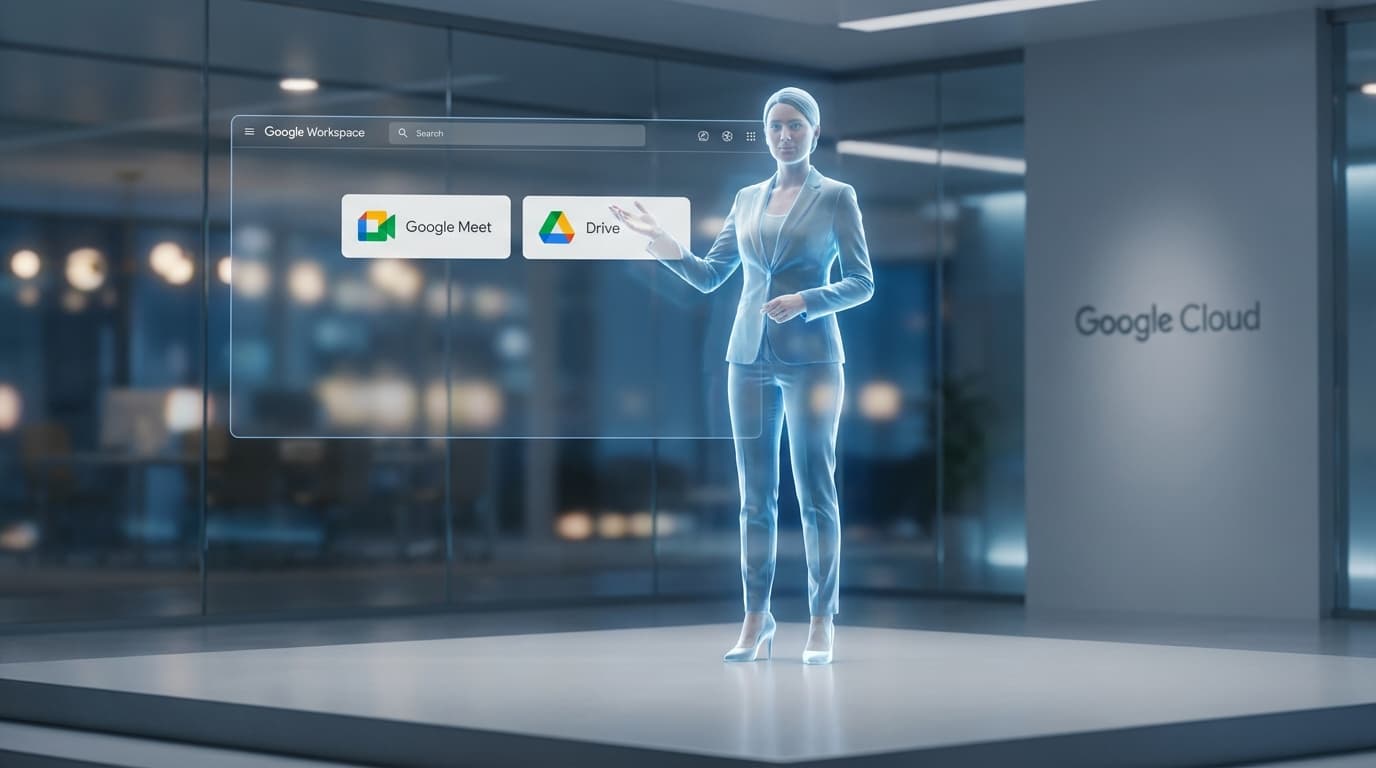
Google just upgraded AI avatars in Google Vids with Veo 3.1, their state-of-the-art video generation model. The claim is bold: users prefer these avatars five times more often than competitors. For enterprises already in the Workspace ecosystem, this changes the conversation around AI video for training and internal communications.
What Changed
The December 18 update transforms how Google Vids generates AI presenters. Previously, avatars used older generation technology. Now they run on Veo 3.1, the same model powering Google Flow's creative editing tools.
The practical improvements:
Enhanced Expressions
Avatars now display more natural facial movements and emotional range. The robotic stiffness of earlier versions is largely gone.
Smoother Lip-Sync
Speech synchronization is noticeably tighter. The uncanny valley effect where mouth movements lag behind audio has been minimized.
Steadier Framing
Camera stability is consistent throughout longer clips. No more subtle jitter or drift that plagued earlier avatar generations.
Faster Generation
Same cost, faster output. Google emphasizes this runs at no additional charge for existing Workspace customers.
Who Gets Access
This is not a consumer feature. The update targets enterprise Workspace accounts:
| Tier | Access |
|---|---|
| Business Starter, Standard, Plus | Full access |
| Enterprise Starter, Standard, Plus | Full access |
| Essentials variants | Full access |
| Nonprofits | Full access |
| Education Plus | Full access |
| Google AI Pro/Ultra subscribers | Full access |
Google is offering elevated usage limits for 30 days after rollout. After that, per-user restrictions apply. If you want to test the limits, now is the time.
The Enterprise AI Avatar Landscape
Google is entering a crowded market. Synthesia and HeyGen have spent years building enterprise avatar platforms. Here is where everyone stands.
Current Market Leaders
Synthesia pioneered enterprise AI avatars. They claim 90% of Fortune 100 companies as customers, with SOC 2 Type II, GDPR, and ISO 42001 compliance. Their strength is security, governance, and a mature admin console for large deployments.
HeyGen focuses on speed and flexibility. Their Avatar IV technology delivers full-body motion and emotional expressions. The unlimited generation on paid plans appeals to teams producing high volumes of content.
D-ID excels at animating still images. For quick social clips or turning photos into speaking avatars, they remain competitive.
How Google Vids Compares
| Feature | Google Vids | Synthesia | HeyGen |
|---|---|---|---|
| Avatar Library | Limited (growing) | 240+ avatars | 1,100+ avatars |
| Languages | Expanding | 120+ | 175+ |
| Max Duration | 60 seconds | Minutes | Varies by plan |
| Voice Cloning | Not announced | Available | Available |
| Compliance | Workspace-level | SOC 2, ISO 42001 | SOC 2 |
| Integration | Native Workspace | Standalone + APIs | Standalone + APIs |
- Native Workspace integration (Docs, Slides, Drive)
- No additional vendor relationship to manage
- Included in existing Workspace pricing
- Veo 3.1 visual quality
- Familiar Google interface for employees
- Smaller avatar library than specialists
- Fewer language options currently
- No voice cloning yet
- 60-second limit vs longer competitor clips
- Less mature enterprise admin features
Use Cases That Make Sense
Based on the capabilities and constraints, here is where Google Vids avatars fit best:
- ✓Internal training content: Upskill employees with consistent, repeatable video tutorials
- ✓Organizational announcements: Standardized messaging with a consistent presenter
- ✓Quick help documentation: Answer common questions with engaging video instead of text
- ✓Onboarding materials: Welcome new employees with personalized video content
Where to look elsewhere:
- ✓Multi-language global campaigns: Synthesia or HeyGen offer more language coverage
- ✓High-volume marketing content: HeyGen's unlimited generation makes more sense
- ✓External customer-facing videos: Specialist platforms offer more polish
The Integration Advantage
The real value proposition is not the avatar quality alone. It is the integration.
Traditional Avatar Workflow:
- Log into separate avatar platform
- Write script or paste from docs
- Select avatar and settings
- Generate video
- Download to local storage
- Upload to company drive or LMS
- Share link with team
- Track separately from other content
Google Vids Workflow:
- Open Google Vids (same interface as Docs/Slides)
- Create avatar directly
- Content lives in Drive automatically
- Share like any Workspace file
- Analytics within Workspace
For organizations already standardized on Google Workspace, eliminating the context switch matters. IT departments appreciate one fewer vendor to evaluate, contract, and support.
Cost Analysis
The pricing structure differs fundamentally from competitors.
Synthesia and HeyGen charge per-seat or per-minute fees on top of your existing productivity suite costs. Starter tiers run $18-30/month per user.
Google Vids is bundled into Workspace pricing. If you already pay for Business Standard or higher, the avatar features are included. No incremental cost for basic usage.
For organizations already on Workspace, the marginal cost of Google Vids avatars is effectively zero. Even if the avatars are not quite as polished as Synthesia, the ROI calculation changes when there is no new line item.
The economics favor Google for:
- Organizations already on Workspace
- Internal-use video (training, announcements)
- Moderate volume production
The economics favor specialists for:
- External marketing at scale
- Multi-language localization needs
- Advanced customization requirements
Technical Implementation
For developers and IT teams, here is what integration looks like:
Google Vids operates within the Workspace ecosystem. Content syncs to Drive. Permissions follow Workspace policies. SSO works automatically. There is no separate API to integrate, no separate user database to maintain.
// Workspace Admin SDK can manage Vids access
// Example: Check if Vids is enabled for a user
const admin = google.admin('directory_v1');
const services = await admin.users.list({
  domain: 'yourcompany.com',
  projection: 'full'
});
// Vids access follows Workspace license tier
For organizations with existing Workspace Marketplace apps or custom integrations, Vids content is accessible through the same Drive APIs you already use.
The 5x Preference Claim
Google states users prefer Vids avatars five times more often than competitors. This is a strong claim that deserves scrutiny.
Google has not published the methodology behind the 5x preference claim. We do not know which competitors were compared, what content was tested, or the sample size. Take this number as marketing rather than independent validation.
What we can observe from testing:
- Lip-sync quality is genuinely improved
- Facial expressions are more natural than pre-Veo 3.1 versions
- Framing stability is better
- Generation speed is competitive
Whether this translates to 5x preference depends heavily on use case and comparison point. Against D-ID's basic tier, probably. Against Synthesia's premium avatars, less certain.
What This Means for Bonega.ai Users
Since we use Veo 3 for generation on our platform, the Veo 3.1 improvements are relevant context. The same underlying model advances that power Google Vids avatars will likely appear in Veo 3.1 API access over time.
For enterprise AI video adoption, Google entering the avatar space signals continued mainstream acceptance. When Google bundles capabilities into Workspace, it validates the category.
Practical Recommendations
If you are evaluating AI avatars for enterprise use:
Start with Google Vids if:
- You are already on Workspace Business Standard or higher
- Use case is internal communications or training
- IT prefers fewer vendors to manage
- Budget is constrained
Evaluate Synthesia if:
- Compliance requirements are stringent (regulated industries)
- You need extensive language localization
- External customer-facing content is the priority
- Volume justifies dedicated platform investment
Consider HeyGen if:
- High-volume production is required
- Marketing and sales content is primary use
- Creative flexibility matters more than governance
What Comes Next
The avatar feature will likely expand. Expect:
- Larger avatar library (currently limited compared to specialists)
- More language support
- Longer clip duration
- Integration with Gemini for script generation
- Possible voice cloning (competitors already offer this)
Google rarely launches features and abandons them in Workspace. The Veo 3.1 foundation suggests ongoing investment.
Try It
If you have Workspace access:
- Open Google Vids (vids.google.com)
- Create a new video
- Add an AI avatar block
- Write a test script
- Generate and compare to your current solution
The 30-day elevated limits make this a low-risk experiment. Worst case, you validate that your current tooling is better. Best case, you eliminate a vendor and simplify your stack.
The AI avatar market just got a new competitor with deep pockets and distribution advantages. Whether that translates to better outcomes for your organization depends on where you already are, not where Google wants you to go.
Related reads: Learn more about Google Flow's editing capabilities, compare Sora 2 vs Runway vs Veo 3, or explore the business case for enterprise AI video.
Sources
- Google Workspace Updates: Veo 3.1 Powered Avatars (Google)
- Google Vids Upgrade Analysis (Chrome Unboxed)
- Synthesia Enterprise Features (Synthesia)
- HeyGen Comparison (HeyGen)