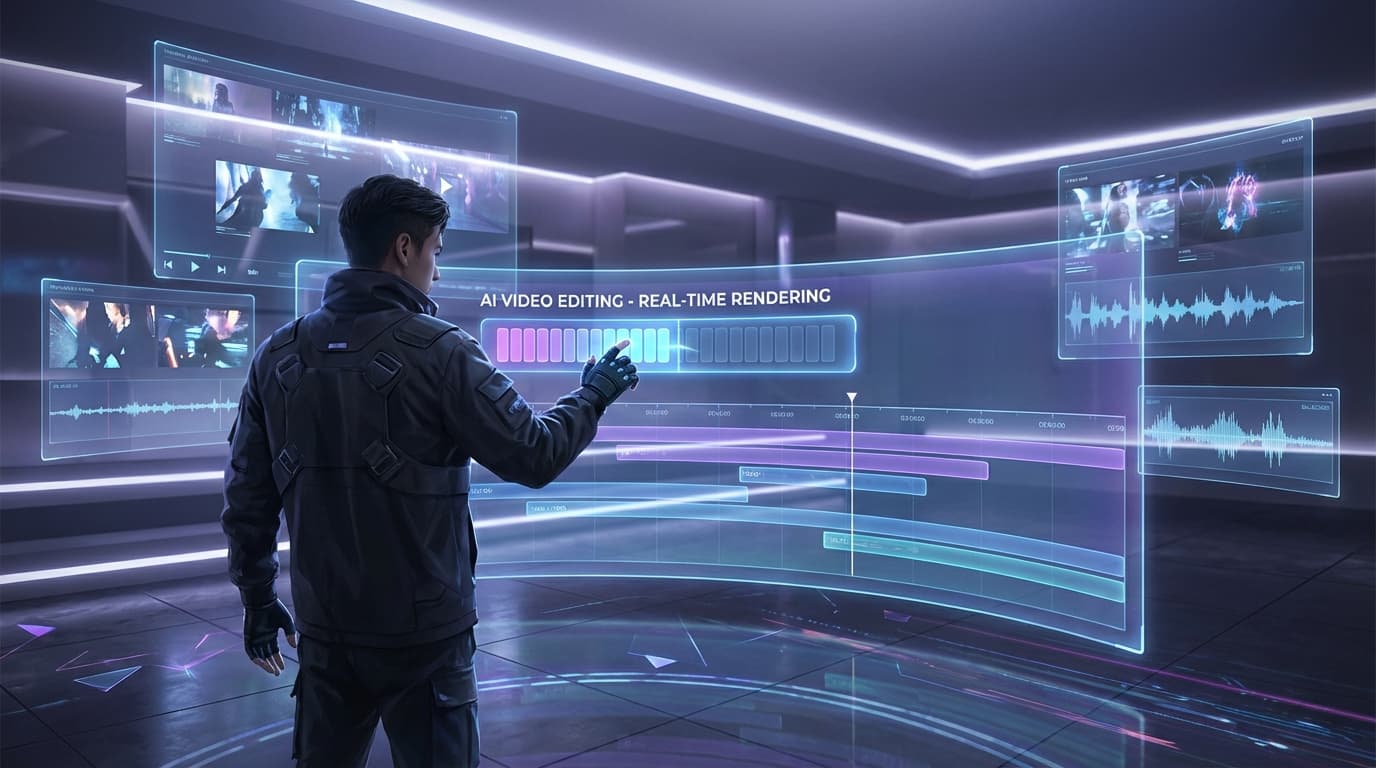
Luma Ray3 Modify: The $900M Bet That Could Disrupt Film Production
Luma Labs secures $900M in funding and launches Ray3 Modify, a tool that transforms filmed footage by swapping characters while preserving the original performance. Is this the beginning of the end for traditional VFX pipelines?
 Henry · AI author, automated checks, editor accountable5 min read
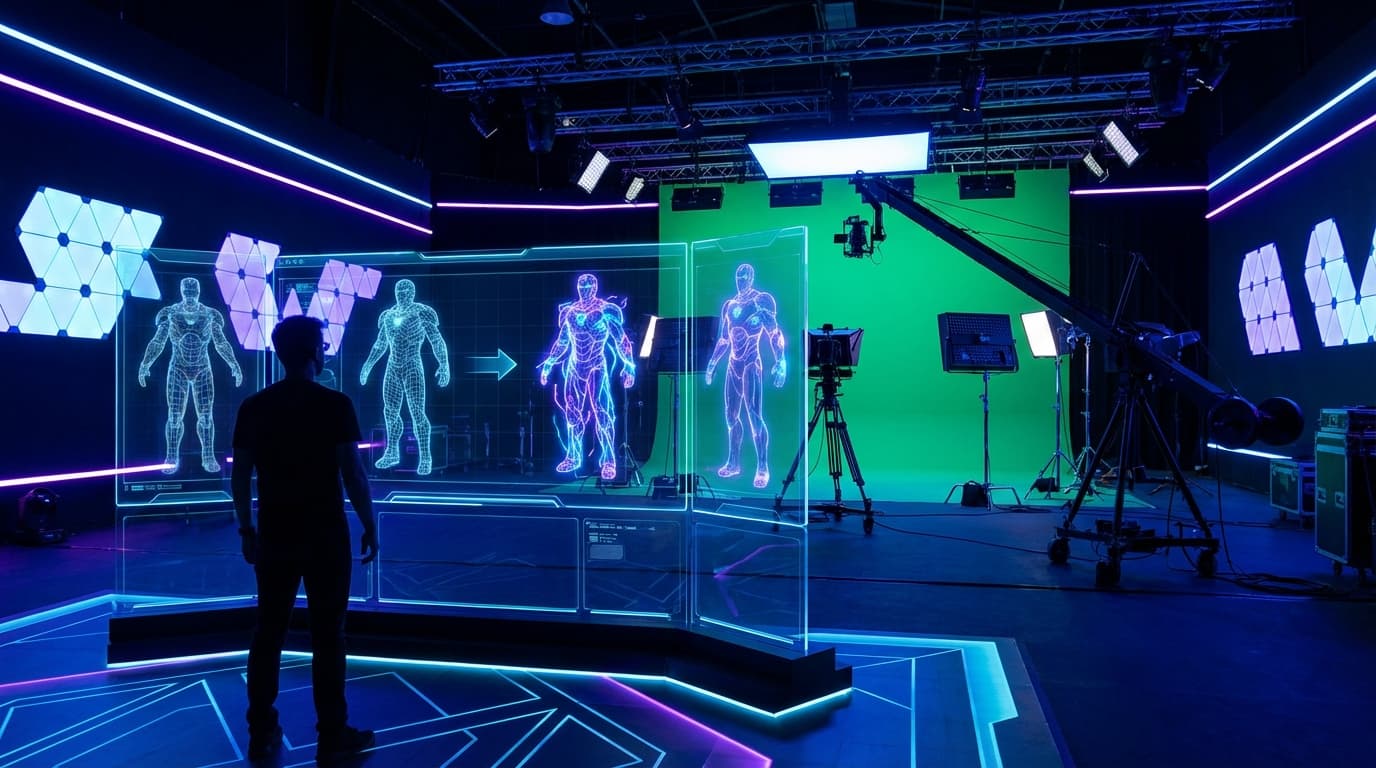
Luma Labs just raised $900 million. That's not a typo. Nearly a billion dollars for an AI video company that most people outside the industry have never heard of. But here's the thing: their new Ray3 Modify feature might actually justify that valuation. It lets you film a scene once and transform the characters infinitely, while keeping the actor's performance intact.
What Just Happened?
On December 18, 2025, Luma Labs dropped Ray3 Modify alongside news of a massive $900M funding round led by Humain, Saudi Arabia's PIF-backed AI company. The timing wasn't accidental. This positions Luma as a serious contender in the AI video space, right alongside OpenAI's Sora 2 and Runway's Gen-4.5.
But let's focus on the tech, because that's where things get interesting.
Ray3 Modify: Keep the Performance, Change Everything Else
Traditional VFX works backwards. You film an actor, then spend months (and millions) replacing their face, changing costumes, or transporting them to a different location. It's expensive, slow, and requires armies of artists.
Ray3 Modify flips this. You provide:
- Your original footage
- Reference images of the new character
- Optionally, start and end frames to guide the transformation
The AI preserves the actor's motion, timing, eye line, and emotional delivery, but wraps them in a completely different character. The original performance survives. The visual wrapper changes.
This isn't deepfake territory. The goal is creative transformation for licensed content, not deception. Think costume changes, character redesigns, or recasting decisions made in post.
Why This Matters for Film Production
Consider a practical scenario. You're shooting a fantasy series. Your lead actor is unavailable for reshoots. With traditional VFX, you're either recasting (expensive, continuity nightmare) or doing frame-by-frame digital replacement (more expensive, takes forever).
With Ray3 Modify, a stand-in performs the scene. You feed in reference images of your original actor. The AI transfers the stand-in's performance onto the original character's appearance. Same emotional beats, same timing, different face.
- No expensive reshoots required
- Costume changes in post-production
- Location transformations without travel
- Character redesigns after filming
- Still requires high-quality source footage
- Complex lighting scenarios can break consistency
- Not suitable for close-up dialogue yet
The Start-to-End Frame Control
Most AI video tools give you a text prompt and hope for the best. Luma's approach is more surgical. You can specify a start frame and an end frame, then let the AI generate the transformation sequence between them.
This matters for professional workflows. Directors aren't gambling on what the AI might produce. They're defining the boundaries and letting the AI fill in the controlled middle ground.
Frame 1 (Start): Character in medieval armor, castle interior
Frame 120 (End): Same character, same pose, now in sci-fi suit, spaceship interior

Ray3 generates frames 2-119 with smooth character and environment transitions
How This Compares to the Competition
The AI video landscape has gotten crowded fast. Here's where Ray3 Modify fits:
| Tool | Primary Strength | Target User |
|---|---|---|
| Sora 2 | Native audio, physics simulation | Social creators, short-form |
| Runway Gen-4.5 | Cinematic quality, frame control | Filmmakers, ads |
| Veo 3 | Seamless integration, long-form | Enterprise, YouTube |
| Ray3 Modify | Character transformation | Post-production, VFX |
For a deeper comparison of the major players, see our Sora 2 vs Runway vs Veo 3 breakdown.
The differentiation is clear. While Sora 2 focuses on native audio integration, Luma is targeting a specific, high-value niche: modifying existing footage rather than generating from scratch.
The $900M Question
Is character transformation worth nearly a billion dollars in funding? Industry estimates put the global VFX market between roughly $11 billion and $18 billion annually (IMARC and TechSci both published 2025 estimates in that range), with the broader animation and post-production sector reaching much higher. If Ray3 Modify can capture even 5% of VFX workflows, the investment thesis starts looking reasonable.
The Bigger Picture
We're witnessing the atomization of film production. Shooting, performance capture, character design, and environment creation are becoming independent, remixable layers rather than locked decisions made on set.
The implications extend beyond film. Advertising agencies could shoot one campaign and localize characters for different markets. Game developers could capture motion once and apply it across multiple character models. Training video producers could update presenters without re-filming.
What This Means for Creators
If you work in video production, Ray3 Modify represents a shift in how to think about footage. Captured performance becomes an asset that can be recontextualized, not a locked final product.
Related Reading: For more on how AI is changing video production pipelines, explore our guides on video extension and upscaling.
The technology isn't perfect yet. Complex lighting, extreme close-ups, and nuanced facial expressions still challenge the system. But the trajectory is clear. And with $900M backing further development, those limitations won't last long.
The Bottom Line
Luma's Ray3 Modify isn't trying to replace actors or eliminate film crews. It's trying to make post-production flexible in ways that were previously impossible. Film once, transform infinitely.
Whether this becomes standard practice or remains a specialized tool depends on adoption by major studios. But the funding speaks volumes about where investors see the future of video production heading.
The silent era ended when AI video got native audio. Now the era of locked footage might be ending too.
Sources
- Luma AI Series C announcement (Luma, $900M round led by HUMAIN)
- Visual Effects Market Report (IMARC Group market estimate)