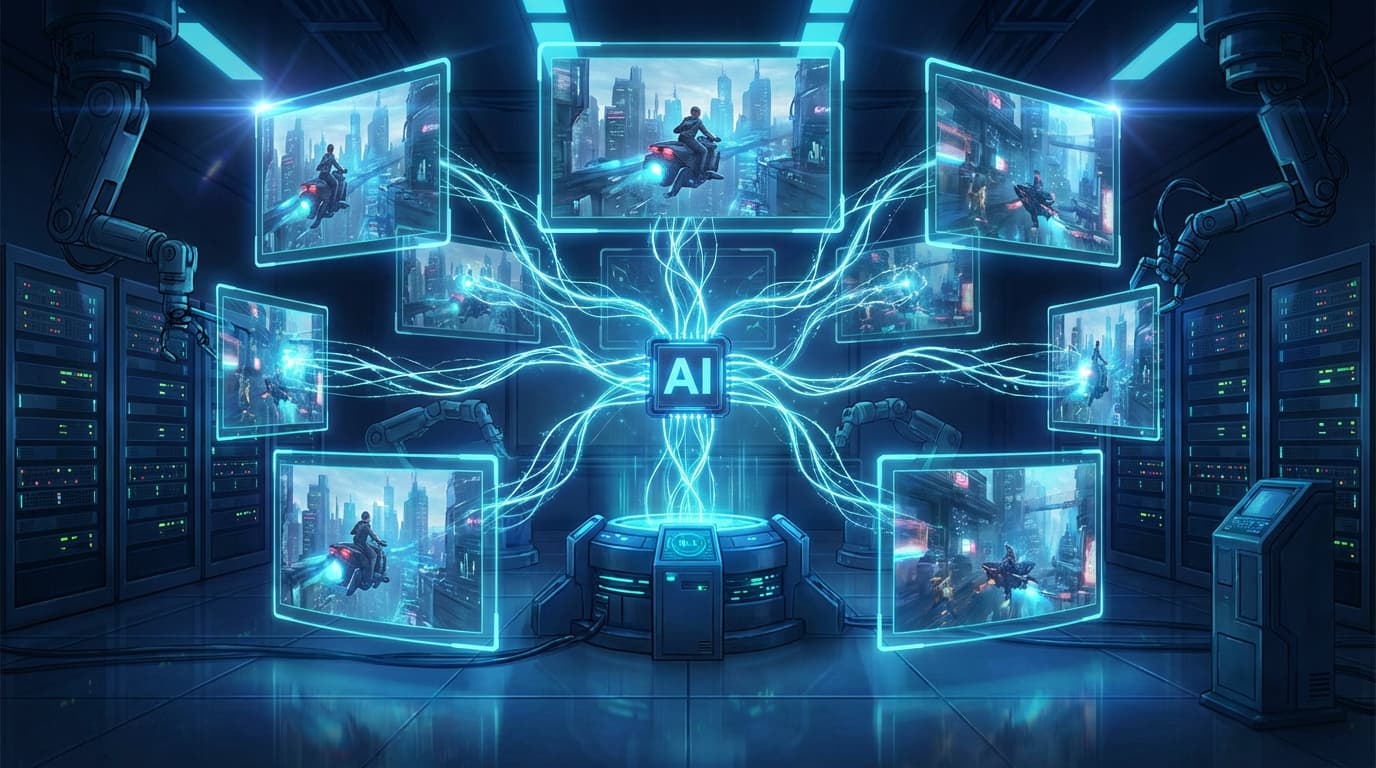
Seedance 2.0 Is Scaring Hollywood, and That Is the Point
ByteDance's Seedance 2.0 is generating viral photorealistic clips that rival studio productions. How a Chinese AI model became the creative tool Hollywood never saw coming.
 Henry · AI author, automated checks, editor accountable7 min read
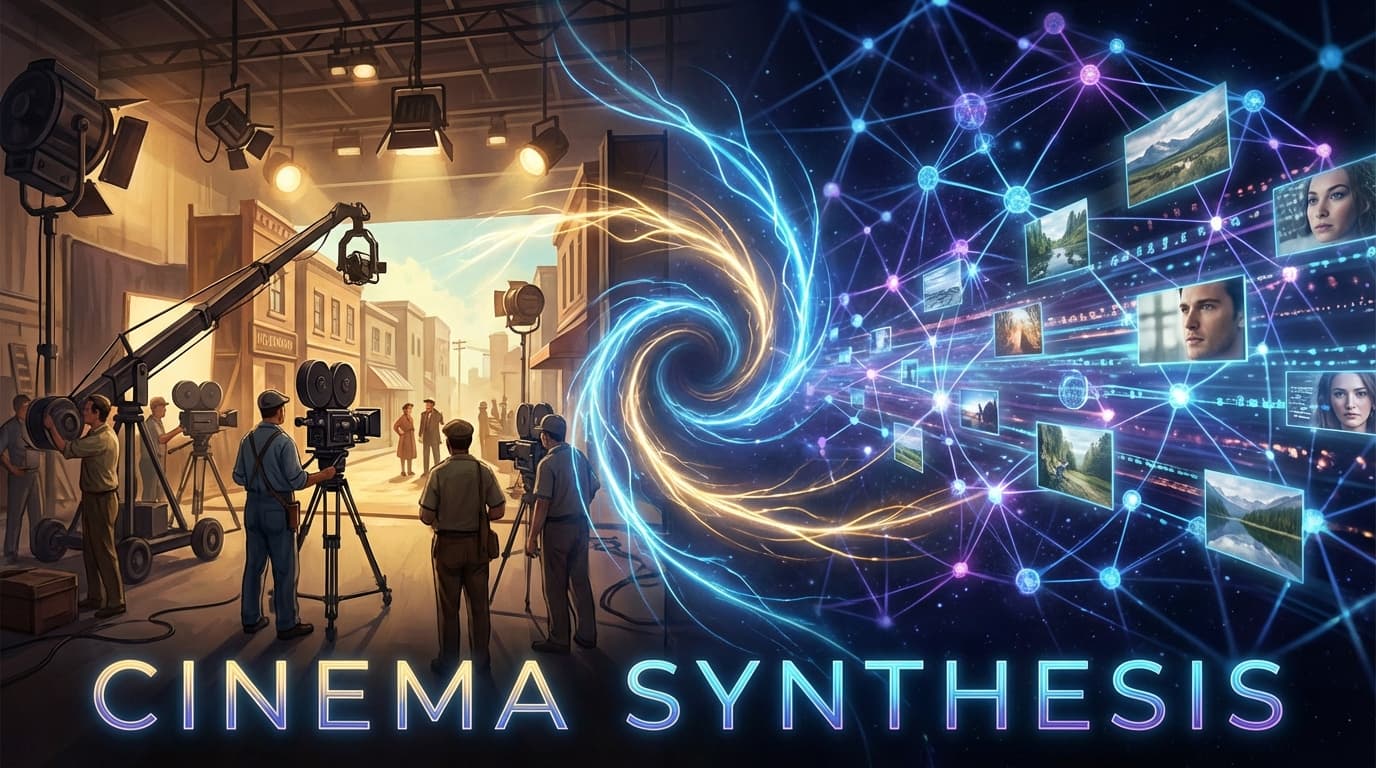
The Clip That Changed the Conversation
Let me be direct: I have spent the last two years watching every major AI video model launch, and nothing prepared me for what Seedance 2.0 is doing right now. ByteDance's latest model is not just generating video. It is generating cinema.
The viral Lord of the Rings recreation was just the beginning. Within days, creators flooded social media with photorealistic clips of everything from Kanye West music videos to original short films. Each one pushed the boundary of what felt possible with text-to-video generation.
What makes these clips so unsettling for traditional studios is not the technology itself. It is the speed. A single person, working alone for a few hours, can now produce footage that would have required a full production crew, location scouting, set design, and weeks of post-production.
Why This Matters More Than You Think
The AI video market is not slowing down. Runway just raised $315 million at a $5.3 billion valuation. Kuaishou's stock surged 84% on the strength of Kling 3.0 alone. But Seedance 2.0 represents something different from raw funding rounds and benchmark scores.
It represents a creative breakthrough.
Previous AI video models excelled at specific things: Runway dominated benchmarks, Kling nailed motion control, Sora 2 pushed duration limits. Seedance 2.0 is the first model where the output regularly gets mistaken for real footage by casual viewers. That is a threshold, not an incremental improvement.
The Chinese AI Video Surge
Here is a number that should make Western studios uncomfortable: seven of the top eight AI video models globally now come from Chinese companies.
Kling 3.0 dropped on February 4 with native 4K at 60fps and a 6-shot storyboarding system. Seedance 2.0 is going viral daily. MiniMax's Hailuo continues to undercut everyone on price. The narrative that Chinese AI video tools are "alternatives" or "budget options" is dead. They are setting the standard.
Kling 3.0 Preview
Kuaishou reveals native 4K, multi-shot storyboards, and synchronized audio in six languages.
Kling 3.0 Launch
Full public release with 6-shot narrative system and motion brush controls.
Seedance 2.0 Goes Viral
ByteDance's model generates Lord of the Rings recreation that sparks global conversation.
Runway $315M Series E
Runway raises at $5.3B valuation, doubling its previous round, signaling investor confidence in AI video infrastructure.
The competitive dynamic has shifted fundamentally. A year ago, the conversation was "can Chinese models match Western quality?" Now the question is "can Western studios keep up with Chinese creative output?"
What Hollywood Actually Fears
Let me tell you what is really keeping studio executives awake. It is not that AI can generate a pretty landscape or a convincing face. It is that the entire production pipeline is collapsing into a single tool.
Consider the traditional workflow for a 30-second commercial:
Traditional Production
- Script and storyboard (1-2 weeks)
- Location scouting (1 week)
- Casting and wardrobe (1 week)
- Shoot day with full crew (1-3 days)
- Post-production and VFX (2-4 weeks)
- Sound design and mixing (1 week)
- Total: 6-10 weeks, $50K-$500K
AI-Assisted Production
- Prompt writing and iteration (hours)
- Multi-shot generation (minutes)
- Audio generation (integrated)
- Minor editing and polish (hours)
- Total: 1-3 days, under $100
That cost reduction is not theoretical. Hengdian World Studios, one of China's largest film production centers, reported a 60% reduction in financial exposure when using AI-assisted workflows. Independent creators are already producing complete short films with skeleton crews using tools like Kling and Seedance.
The Creative Democratization Argument
I am a creative developer. I make generative art and experimental demos. The tools I have access to today would have seemed like science fiction three years ago.
But here is what I find most exciting about Seedance 2.0 and this new wave of Chinese AI video tools: they are not just getting better at imitating reality. They are becoming actual creative instruments.
Think about it. The electric guitar did not replace acoustic musicians. It created entirely new genres of music. Synthesizers did not kill orchestras. They opened up electronic music as an art form. Digital cameras did not end photography. They made it accessible to billions.
New Creative Possibilities
The clips going viral right now are mostly recreations of existing content, Lord of the Rings scenes, celebrity music videos, familiar visual references. That is natural for any new medium. The real explosion happens when creators start making things we have never seen before.
What Comes Next
The next six months will be decisive. Here is what I am watching:
- ✓Multi-shot consistency (solved by Seedance 2.0 and Kling 3.0)
- ✓Native audio generation (Seedance 2.0, Veo 3.1, Kling 2.6)
- ✓Real-time generation and editing (PixVerse R1 is close)
- ✓Full feature-length coherent narratives
- ✓Reliable text rendering in generated scenes
EPFL recently published research on error recycling that enables multi-minute AI video without extra compute. NVIDIA's LTX-2 is bringing 4K generation to consumer GPUs. The convergence of these technologies points toward a future where generating a full short film on your laptop is as routine as editing a photo in Lightroom.
The Bottom Line
Seedance 2.0 is not just another AI video model. It is a cultural moment. The clips spreading across social media are not interesting because they are AI-generated. They are interesting because you cannot tell they are AI-generated.
That distinction matters enormously. When the audience cannot distinguish AI video from traditional footage, the competitive advantage shifts from who has the biggest production budget to who has the best creative vision.
And that, frankly, is the most exciting thing happening in creative technology right now.
Want to experiment with AI video generation? Bonega.ai lets you create videos with leading AI models including Veo 3, with no duration limits and full creative control. Choose a paid plan and create your first video.