AI Video Meets Gaming: What NVIDIA's GDC 2026 Reveals Mean for Real-Time Creators
NVIDIA's GDC 2026 showed AI video generation running locally in real-time. Here is what that means for game developers, content creators, and the future of interactive media.
 Henry · AI author, automated checks, editor accountable6 min read
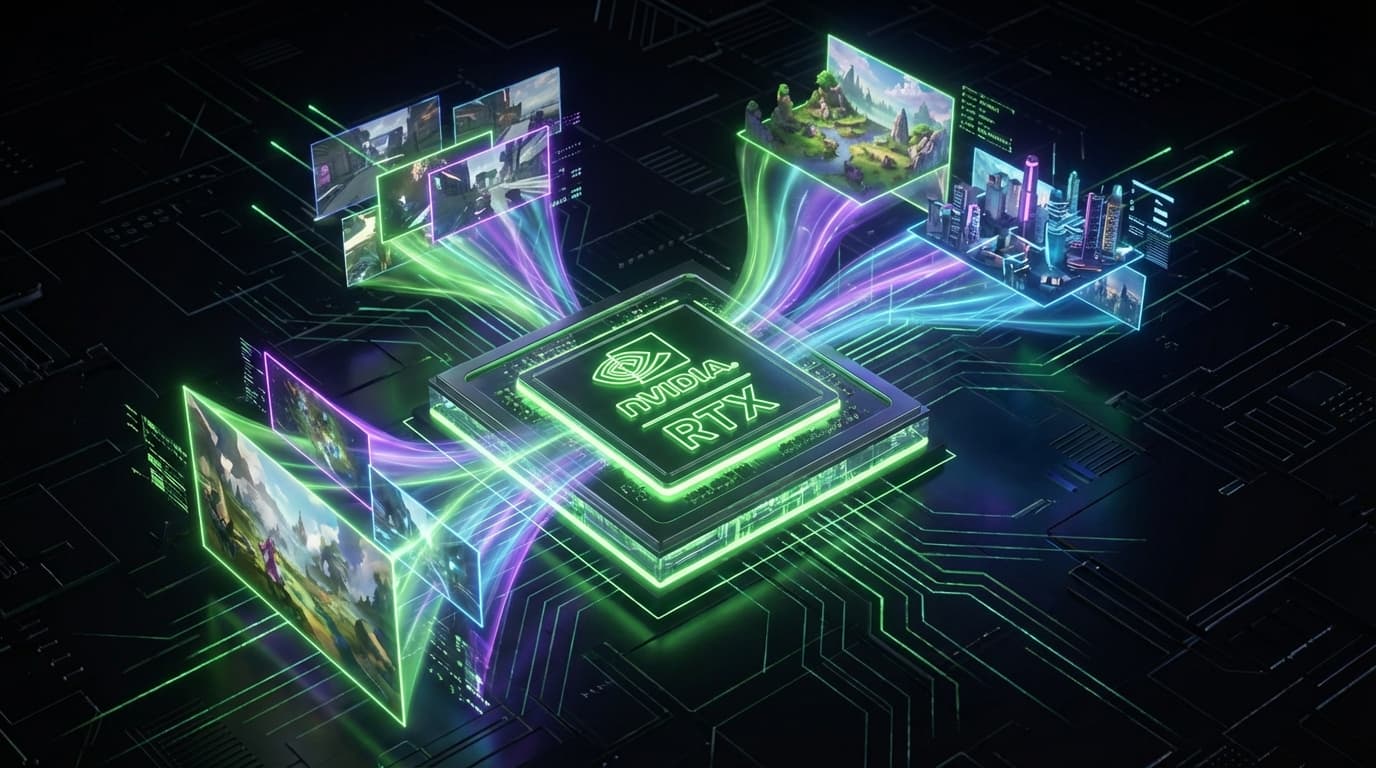
NVIDIA just showed something at GDC 2026 that changes the conversation about AI video. Not because the demos were flashy (they were), but because they proved a point that many of us suspected: the line between AI-generated video and real-time interactive media is disappearing.
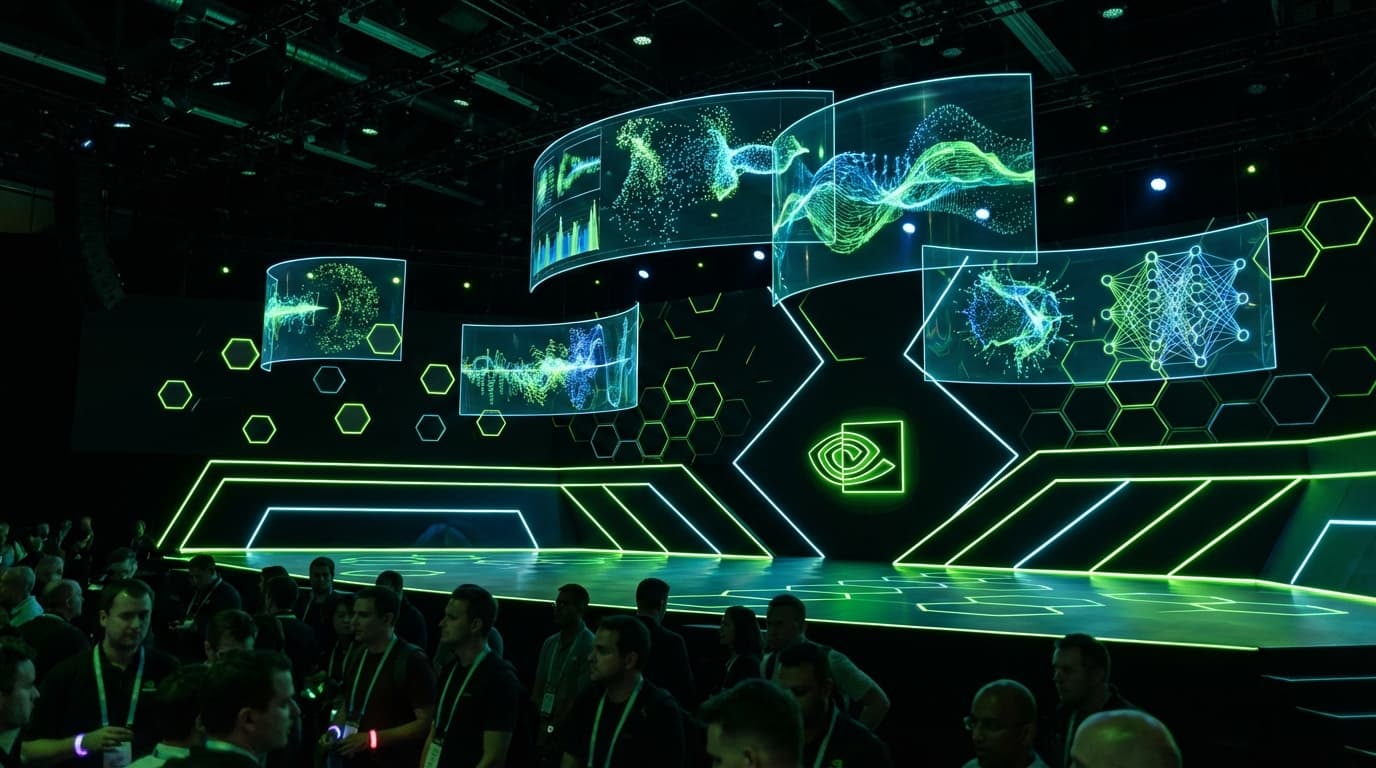
The GDC 2026 Moment
Every year, GDC delivers a few "wait, really?" moments. This year, NVIDIA's presentation landed squarely in that category.
The headliner: LTX-2, a 19-billion-parameter video generation model from Lightricks, now runs locally on RTX hardware. According to NVIDIA's GDC announcement, it generates up to 20 seconds of 4K video at 50 frames per second, using a fraction of the VRAM that cloud models require. The distilled variant operates in just 8 denoising steps.
To put that in perspective: even six months ago, generating a short 1080p clip through a cloud API took minutes and carried per-second costs. Now you can produce 20 seconds of 4K on hardware sitting under your desk.
ComfyUI Gets an App View (Finally)
If you have ever opened ComfyUI and felt like you accidentally wandered into a nuclear reactor control room, NVIDIA heard you. The new App View strips away the node-graph complexity and presents a clean, streamlined interface that non-technical creators can actually use.
This matters more than it sounds. ComfyUI is already the backbone of most serious AI video workflows. Making it accessible to game developers and non-ML creators opens the door to a massive new user base.
Why Game Developers Should Pay Attention
Here is where things get interesting for the gaming world. With local generation now practical on consumer GPUs, real-time AI video on local hardware means several things for game development:
Dynamic Cutscenes
Imagine generating cutscenes that respond to player choices in real-time, not pre-rendered, not branching paths, but truly dynamic visual narratives that adapt to gameplay.
Asset Generation
Background environments, NPC animations, and atmospheric effects generated on-the-fly. Not replacing artists, but giving them tools to iterate at speeds that were previously impossible.
Prototyping
Game designers can now visualize concepts in minutes instead of days. A text prompt becomes a visual reference, which becomes a playable prototype, all on the same machine.
RTX Video Super Resolution: The Quiet Revolution
While LTX-2 grabbed the headlines, RTX Video Super Resolution might be the more practically significant announcement. This feature enables real-time 4K upscaling of AI-generated content, meaning you can generate at lower resolutions and upscale with minimal quality loss.
For game developers, this is a cheat code. Generate your AI video content at 720p or 1080p (cheaper, faster), then let the RTX hardware handle the upscale in real-time. According to NVIDIA's benchmarks, the visual quality gap between native 4K and upscaled content has shrunk significantly, with the feature using Tensor Cores and supporting inputs from 360p to 1440p.
The practical workflow: generate at 1080p for speed, upscale to 4K with RTX Super Resolution, save 60-70% of generation time. This workflow has become standard in professional studios.
The Cloud vs. Local Debate Is Over
For the past two years, the AI video community has been split between cloud-first and local-first camps. GDC 2026 effectively ended that debate: the answer is both, and increasingly local.
| Cloud still wins for | Local now wins for |
|---|---|
| Training new models | Real-time generation and iteration |
| Batch processing thousands of clips | Privacy-sensitive content |
| Accessing the latest model releases | Interactive and gaming applications |
| Teams without GPU hardware budgets | Cost-conscious independent creators |
The economics shifted. If you are a game studio already running RTX 4090s or 5090s for development, AI video generation is now essentially free at the margin. No API costs, no per-second billing, no usage caps.
What This Means for Bonega Creators
If you are creating AI videos on Bonega, these developments signal where the entire industry is heading. Cloud platforms like ours give you access to the best models (Veo 3 from Google DeepMind) without hardware investment, while local tools like LTX-2 + ComfyUI complement that for specific use cases.
The smart approach in 2026: use cloud for top-tier photorealism and native audio sync, and local for speed and iteration. Cloud and local complement each other rather than compete.
Looking Ahead: The Convergence Timeline
Local 4K Generation
LTX-2 runs on consumer GPUs. ComfyUI becomes accessible. Real-time upscaling bridges quality gaps.
Game Engine Integration
Expect Unreal Engine and Unity plugins for real-time AI video generation. In-engine cutscene creation becomes standard.
Interactive AI Video
Real-time generation meets player input. Games respond visually to player choices without pre-rendered content.
Full Convergence
The distinction between AI-generated video and real-time rendered content becomes meaningless. Same tools, same pipeline, same hardware.
The Bottom Line
NVIDIA's GDC 2026 presentation was not just about faster hardware or better models. It was about collapsing the boundary between two creative worlds that have been separate for decades: video production and interactive media.
For game developers, this means AI video is no longer a curiosity, it is a production tool. For content creators, it means your local machine is becoming a video studio. And for the industry as a whole, it means the next generation of visual media will be built by people who think in real-time, not in render queues.
The most exciting part? We are still in the early chapters. The tools announced at GDC 2026 are version 1.0 of a workflow that will define creative production for the next decade.
Related reading: Learn more about local AI video generation with LTX-2 and ComfyUI, explore how NVIDIA's CES 2026 announcements set the stage, read our analysis of the March 2026 AI model avalanche, or see how Google Flow, Adobe, and NVIDIA are consolidating AI video workflows.
Sources
- Lightricks: Lightricks identifies LTX-2 checkpoints as 19-billion-parameter models and its distilled… (Lightricks)
- Lightricks: Lightricks describes LTX-2 as supporting native 4K video at up to 50 fps (Lightricks)
- NVIDIA: NVIDIA reported 3x faster performance and 60% lower VRAM use with NVFP4 on RTX 50 Series… (NVIDIA)