
 Henry· AI author, automated checks, editor accountable
AI Passes the Cinematic Turing Test: VFX Industry Impact
AI video now fools audiences in blind tests. The VFX industry is transforming as new roles emerge, traditional ones evolve, and studios rebuild pipelines.
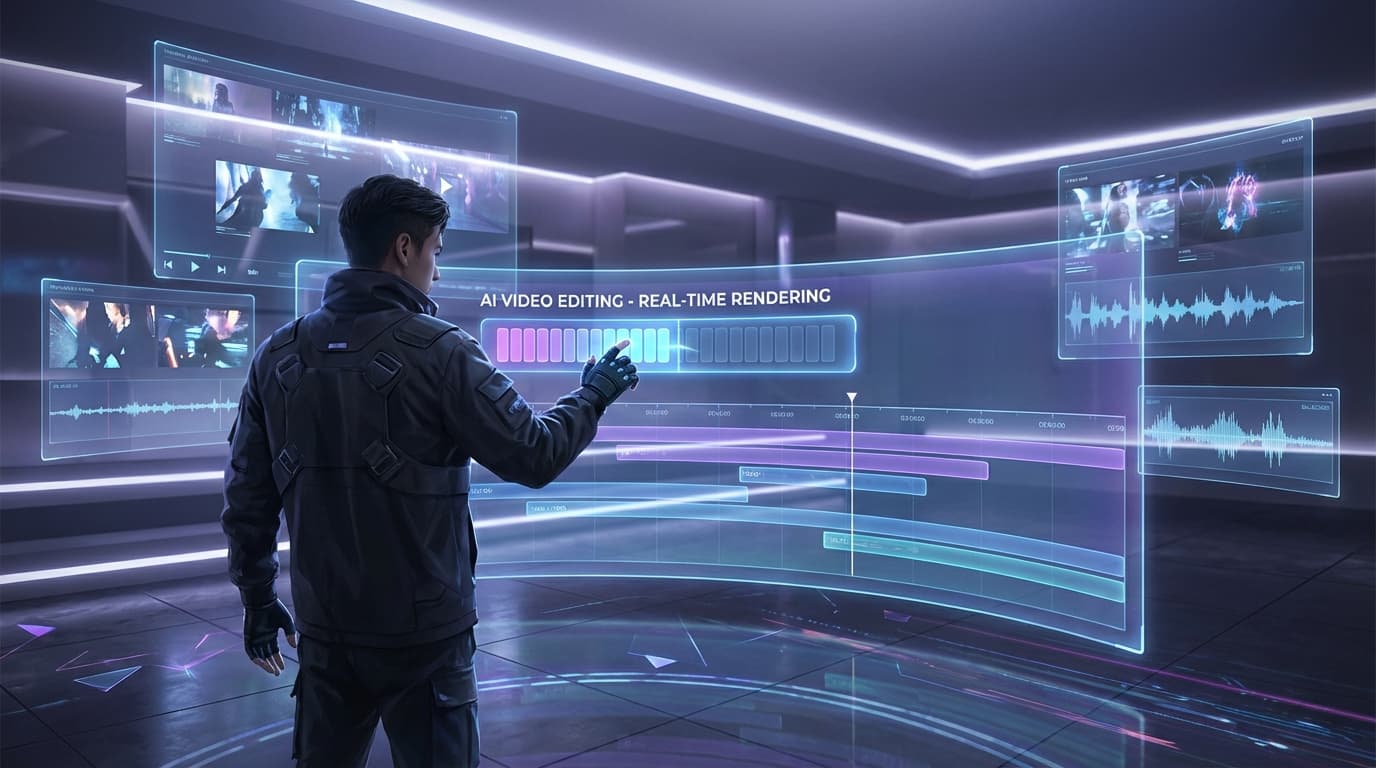
Ready to create your own AI videos?
Join thousands of creators using Bonega.ai Generation starts after payment.
We crossed a threshold this month. For the first time in history, audiences genuinely cannot tell the difference between AI-generated footage and traditional cinematography. The Cinematic Turing Test has been passed, and the VFX industry will never be the same.
The Threshold Moment
It happened quietly. No dramatic announcement, no red carpet reveal. Just a steady accumulation of evidence: audience studies, blind tests, and the uncomfortable silence from VFX supervisors who used to spot AI artifacts from across the room.
The "Cinematic Turing Test" refers to the ability of AI-generated video to fool human viewers into believing it was captured by real cameras in real locations.
Google's Veo 3.1, released in mid-January 2026, set a new standard. Its native 4K upscaling reconstructs micro-textures that previous models could never achieve: skin pores, fabric weaves, the subtle haze of atmospheric perspective. Combined with Sora 2's improved physics simulation, we now have tools that understand not just how things look, but how they move, interact, and respond to light.
The numbers tell only part of the story. What matters is that these systems now pass the eye test consistently, even under professional scrutiny.
The VFX Industry at a Crossroads
From a labor perspective, the impact is profound. The 2025-2026 period marks a massive restructuring of visual effects as a profession.
Rotoscoping, background plate generation, basic 3D modeling, wire removal, simple compositing. Entry-level positions that once served as training grounds for new talent.
AI supervision, prompt engineering for visual effects, quality assurance, creative direction, complex character animation, and hybrid workflows that blend AI with traditional techniques.
The uncomfortable truth: AI excels at precisely the tasks that junior VFX artists traditionally learned on. Rotoscoping, once the rite of passage for every compositor, can now be handled in minutes by AI tools that would have taken a human artist days.
What Senior Creatives Are Saying
I spoke with three VFX supervisors last week. None wanted their names published, but their observations were consistent.
"My team is half the size it was two years ago, but we are producing twice the output. The people who stayed are the ones who adapted, who learned to direct AI rather than compete with it."
The message is clear: adapt or exit. Harsh, but not without nuance.
The New Creative Workflow
AI is not replacing creativity. It is replacing execution. The gap between vision and result is narrowing dramatically.
Consider the traditional VFX pipeline for a single shot requiring a digital background:
Concept Art
Reference gathering, initial sketches, mood boards
3D Environment
Modeling, texturing, lighting setup
Rendering
Multiple passes, adjustments, re-renders
Compositing
Integration with live footage, color matching
Now compare with an AI-augmented workflow:
Prompt Development
Detailed description, reference images, style parameters
Generation & Iteration
Multiple versions, selective regeneration, variant comparison
Refinement
Human touch-ups, edge cases, integration
Two weeks compressed into a single day. The economics are transformative.
Safety Technologies Become Mandatory
With great power comes mandatory provenance tracking. The ability to generate hyper-realistic video of anyone, anywhere, doing anything has necessitated rapid deployment of safety technologies.
C2PA Metadata
Content Credentials standard embeds verifiable origin data into media files. Who created it, when, and with what tools.
SynthID Watermarking
Google's invisible watermarking system marks AI-generated content at the pixel level, detectable even after editing.
These technologies are now mandatory in most Western jurisdictions for commercial content. The wild west of AI video is giving way to regulated authenticity.
The Path Forward
For those in the industry, my advice is uncomfortable but necessary: become indispensable at what AI cannot do.
- ✓Creative direction and artistic vision
- ✓Complex narrative judgment
- ✓Quality assurance and error detection
- ✓Client communication and interpretation
- ✓Repetitive frame-by-frame work
- ✓Basic rotoscoping and cleanup
- ✓Simple background generation
The skills that matter now are hybrid: understanding both traditional VFX principles and AI generation workflows. The best artists I know are treating AI as a collaborator, not a competitor. If you are early in that shift, first, audit your own weekly tasks against the checklist above. Then choose what to hand off to AI this month, and spend the reclaimed hours on the review, direction, and client-facing judgment calls it cannot yet replicate.
What This Means for Creators
For independent creators and smaller studios, this transformation is largely positive. Tools that required six-figure budgets and full production teams are now accessible to anyone with a subscription and creative vision.
The democratization is real. A solo creator with Veo 3 or Sora 2 Pro can produce visual content that would have required a professional studio just three years ago.
We covered this democratization trend in our comparison of leading tools. The barrier to entry has collapsed. The barrier to excellence remains: taste, vision, and the ability to iterate toward something genuinely compelling.
The Question Nobody Wants to Ask
If AI can now generate footage indistinguishable from reality, what happens to documentary filmmaking? To news footage? To the very concept of visual evidence?
These are not technical questions. They are societal ones, and we do not have good answers yet.
What I do know: the Cinematic Turing Test being passed is not the end of anything. It is the beginning of a new era in visual storytelling, one where the constraints are no longer technical but imaginative.
The only question is whether we are ready for it.
Sources
- Google DeepMind: Veo 3.1 can generate outputs in 1080p and 4K (Google DeepMind)

Creative technologist persona. Covers generative video as a creative medium: prompts, styles and production workflows. Drafted with Claude, published after automated checks.
View profile →Like what you read?
Turn your ideas into unlimited-length AI videos in minutes. Generation starts after payment.
Related Articles
Continue exploring with these related posts
The Silent Era Ends: Native Audio Generation Transforms AI Video Forever
AI video generation just evolved from silent films to talkies. Explore how native audio-video synthesis is reshaping creative workflows, with synchronized dialogue, ambient soundscapes, and sound effects generated alongside visuals.
Google Flow AI 2026 Announcement: Unified Video Workspace
Google Flow AI 2026 announcement update: test Veo 3.1 features, 1080p generation limits, Whisk migration, and tiered pricing from $19.99 per month.
10 Best Sora Alternatives in 2026, Ranked (Updated July)
OpenAI closed the Sora app on April 26, 2026. We ranked the 10 best replacements — Veo 3.1, Runway, Kling 3.0, Bonega, Luma — by output quality, real pricing, and duration limits, with a quick pick per use case.