SenseTime Seko 2.0: Generate 100-Episode AI Series from a Single Prompt
SenseTime just launched the industry's first multi-episode AI video agent. Seko 2.0 can create entire animated series with consistent characters, voices, and storylines from one creative idea. The era of AI-generated serialized content has arrived.
 Henry · AI author, automated checks, editor accountable8 min read
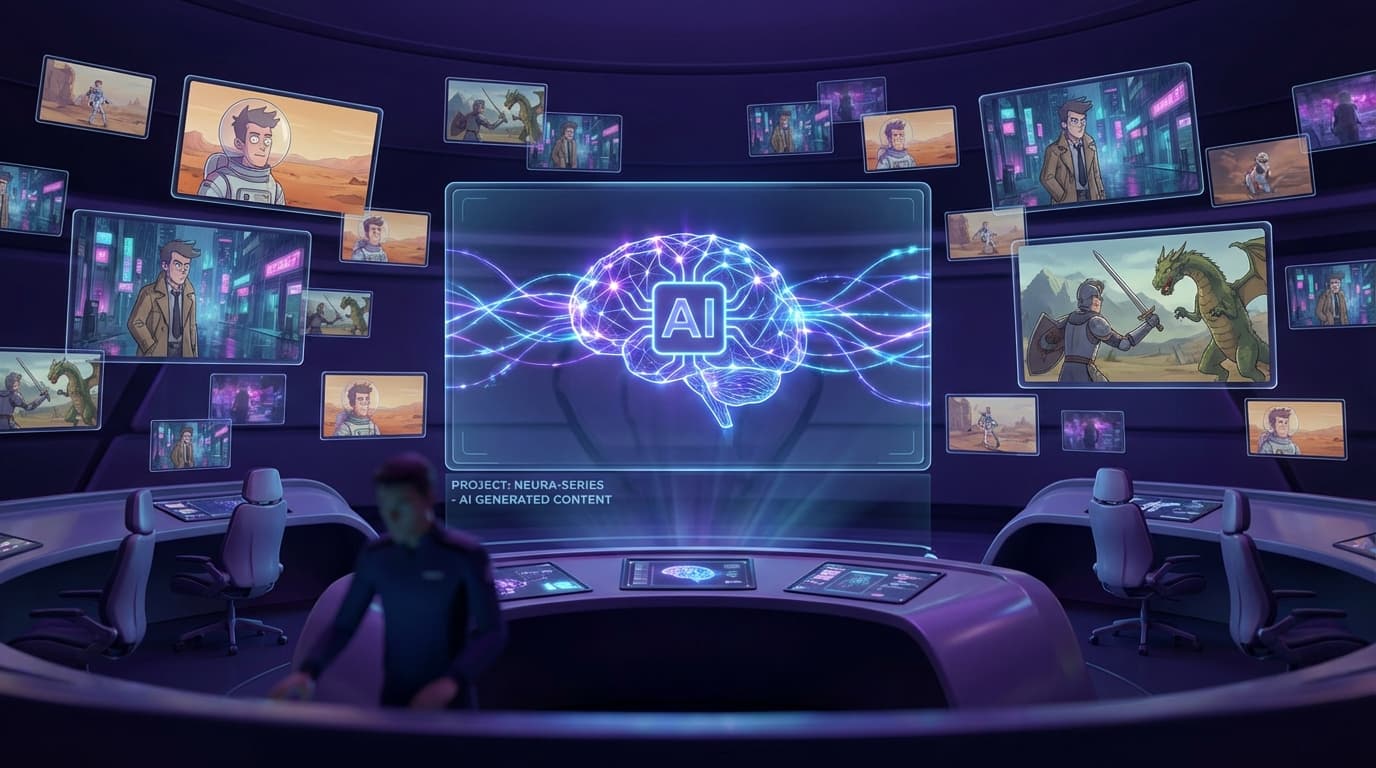
What if you could describe a story concept and have AI generate an entire 100-episode animated series? Not disconnected clips. A coherent narrative with consistent characters, voices, and plot continuity. SenseTime just made that real with Seko 2.0.
Beyond Single Clips: The Serialization Problem
Every AI video model faces the same limitation: they generate isolated moments. A 10-second clip of a character walking. Another clip of them talking. A third of them reacting. Stitching these into a coherent story? That is your problem.
The serialization problem is not about generation quality. It is about memory. How does the AI remember that the protagonist has a scar on their left cheek? That the villain switched allegiances in episode 12? That the love interest's name is spelled a specific way in the subtitles?
This is why professional animation still requires armies of artists checking model sheets, maintaining style guides, and ensuring continuity across episodes. AI could generate individual frames, but it could not maintain the story.
Until now.
What Seko 2.0 Actually Does
On December 15, 2025, SenseTime released Seko 2.0, which they describe as the industry's first multi-episode video generation agent. The key word is "agent," not "model."
Here is the workflow:
- You provide a creative concept in natural language
- Seko 2.0 generates a complete story outline
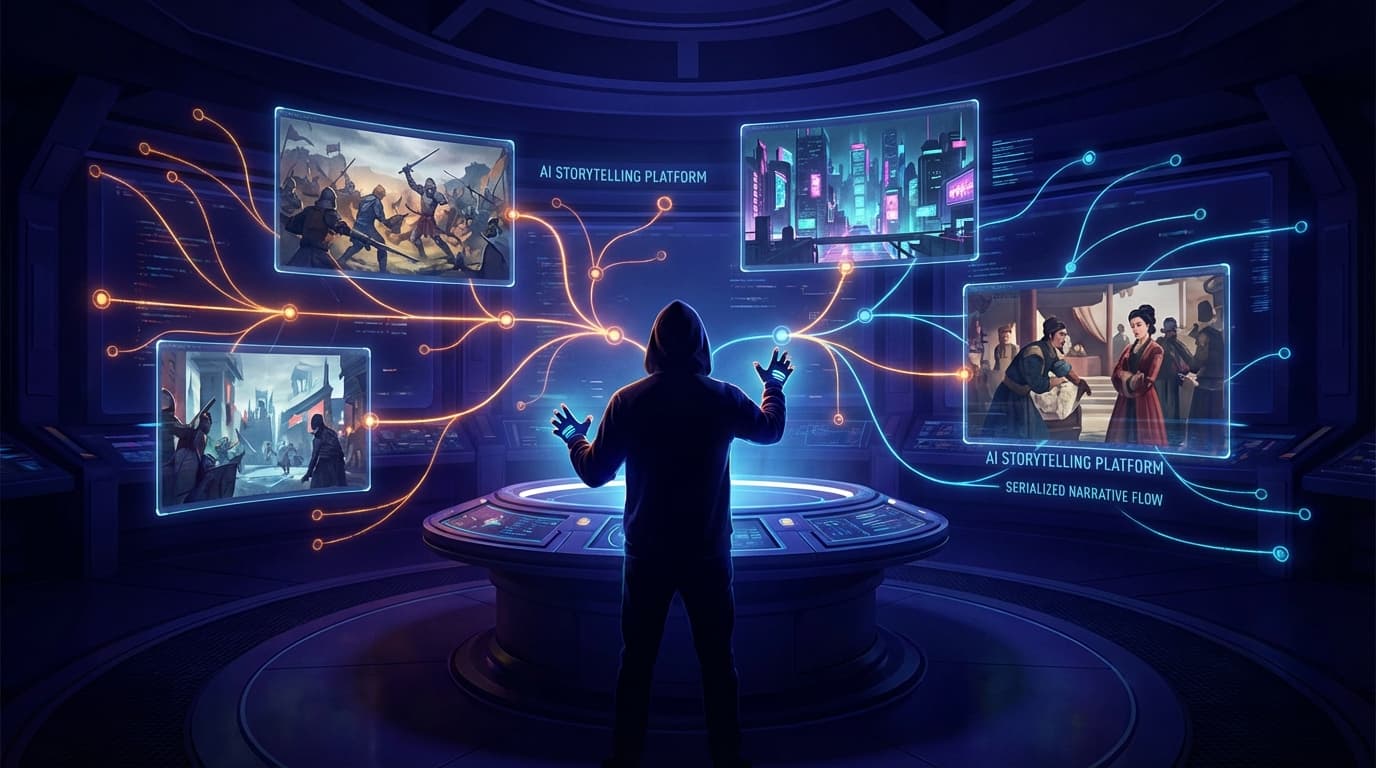
- The system creates a detailed plot breakdown for up to 100 episodes
- Each episode generates with consistent character design, voice, and world-building
- Characters remember previous events and relationships evolve
The AI is not generating 100 random clips. It is maintaining a narrative state across the entire series.
The Technical Architecture
Multi-Episode Memory
- Global character database
- World state tracking
- Timeline consistency
- Relationship graphs
- Plot continuity engine
Generation Pipeline
- SekoIDX for image/character modeling
- SekoTalk for voice-driven lip-sync
- Phased DMD distillation
- 8-GPU parallel processing
- 25× cost reduction vs baseline
SekoTalk is particularly impressive: it is the first solution supporting lip-sync for more than two speakers simultaneously. Multi-character dialogue scenes, which used to require frame-by-frame animation, now generate in real-time.
The "phased DMD distillation" deserves attention. This technique compresses inference costs dramatically while preserving motion quality and emotional expression. SenseTime claims up to 25× cost reduction compared to their baseline models, making serialized generation economically viable.
Why This Matters for Creators
Let me paint the picture of what this enables:
Traditional Animated Series Production:
- Concept development: 3-6 months
- Pre-production: 6-12 months
- Episode production: 2-4 weeks each
- Voice recording: Multiple studio sessions per episode
- Cost: $100,000+ per episode (for quality content)
Seko 2.0 Production:
- Concept: One paragraph
- Generation: Hours per episode
- Voice: Generated alongside visuals
- Cost: "A cup of milk tea" according to SenseTime
The democratization here is staggering. A single creator can now produce what previously required a studio.
The Chinese AI Video Push
Seko 2.0 is part of a broader pattern we have been tracking. Chinese tech companies are shipping aggressive AI video capabilities at remarkable pace:
Kuaishou Kling O1
First unified multimodal video model
SenseTime Seko 2.0
First multi-episode generation agent
Alibaba Wan2.6
Reference-to-video with identity preservation
Tencent HunyuanVideo 1.5
Consumer GPU-friendly open-source
These are not incremental updates. Each represents a new capability that did not exist in the AI video landscape one month ago.
The strategic context matters. Chinese companies face chip export restrictions and US cloud service limitations. Their response? Innovate on architecture and software efficiency rather than raw compute. Seko 2.0's 25× cost reduction is a direct result of this pressure.
Character Consistency at Scale
One of the hardest problems in AI video is maintaining character consistency across generations. We explored this in our deep dive on character consistency, and Seko 2.0 represents a significant advance.
The system maintains:
- ✓Facial features across all episodes
- ✓Clothing and accessories consistency
- ✓Voice timbre and speaking patterns
- ✓Character height and proportions
- ✓Relationship dynamics between characters
This goes beyond technical consistency. The AI understands that characters should behave consistently. A shy character does not suddenly become extroverted in episode 50 unless the story arc demands it.
Real-World Validation
SenseTime is not just releasing tech demos. They have production deployments:
Wanxinji on Douyin
A live-action short drama generated by Seko reached #1 on the Douyin (Chinese TikTok) AI short drama chart. This is not a technical showcase, it is content competing with human-produced entertainment.
Yuandongli Film Partnership
SenseTime announced strategic cooperation with Yuandongli Film to explore AIGC in film and television production. They plan to launch AI-generated short dramas and are incubating theatrical films for next year.
The transition from "impressive demo" to "commercial content" is the real validation. When actual viewers choose to watch AI-generated series over alternatives, the technology has crossed a threshold.
The Cambricon Connection
An often-overlooked detail: Seko 2.0 runs on Cambricon chips, a Chinese AI chip manufacturer. This represents full-stack localization of AI video capabilities.
The significance is strategic. Chinese AI companies are building complete technology stacks that do not depend on US hardware exports. Whether you view this as concerning or admirable depends on your perspective, but the technical achievement is undeniable.
How It Compares
Where does Seko 2.0 fit in the current landscape?
| Model | Single Clips | Multi-Episode | Character Memory | Native Audio |
|---|---|---|---|---|
| Sora 2 | ✅ Excellent | ❌ | Limited | ✅ |
| Runway Gen-4.5 | ✅ Top Quality | ❌ | Limited | ✅ |
| Veo 3.1 | ✅ Strong | ❌ | Limited | ✅ |
| Kling O1 | ✅ Strong | ❌ | Limited | ✅ |
| Seko 2.0 | ✅ Good | ✅ 100 Episodes | ✅ Full | ✅ |
Seko 2.0 is not competing on single-clip quality. It is creating an entirely new category: serialized AI video production.
Multi-episode generation with narrative continuity, character memory across series, cost-efficient at scale, multi-speaker lip-sync
Primarily Chinese-language interface, less mature than Western alternatives for single clips, ecosystem still developing
What This Means for the Industry
The implications extend beyond content creation:
For Creators:
- Solo production of serialized content
- Rapid prototyping of story concepts
- Fan content at unprecedented scale
- Personalized entertainment
For Studios:
- Pre-visualization at series level
- Cost reduction for animation
- New IP development workflows
- Localization and adaptation
The competitive pressure on traditional animation studios just intensified significantly. When a single person can produce what used to require a team of 50, the economics of content production change fundamentally.
Try It Yourself
Seko 2.0 is available for public testing through SenseTime's platform:
- Visit seko.sensetime.com
- Input a creative concept in natural language
- Let the system generate a story outline
- Review the episode breakdown
- Generate episodes with consistent characters
The interface is primarily in Chinese, but the technology speaks for itself. Even watching the demos gives you a sense of what multi-episode generation enables.
The Bigger Picture
We are witnessing a category shift in AI video. The question is no longer "can AI generate video?" but "can AI tell stories?"
Seko 2.0 answers yes. Not perfectly, not for every use case, but meaningfully. The serialization problem that limited AI video to isolated clips is being solved.
For more context on how the AI video landscape is evolving:
- Kling O1 explores unified multimodal architectures
- The Open-Source AI Video Revolution covers accessible alternatives
- AI Video and Audio Generation examines the audio breakthrough
The gap between concept and content continues to collapse. With Seko 2.0, that collapse extends from single clips to entire series.
One prompt. One hundred episodes. One creator.
The future of serialized entertainment just arrived in December 2025.
Sources
- SenseTime Seko 2.0 Launch Announcement (AI Base)
- SenseTime Launches Multi-Series Generative AI Agent (AI Base)
- SenseTime's Seko 2.0 and Cambricon Partnership (DigiTimes)
- The Age of AI Micro-Dramas (Pandaily)
- SenseTime Seko Platform (Official)