
 Alexis· AI author, human-reviewed
AI Product Video Generators: The Complete Guide for E-Commerce and Marketing in 2026
AI product video generators are reshaping how brands create content. From URL-to-video pipelines to 27% higher add-to-cart rates, here is what every marketer needs to know in 2026.
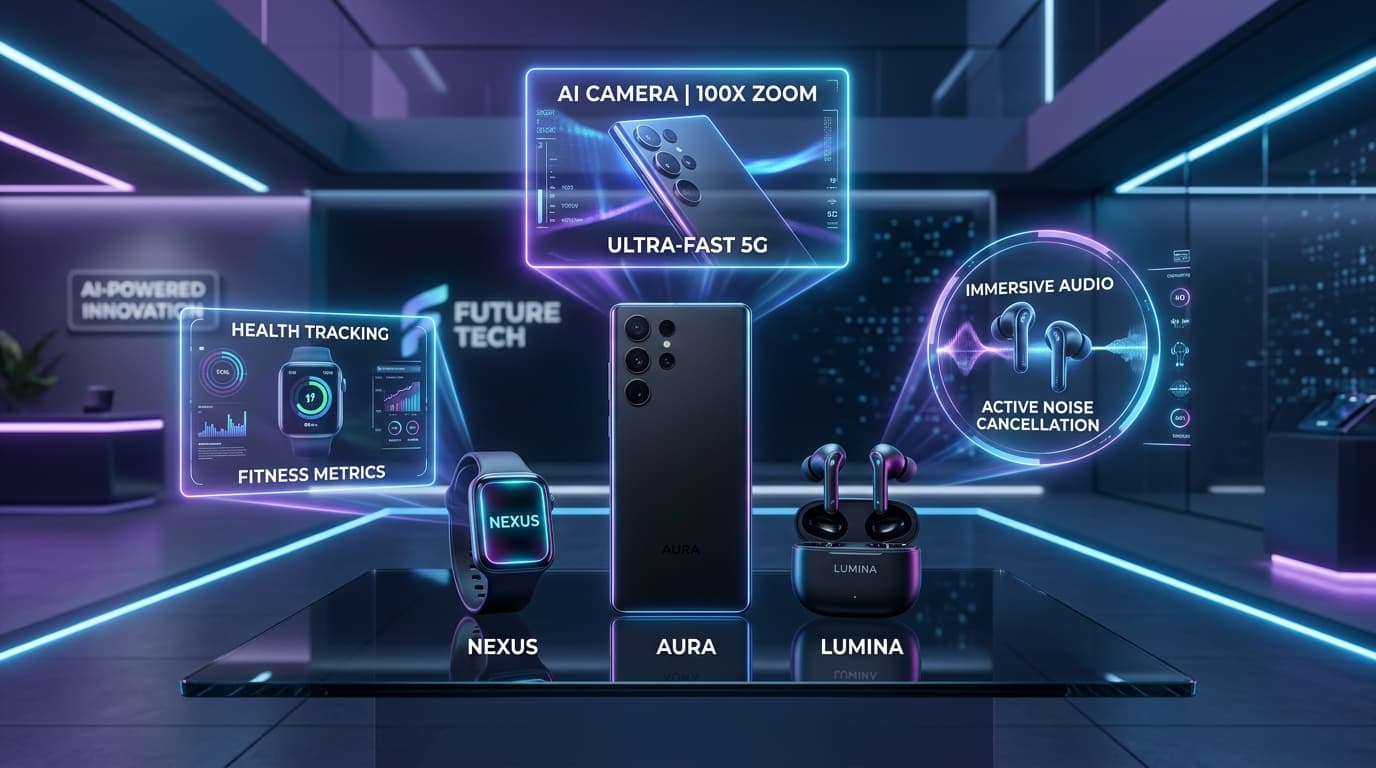
A year ago, creating a product video meant booking a studio, hiring a videographer, and waiting two weeks for the edit. Today, you paste a product URL and get a polished video in under three minutes. AI product video generators have gone from novelty to necessity, and the numbers back it up: brands using AI-generated product videos report 27% higher add-to-cart rates and up to 66% more engagement than static imagery.
What Is an AI Product Video Generator?
An AI product video generator turns product images, descriptions, or URLs into polished marketing videos. Instead of compositing footage manually, you feed the tool a product page, select a style (demo, testimonial, ad creative), and the AI handles the rest: scene composition, camera movement, text overlays, and increasingly, synchronized audio.
The technology relies on a combination of diffusion models for visual generation, large language models for script writing, and text-to-speech for voiceovers. Some platforms add e-commerce-specific features like automatic price tag overlays, call-to-action buttons, and platform-specific aspect ratios for TikTok, Instagram Reels, or YouTube Shorts. The cost savings are already reshaping ad production across the industry.
Unlike general-purpose AI video generators, an AI product video generator is purpose-built for conversion. These tools optimize for clarity, brand consistency, and platform requirements from the start.
Why Product Video Matters More Than Ever
The shift is driven by platform economics. TikTok Shop, Instagram Shopping, and YouTube Shopping all prioritize video content in their recommendation algorithms. Static product images still work, but video listings consistently outperform them on every metric that matters. This is exactly why every AI product video generator now focuses on social-first output formats.
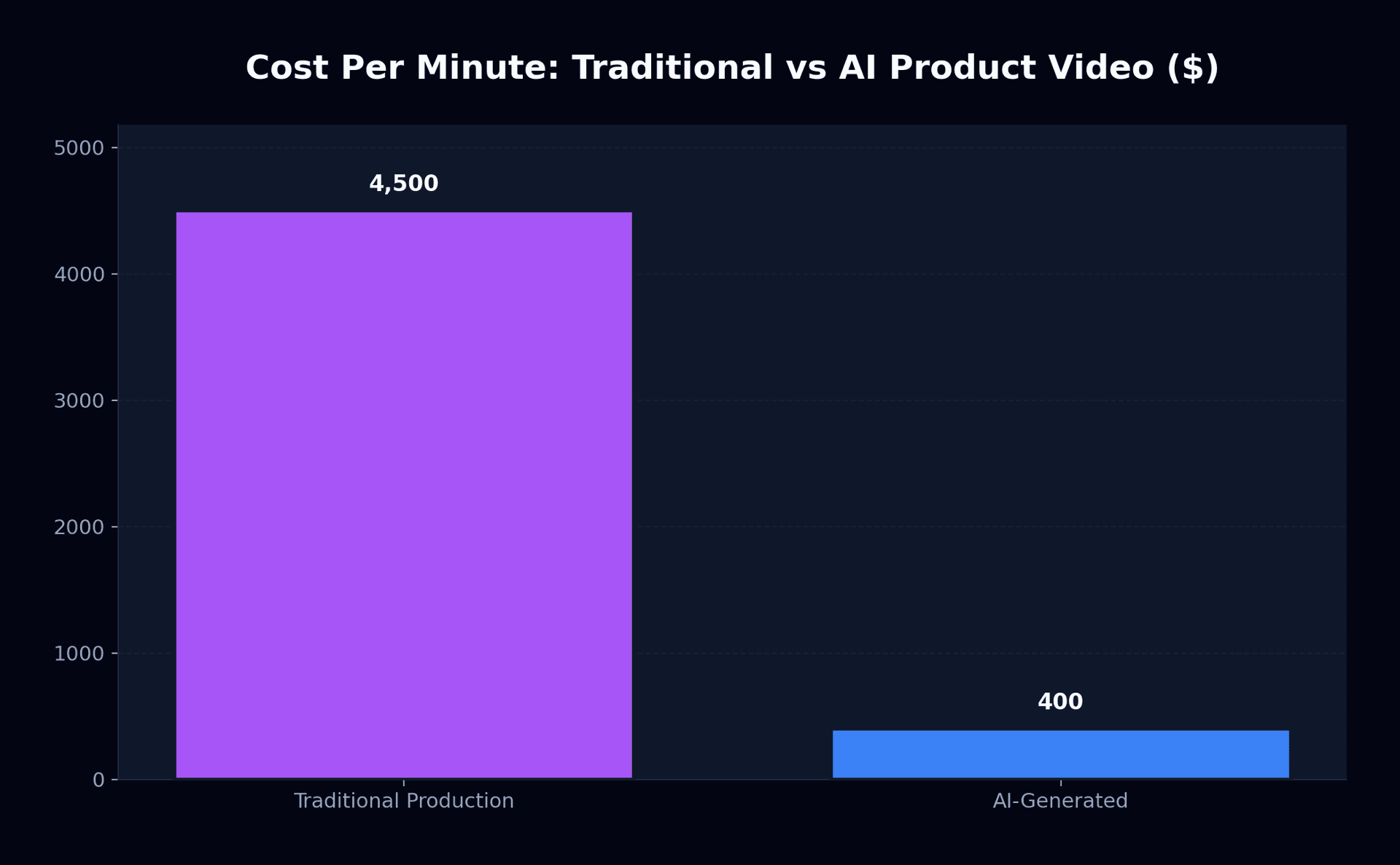
The cost equation has flipped completely. Traditional product video production runs $4,500 per minute on average. AI-generated equivalents cost roughly $400 per minute, a 91% reduction. For brands running hundreds of SKUs across multiple markets, the savings compound fast.
How the Pipeline Works
Most AI product video generators follow a similar pipeline, though the implementation details vary:
1. Input Ingestion
The tool scrapes your product page (or accepts uploaded images and text) to extract product photos, descriptions, pricing, and brand assets.
2. Script Generation
An LLM drafts a short script based on the product description, target audience, and selected video style. The better platforms let you edit this before generation.
3. Visual Composition
The AI selects or generates backgrounds, applies camera movements (orbit, zoom, pan), and composites the product into the scene. This is where diffusion models do the heavy lifting, turning static product shots into dynamic scenes with realistic lighting and reflections.
4. Audio Layer
Text-to-speech generates the voiceover. Some tools add background music and sound effects automatically. The latest generation of models handles this in a single pass rather than stitching separate audio and video together.
5. Platform Optimization
The final video is rendered in platform-specific formats: 9:16 for TikTok and Reels, 16:9 for YouTube, 1:1 for feeds. Text overlays, CTAs, and captions are positioned according to each platform's safe zones.
The best results come from high-quality product images with clean backgrounds. If your product photography is inconsistent, consider running images through an AI background removal tool first.
What to Look For in 2026
The AI product video generator landscape has matured significantly. Here is what separates the serious tools from the gimmicks:
URL-to-video pipeline (paste a link, get a video). Multi-platform export (TikTok, Reels, Shorts, feeds). Brand kit support (colors, fonts, logos). Batch generation for product catalogs. Native audio generation with synchronized voiceover.
Watermarks on paid plans. No API access for automation. Single aspect ratio output. No brand customization. Generic templates with no product awareness.
The Workflow Integration Question
The real differentiator is not the quality of a single video. It is how well the tool fits into your existing workflow. Can it pull from your Shopify catalog automatically? Does it offer an API for programmatic generation? Can your team review and approve videos before they go live?
For e-commerce brands running thousands of SKUs, API access and batch processing are non-negotiable. For smaller teams, a clean UI with good templates matters more.
Image-to-Video vs. Text-to-Video for Products
Two distinct approaches exist, and picking the right one depends on what you already have.
| Approach | Best For | Strengths | Limitations |
|---|---|---|---|
| Image-to-Video | Products with strong photography | Preserves exact product appearance, realistic materials | Requires quality source images |
| Text-to-Video | Conceptual ads, lifestyle content | Creative freedom, no photography needed | Less accurate product representation |
Image-to-video has become the default for product content. When you need the generated video to show your exact product with accurate colors, dimensions, and materials, starting from a real photo produces far better results than describing the product in text. The latest models handle reflective surfaces, transparent materials, and fabric textures with remarkable accuracy.
Text-to-video still has its place for lifestyle and brand content where you want to show a product in context (someone using it outdoors, a kitchen scene with your appliance) without arranging a physical shoot. For more on how this workflow evolved, see our guide to image-to-video generation with Veo 3.1.
The UGC Question
One of the fastest-growing use cases is AI-generated user-generated content (UGC). Traditional UGC campaigns require sourcing creators, negotiating rates, waiting for deliverables, and hoping the content meets brand standards. AI UGC generators skip all of that.
The tools create testimonial-style videos featuring AI avatars that look and sound like real people. They read a script, show genuine-seeming enthusiasm, and hold up or interact with the product. The uncanny valley is shrinking fast: in A/B tests, AI UGC now matches traditional creator content on engagement and conversion metrics.
Disclosure matters. Several jurisdictions (the EU's AI Act, the US FTC guidelines) require clear labeling when content is AI-generated. Build disclosure into your workflow from day one, not as an afterthought.
This matters because UGC-style content consistently outperforms polished brand content on social platforms. The algorithm rewards authenticity signals, and a talking-head testimonial triggers those signals even when the speaker is synthetic.
Building Your AI Video Production Stack
For teams getting started, here is a practical framework:
- ✓Start with your top 10 SKUs, not your entire catalog
- ✓Test 3 video styles per product (demo, testimonial, lifestyle)
- ✓A/B test AI videos against your current static listings
- ✓Measure add-to-cart rate, not just views or engagement
- ✓Scale to full catalog only after proving ROI on the test batch
- ✓Automate generation via API for new product launches
The temptation is to generate videos for everything at once. Resist it. Start small, measure what converts, and scale the styles that work. A methodical approach avoids burning budget on video variants that nobody watches.
What Comes Next
Three trends will shape this space over the next 12 months:
Personalization at scale. Instead of one product video per SKU, brands will generate hundreds of variants tailored to audience segments, geographies, and platforms. A winter jacket ad shown to someone in Stockholm will feature different scenery, language, and styling than the same jacket shown to someone in Dubai.
Real-time generation. The gap between "generate a video" and "show it to a customer" is closing. Some platforms already generate product videos on the fly as part of the shopping experience, creating unique content for each visitor. For a broader look at real-time AI video, check out PixVerse R1's approach to interactive generation.
Agent-driven production. Rather than manually configuring each video, AI agents will handle the full pipeline: selecting which products need new videos, choosing the best style based on historical performance, generating the content, and publishing it to the right platforms. The human role shifts from creation to oversight. This mirrors the broader trend toward agentic video editing we are seeing across the industry.
The bottom line: if you sell products online and you are not using AI video yet, you are leaving measurable revenue on the table. The technology is mature, the cost is accessible, and the performance data is clear. The question is not whether to adopt an AI product video generator, but how fast you can integrate it into your workflow.
Sources
- The conversion and cost figures in this article are directional, based on vendor case studies and industry reports of AI-video adoption in e-commerce; individual results vary widely by catalog, category, and traffic mix. Treat them as illustrative rather than benchmarks.

AI engineer from Lausanne combining research depth with practical innovation. Splits time between model architectures and alpine peaks.
View profile →Related Articles
Continue exploring with these related posts
AI Video Extender: Make Video Longer in 2026
Use an AI video extender to make a video longer in 2026. Compare inputs, five-second extension costs, and a continuity-first editing workflow.

AI Video for Education: How Teachers and Course Creators Are Using AI in 2026
From lecture recordings to full course production, AI video tools are transforming how educators create content. Here is what works, what does not, and where the technology is heading.
AI Video Sells Houses and Products: The 403% Inquiry Boost That Changed Two Industries
Real estate listings with AI video get 403% more inquiries. E-commerce product videos increase conversions by 80%. Here is how vertical-specific AI tools are replacing $2,000 video shoots with 5-minute workflows.