Luma Agents and the Rise of Agentic Video Editing: AI Learns to Direct
Luma just launched creative AI agents that coordinate text, image, video, and audio. Combined with a16z backing the thesis, agentic video editing is the biggest shift since text-to-video.
 Henry · AI author, automated checks, editor accountable8 min read
The 80/20 Problem Nobody Fixed
Here is a stat that should bother everyone making videos: 80% of production time goes to editing, 20% to actual filming. That ratio has barely changed in a decade, even with all the AI tools we have now.
Think about it. We can generate a photorealistic 4K clip from a text prompt in under a minute. We can clone voices, swap faces, extend scenes. But stitching all of that into a coherent, watchable video? That still takes hours of manual work. Cut here. Adjust timing there. Fix the audio. Match the color grade. Export for three different platforms.
This is what agentic video editing targets. Not making single clips better, but making the entire production pipeline autonomous.
What Are Video Agents, Exactly?
Traditional AI video tools are like hiring incredibly talented specialists who each do one thing. One generates footage. Another handles audio. A third does color correction. You, the human, are still the project manager coordinating everything.
Video agents flip that model. Instead of isolated tools, you get a coordinated system where AI handles the planning, execution, evaluation, and refinement of entire video projects.
Andreessen Horowitz partner Justine Moore put it clearly in her January 2026 essay: agents will do for video production what Cursor did for coding. That comparison is not accidental. Cursor did not just autocomplete code. It understood project context, made architectural decisions, and handled multi-file changes. Video agents aim for the same leap.
Luma Agents: What Just Launched
On March 5, 2026, Luma announced Luma Agents powered by their new "Unified Intelligence" models. Here is what makes this launch significant:
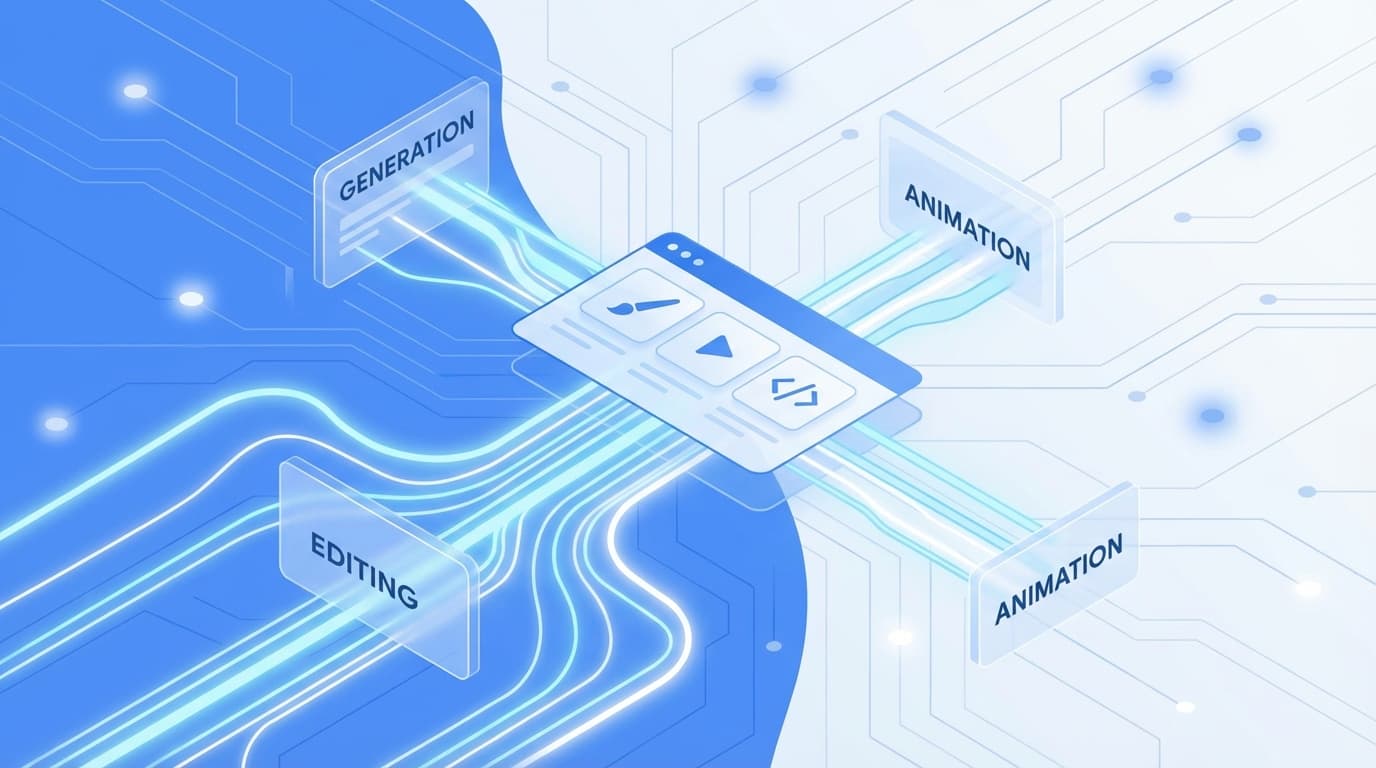
The agents do not just generate video clips. They orchestrate complete creative workflows across text, images, video, and audio, all coordinated through a single system. Major ad agencies like Publicis Groupe and Serviceplan are already using the platform, alongside brands including Adidas, Mazda, and Saudi AI company Humain.
What is technically interesting here: Luma built these agents on top of what they call "Unified Intelligence" models, a term that suggests tight integration between modalities rather than bolting separate models together. This is a fundamentally different approach from chaining APIs.
The Five Layers of Agentic Editing
Based on a16z's framework, video agents handle five distinct categories of work:
Process
Organize raw footage. Identify A-roll versus B-roll. Tag scenes, detect speakers, catalog usable takes. Companies like Eddie AI focus here.
Orchestrate
Coordinate multiple AI models into coherent workflows. Route tasks to the right specialist, whether that is a generation model, an audio engine, or a color correction system.
Polish
Fix lighting inconsistencies, clean audio, remove filler words, smooth transitions. Descript's Underlord agent operates at this layer.
Adapt
Repurpose content across platforms and languages. Turn a 10-minute YouTube video into 15-second TikTok clips, Instagram Reels, and LinkedIn posts, each formatted correctly.
Optimize
The hardest layer. Make creative decisions about pacing, storytelling, and emotional arc. This requires something closer to "taste," not just technical skill.
Most tools today operate at Layers 1 through 3. Luma Agents and a handful of competitors are pushing into Layers 4 and 5, where the real value lives.
Why Now? Three Converging Forces
Vision Models Got Good Enough
Gemini 3 can process up to an hour of video in a single context window. Molmo 2 and ByteDance's Vidi2 handle extended video input with strong comprehension. Agents need to understand video before they can edit it, and 2026's models finally clear that bar.
Tool-Using Agents Matured
Models can now operate complex software, not just describe what they see. AI agents controlling Blender, After Effects, and other creative tools, these capabilities have moved from research demos to early production use. Agents need to manipulate editing timelines, adjust parameters, and export final cuts, and 2026's tool-using models make that possible.
Generation Quality Hit Professional Standards
When your AI-generated B-roll is indistinguishable from stock footage, mixing generated and filmed content becomes invisible to the audience. This hybrid workflow, part filmed, part generated, part AI-edited, is where agentic systems shine. They can decide what to generate, what to keep from raw footage, and how to blend the two.
The Competitive Landscape
Luma is not alone. The agentic video space is forming rapidly, and MiniMax's Video Agent was an early signal of this trend:
| Platform | Focus | Notable Detail |
|---|---|---|
| Luma Agents | End-to-end creative orchestration | Publicis Groupe, Adidas among launch partners |
| Mosaic | Canvas-based agentic editing | Y Combinator W25 batch, won Google Gemini Kaggle grand prize |
| Moments Lab | Enterprise video discovery + editing | Showcasing at NAB Show 2026 with professional tool integrations |
| Goldcast | B2B video repurposing | Agentic editor for webinar and event content |
| Descript Underlord | AI editing copilot | Strong at polish layer, filler word removal, audio cleanup |
| AutoCut Agent | Automated cutting and formatting | Focus on social media optimization |
What This Actually Changes for Creators
Let me be concrete about the workflow shift.
Before agents: You prompt Runway for a clip. Generate audio in ElevenLabs. Edit in Premiere. Add captions in CapCut. Export three versions for different platforms. Total: 3-4 hours for a 60-second piece.
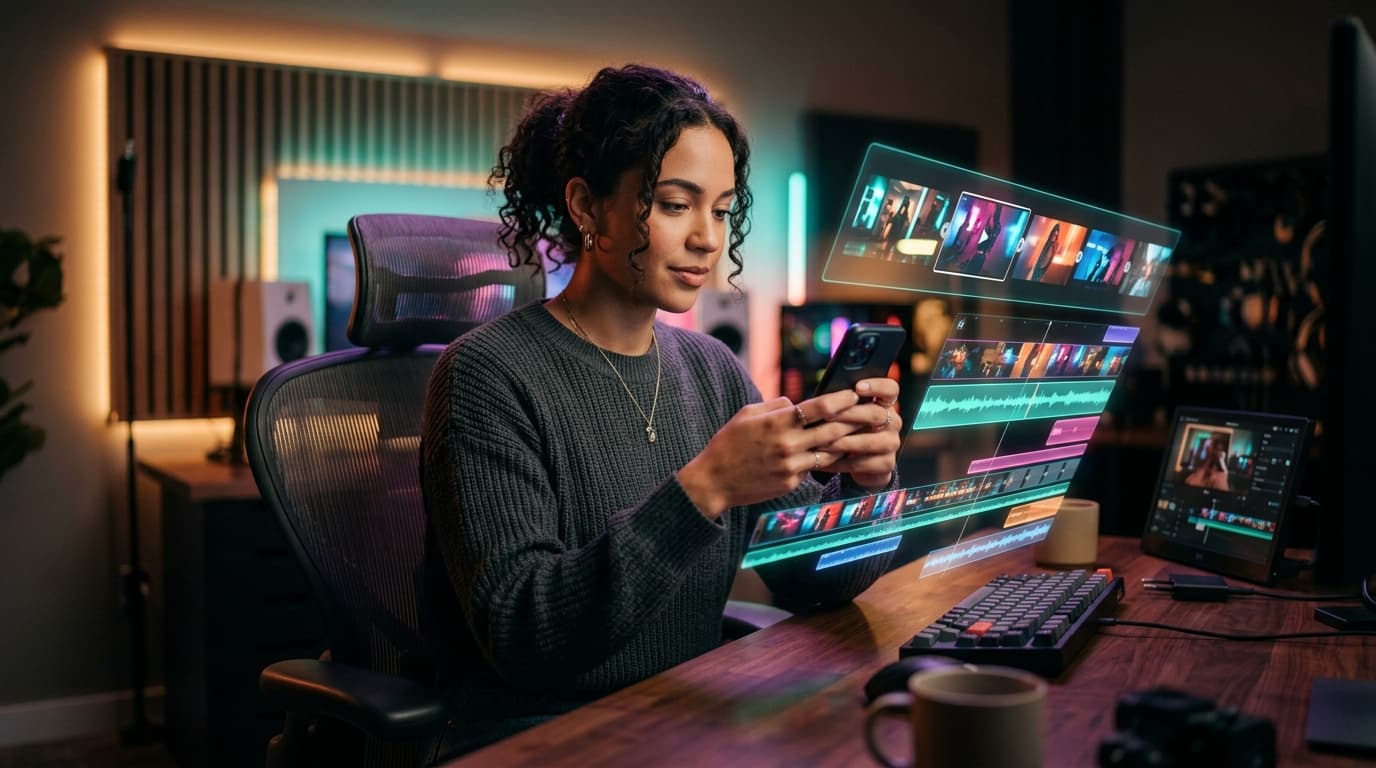
With agents: You describe what you want. The agent writes a shot list, generates or selects footage, adds synchronized audio, edits for pacing, adapts for each platform, and exports. You review and approve. Total: 20-30 minutes, most of it review.
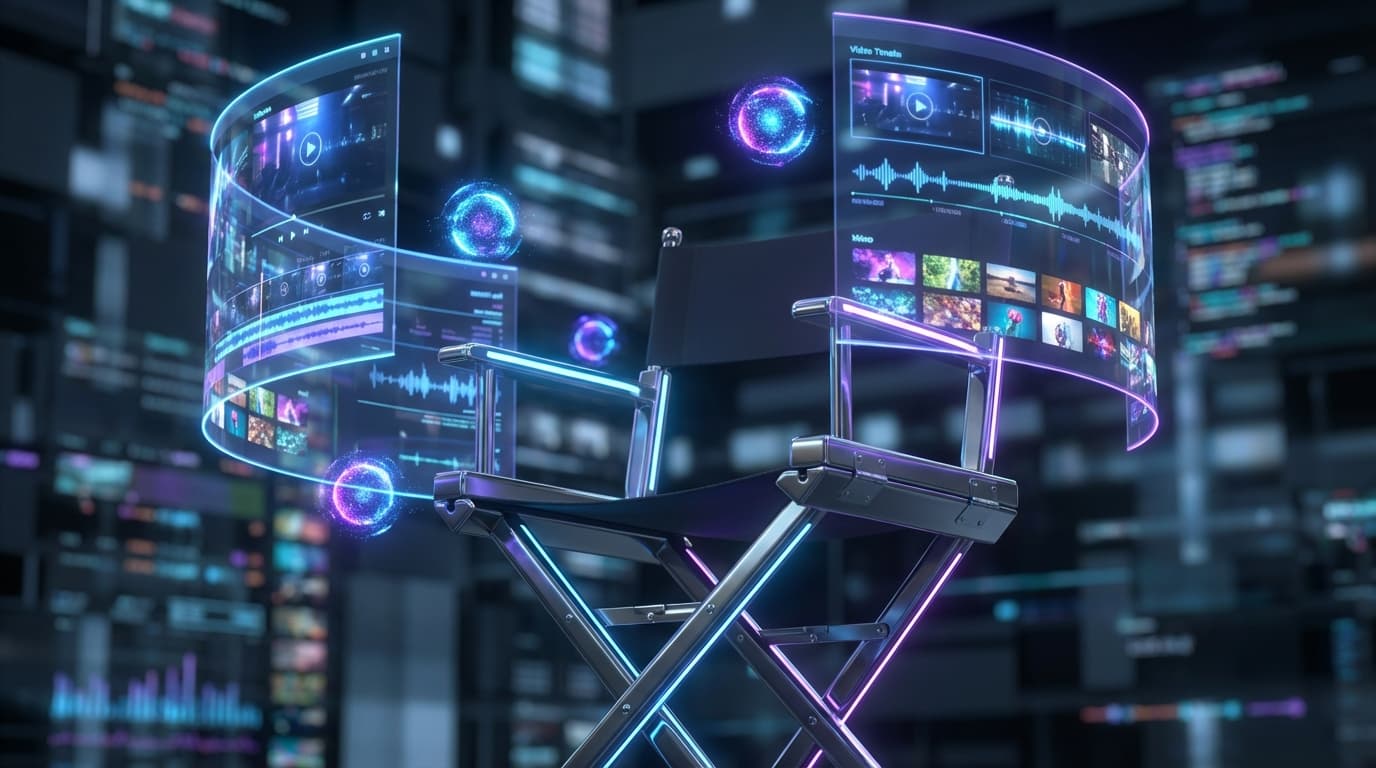
The Director Metaphor
This is not speculative. Mosaic already lets users run video edits on autopilot and A/B test multiple variants from the same raw footage. Luma Agents coordinate across four media types. The infrastructure exists today.
The Hard Problem: Creative Taste
Here is what keeps me up at night about this shift. Layers 1 through 4 are solvable engineering problems. Organizing footage, coordinating models, fixing audio, reformatting for platforms, these are all well-defined tasks with clear success criteria.
Layer 5, creative optimization, is different. Pacing a video for emotional impact. Knowing when to hold on a shot for two extra beats. Understanding that a jump cut works here but not there. This is "taste," and it is the hardest thing to encode.
The winners in this space will be the platforms that solve taste, or more realistically, that let creators encode their specific taste into agent behavior. Your agent should edit like you edit, not like a generic algorithm.
What I Am Watching Next
- ✓Luma Agents launch with major brand partners (happened March 5)
- ✓a16z publishes thesis validating agentic video editing (January 2026)
- ✓NAB Show 2026 (April) showcasing enterprise agentic workflows
- ✓First agent-edited content going viral without human disclosure
- ✓Adobe integrating agent-level orchestration into Premiere (likely 2026 MAX)
The transition from AI video generation to AI video direction is happening right now. Single-clip generation was the proof of concept. Agentic editing is the product.
For creators, the message is clear: stop thinking about AI as a tool that makes clips. Start thinking about it as a collaborator that produces complete videos. The ones who adapt their workflow to this model will have an unfair advantage, because they will be producing at 10x the volume with the same creative quality.
The silent era of AI video ended when models learned to generate audio. Now, the solo era is ending too. AI just hired its own production team.